
How to use Line Data Analytics (SCADA MES) to improve decision-making?
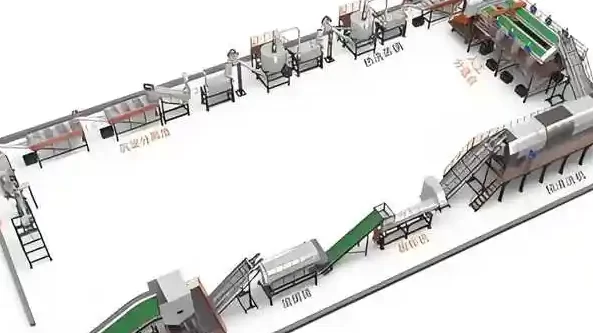
How to use Line Data Analytics (SCADA, MES) to improve decision-making? By transforming raw production data into actionable insights, moving management from experience-driven to data-driven decisions, and closing the circle of sensing, analyzing, deciding, and acting, SCADA and MES line data analytics enhance decision-making.
Data Collection: The Foundation of Smart Decisions
Since accurate insights depend on comprehensive, real-time data from both equipment and production operations, data gathering is the first crucial step.
Throughout the food production process, SCADA systems collect millisecond-level data from machines, such as temperature, pressure, vibration, current, and operating status.
This includes all essential equipment, including chargers for high-speed food processing machines, 500KG and 200KG grinders, and electric grinders.
For food ingredients including peanuts, seasam, maize, and rice, MES systems monitor batch records, process timings, personnel activities, quality test results, and material consumption.
Together, SCADA and MES connect equipment health to production outcomes, creating a full data chain for informed decision-making.
When a universal grinder or Vacuum Mill shows abnormal vibration, SCADA alerts trigger MES to pull related batch and cleaning data instantly.
Core Data Analysis Methods for Production Lines
Statistical Process Control (SPC)
In order to maintain production stability and lower flaws in the processing of food and spices, statistical process control keeps an eye on important quality metrics.
For the black pepper grinder and dry ginger grinder, control charts monitor parameters such filling weight, sterilization temperature, and grinding fineness.
By differentiating between systemic problems and natural fluctuations, SPC avoids over-adjustment or overlooked risks that compromise product quality.
This process guarantees uniformity in batches of wheat, tea, coffee, meat, and mushrooms.
Root Cause Analysis (RCA)
Root Cause Analysis uses focused questioning to address fundamental faults and looks past apparent difficulties to uncover true problems.
For instance, rather than being only the result of operator error, packing leaks may also be caused by sensor drift, neglected calibration, and inadequate maintenance procedures.
To address persistent problems with coarse crushers, airflow pulverizers, and turbo grinder units, RCA connects SCADA equipment data to MES batch logs.
This research applies to equipment that comes into touch with food, such as stainless steel processing equipment and CE Certificate grinders.
Time Series Predictive Analysis
Time series forecasting shifts from fixed maintenance to on-demand maintenance by using past data to estimate future equipment problems.
For dust grinder and hammer mill equipment, machine learning models predict motor performance declines, bearing wear, and a loss in cleaning efficiency.
This minimizes unscheduled downtime for operations of small grinder machines, ultrafine grinders, and cryogenic grinding machines.
For bean, seed, and spice goods, predictive insights aid in maintenance planning without interfering with food production runs.
Closed-Loop Decision Execution and Visualization
Clear visualization and well-coordinated workflows across teams and responsibilities are necessary to translate analysis into action.
Managers may rapidly identify bottlenecks by using a uniform dashboard that displays real-time KPIs like OEE, first-pass yield, and energy utilization.
Personalized signals, such as modifying chilling time for wetter raw materials or reducing grinding speed, are sent to frontline employees.
Every decision in MES is linked to manufacturing batches, generating electronic logs for complete traceability and GMP and HACCP compliance.
This closed loop guarantees that data insights result in consistent, auditable actions for the food line equipment, herb grinder, and licorice grinding machine.
Key Challenges and Practical Solutions
Breaking Down Data Silos
Because old and new systems frequently employ different data repositories and incompatible protocols, data silos prevent effective analysis.
Legacy equipment and contemporary SCADA/MES systems are effortlessly connected by industrial IoT gateways that support OPC UA and Modbus.
Through this integration, data from dust collector grinders, vacuum mills, and cutting type grinders are combined into a single, easily accessible platform.
Improving Data Quality
Standardized coding and automatic cleaning correct errors and inconsistencies because poor data quality renders insights untrustworthy.
For salt, sugar, tobacco, and chemical commodities, Master Data Management synchronizes material codes, equipment IDs, and process settings.
In order to ensure proper analysis for food and cannabis processing lines, automated filters eliminate outliers from sensor data.
Building Team Data Literacy
Even with robust SCADA and MES systems in place, low data literacy results in the loss of important insights.
Engineers are trained to understand trend data for grinding and crushing equipment, and operators are trained to read control charts.
For every employee on the food manufacturing line, this bridges the gap between raw data and judgments that are useful.
Reducing Resistance to Change
Pilot projects enable teams to test data-driven choices on a single line first, demonstrating their benefit with measurable KPIs such as reduced downtime.
Wider implementation across all manufacturing lines is encouraged by demonstrated improvements, such as 20% less downtime.
Long-Term Value of Data-Driven Decision-Making
Transitioning from reactive fixes to proactive, company-wide collaboration is where SCADA and MES analytics truly shine.
Lines optimize production for batches of meat, wheat, and dry fruit by automatically adjusting settings for variations in raw materials.
Food safety is strengthened by data-driven decisions, which transform manual inspections into a dynamic, intelligent barrier.
This strategy maintains compliance for all food processing activities and equipment while increasing efficiency and reducing costs.
Customize Automatic Production Line:
- Pepper grinding production line
- Carrot Production Line Drying Grinding
- Beans Drying Line
- Automatic Powder Production Line
- Sugar powder production line
- Automatic Banana Powder Production Line
- Automatic Yellow Onion Powder Production Line
- Automatic Ginger Powder Production Line
- Automatic Fruit Powder Production Line
- Automatic Food Production Line
- Automatic Sauce Paste Production Line
- Automatic Garlic Powder Production Line
- Automatic Coffee Powder Production Line
- Automatic Metal Powder Production Line
- Automatic Laundry Powder Production Line
- Automatic Diamond Powder Production Line
- Automatic Turmeric Powder Production Line
- Automatic Protein Powder Production Line
- Automatic Crumb Rubber Powder Producation Line
- Automatic Ceramic Powder Production Line
- Automatic Green Onion Powder Production Line
- Automatic Chalk Production Line
- Automatic Ceramic Powder Production Line
- Automatic Green Onion Powder Production Line
- Automatic Rubber Powder Production Line
- Automatic Potato Powder Production Line
- Automatic Talc Powder Production Line
- Automatic Putty Powder Production Line
- Automatic Tomato Powder Production Line
- Automatic Egg Shell Powder Production Line
- Automatic Protein Powder Production Line
- Automatic Milk Powder Production Line
- Automatic Quartz Powder Production Line
- Automatic Butyl Rubber Powder Production Line
- Automatic Zenith Industrial Powder Production Line
- Automatic Elf Powder Production Line
- Automatic Calcium Carbonate Production Line
- Automatic Red Onion Powder Production Line
- Automatic Hair Line Powder Production Line
- Automatic Chilli Powder Production Line
- Automatic Coca Powder Production Line
- Automatic Aluminum Powder Production Line
- Automatic Washing Powder Production Line
- Automatic Gypsum Powder Production Line
- Automatic Moringa Leaf Powder Production Line
- Automatic Epdm Rubber Powder Production Line
- Automatic Baobab Powder Production Line
- Automatic purple sweet potato Powder Production Line
- Automatic baby powder Production Line
- Automatic vegetable Powder production line
- Spice Pepper Drying Grinding Production Line
- Automatic Liquid Detergent Production Line
- Automatic Laudry Detergent Production Line
- Automatic Sauce Paste production line
- Automatic Tomato Sauce Paste production line
- Automatic Hot Sauce Paste production line
- Automatic Soy Sauce Paste production line
- Automatic Soya Sauce Paste production line
- Automatic Garlic Paste production line
- Automatic Fish Sauce production line
- Automatic BBQ Sauce production line
- Automatic Cranberry Sauce Paste production line
- Automatic Oyster Sauce Paste production line
- Automatic Red Sauce Paste production line
- Automatic Chili Sauce Paste production line
- Automatic Sriracha Sauce production line
- Automatic secret sauce production line
- Automatic Pouch sauce production line
Grinder for Mateirals:
Food Processor; chemical, plastic, pharmaceutical Materials: