
What are the key considerations for a frozen food production line?
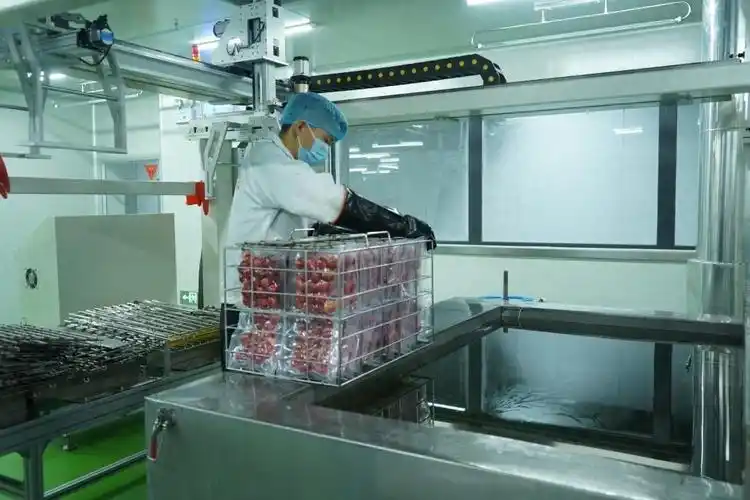
What are the key considerations for a frozen food production line? Engineering stability in low temperatures, product quality retention, and compliance safety are the main factors for a frozen food production line. To maintain quality and food safety, systematic coordination of materials, processes, environmental control, and real-time monitoring is necessary.
Low-Temperature Structural and Hygienic Design
Since cold settings require more stringent material and construction standards than room-temperature production lines, low-temperature structural and hygienic design is the fundamental guarantee for a frozen food line.
To avoid liquid buildup and microbiological hiding places, all surfaces that come into contact with food must be made of 316L stainless steel that has been electropolished to Ra ≤ 0.8μm and has rounded joints and seamless welds.
To prevent insulation failure and frost swelling, non-contact walls, floors, and ceilings require polyurethane sandwich-colored steel plates with insulation layers at least 100 mm thick in addition to moisture-proof membranes.
Floors require a drainage slope of ≥1.5% with water-sealed floor drains to quickly remove cleaning water and defrosting water, preventing ice-water mixtures and psychrophile growth.
All doors and pipe penetrations must use special seals to stop cold bridges and external hot, humid air from entering the low-temperature production area.
Freezing Process Selection for Product Quality
The quality of frozen food is directly impacted by the freezing method used, since incorrect freezing creates big ice crystals that destroy texture, juiciness, and cell structure.
With regulated chilling rates of 7–15K per minute to guarantee tiny, consistent ice crystals in goods like meat, maize, and seasam balls, quick-freezing technology is crucial to reducing crystal damage.
For large-batch frozen rice, wheat, and flour-based meals, tunnel freezers provide continuous manufacturing for block or sheet products by reducing the core temperature to -18°C in 20–40 minutes.
Fluidized bed freezers work best for small-particle foods such as vegetable grains and shrimp, suspending particles in upward cold air to prevent clumping and boost rehydration quality.
Liquid nitrogen freezing reaches -196℃ for ultra-fast cooling, ideal for high-value products, though high costs and operational risks limit its widespread use on standard lines.
Condensate Management and Temperature Control Accuracy
Since condensation produces the perfect conditions for bacterial growth in cold environments, careful temperature control and condensate management are essential to sustained frozen line operation.
With low-speed circulation fans in strategic locations to encourage uniform air mixing throughout the factory floor, a bottom-supply and top-return air distribution system avoids cold air collecting.
For remote warnings and data traceability, temperature control systems require multi-point real-time monitoring with uniformity errors within ±2°C in conjunction with PLC and touchscreen controllers.
To guarantee reliable readings, all temperature sensors need to be calibrated on a regular basis, particularly in close proximity to processing machinery like vacuum mills and high-speed dry grinder stations.
Cross-contamination between waste water and locations that come into contact with food is prevented by independent stainless steel condensate collection systems that are kept apart from drainage lines.
Microbial Control for Psychrophilic Bacteria
Psychrophilic bacteria like Listeria, which grow slowly at 0–10°C and cannot be controlled by low temperatures alone on frozen food lines, must be the focus of microbial control.
High-risk areas are covered by weekly ambient microbiological tests, including equipment interfaces close to coarse crusher and black pepper grinder stations, drains, door gaps, and food contact surfaces.
Peracetic acid or quaternary ammonium salt disinfectants are used for routine disinfection, and stainless steel grinding machines and processing equipment must adhere to stringent cleaning procedures.
In order to prevent cross-contamination, staff hygiene regulations include frequent glove changes, special cold-resistant work outfits, and air showers prior to entering clean zones.
To satisfy the GFSI certification audit standards for frozen food safety compliance, all cleaning and disinfection records are kept electronically.
Energy Optimization and Cold Chain Continuity
For sustainable frozen line operation, energy optimization and a continuous cold chain are essential for cutting expenses and avoiding quality loss due to ice crystal recrystallization.
Heat recovery systems, variable-frequency drive motors, and complete insulation layers greatly reduce energy consumption for large-scale machinery like air-cooled crushers and 500 kg grinders.
From freezing egress to packing and loading, every part of the production line, warehousing, and transportation must maintain a consistent temperature chain of -18°C or lower.
Wireless temperature and humidity monitoring systems enable real-time data upload and abnormal alerts, tracking conditions for mushroom, bone, and seed-based frozen products.
Even short temperature breaks cause ice crystal regrowth, damaging texture of frozen peanut, bean, and spice-infused foods, so full-chain monitoring is non-negotiable.
Equipment Adaptation for Low-Temperature Environments
All processing equipment on frozen lines, including motors, electrical components with cold-resistant ratings, and chargers for electric grinders, must be able to endure prolonged low temperatures.
Specialized lubricants that function dependably in below-freezing temperatures are required for food contact equipment such as cryogenic grinders, universal grinders, and CE Certificate grinders.
For vibrating pulverizer machines and dust collector grinders to operate consistently on frozen by-product processing lines and avoid frost accumulation, insulated casings are necessary.
Material and Equipment Compatibility
To prevent metal leaching or material cracking in cold weather, only certified low-temperature polymers and food-grade 316L stainless steel are used for parts that come into contact with frozen food.
To reduce the potential of cross-contamination, equipment used to process tobacco, chemical, or cannabis products must be completely isolated from frozen food lines.
To prevent malfunctions, grinding machines including dry ginger grinders, licorice grinders, and tiny grinders require regular cold-temperature performance inspections.
System Integration and Compliance Validation
With engineering design serving as the framework, process control serving as the core, and data monitoring serving as the nerve center, a frozen food production line is a precision system that goes beyond just stacking equipment.
Every piece of equipment, including cutting type grinders, airflow pulverizers, turbo grinders, and ultrafine grinders, must work flawlessly with low-temperature procedures and safety controls.
Market access and consumer confidence in frozen food items are impacted by regular compliance validation, which guarantees the line satisfies international food safety regulations.
Customize Automatic Production Line:
- Pepper grinding production line
- Carrot Production Line Drying Grinding
- Beans Drying Line
- Automatic Powder Production Line
- Sugar powder production line
- Automatic Banana Powder Production Line
- Automatic Yellow Onion Powder Production Line
- Automatic Ginger Powder Production Line
- Automatic Fruit Powder Production Line
- Automatic Food Production Line
- Automatic Sauce Paste Production Line
- Automatic Garlic Powder Production Line
- Automatic Coffee Powder Production Line
- Automatic Metal Powder Production Line
- Automatic Laundry Powder Production Line
- Automatic Diamond Powder Production Line
- Automatic Turmeric Powder Production Line
- Automatic Protein Powder Production Line
- Automatic Crumb Rubber Powder Producation Line
- Automatic Ceramic Powder Production Line
- Automatic Green Onion Powder Production Line
- Automatic Chalk Production Line
- Automatic Ceramic Powder Production Line
- Automatic Green Onion Powder Production Line
- Automatic Rubber Powder Production Line
- Automatic Potato Powder Production Line
- Automatic Talc Powder Production Line
- Automatic Putty Powder Production Line
- Automatic Tomato Powder Production Line
- Automatic Egg Shell Powder Production Line
- Automatic Protein Powder Production Line
- Automatic Milk Powder Production Line
- Automatic Quartz Powder Production Line
- Automatic Butyl Rubber Powder Production Line
- Automatic Zenith Industrial Powder Production Line
- Automatic Elf Powder Production Line
- Automatic Calcium Carbonate Production Line
- Automatic Red Onion Powder Production Line
- Automatic Hair Line Powder Production Line
- Automatic Chilli Powder Production Line
- Automatic Coca Powder Production Line
- Automatic Aluminum Powder Production Line
- Automatic Washing Powder Production Line
- Automatic Gypsum Powder Production Line
- Automatic Moringa Leaf Powder Production Line
- Automatic Epdm Rubber Powder Production Line
- Automatic Baobab Powder Production Line
- Automatic purple sweet potato Powder Production Line
- Automatic baby powder Production Line
- Automatic vegetable Powder production line
- Spice Pepper Drying Grinding Production Line
- Automatic Liquid Detergent Production Line
- Automatic Laudry Detergent Production Line
- Automatic Sauce Paste production line
- Automatic Tomato Sauce Paste production line
- Automatic Hot Sauce Paste production line
- Automatic Soy Sauce Paste production line
- Automatic Soya Sauce Paste production line
- Automatic Garlic Paste production line
- Automatic Fish Sauce production line
- Automatic BBQ Sauce production line
- Automatic Cranberry Sauce Paste production line
- Automatic Oyster Sauce Paste production line
- Automatic Red Sauce Paste production line
- Automatic Chili Sauce Paste production line
- Automatic Sriracha Sauce production line
- Automatic secret sauce production line
- Automatic Pouch sauce production line
Grinder for Mateirals:
Food Processor; chemical, plastic, pharmaceutical Materials: