
What technologies support upcycling food by-products on the line?
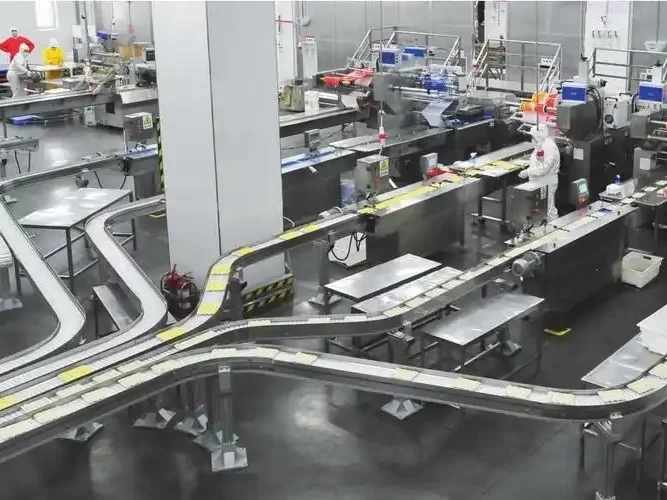
What technologies support upcycling food by-products on the line? Food by-product upcycling on production lines is supported by a number of cutting-edge technologies, primarily bioconversion technologies, microencapsulation and nano-embedding techniques, targeted fermentation for high-value compounds, and intelligent sorting and drying systems that convert food waste into high-value raw materials while meeting circular food manufacturing objectives.
Bioconversion Technologies for Food By-Product Upcycling
The most promising method for upcycling food byproducts is bioconversion, which combines fermentation and enzymatic hydrolysis to change the nutritional content and molecular structure of food waste.
Grain by-products such as wheat bran and leftover wheat flour are good candidates for this technology. In order to produce functional foods, cellulase and hemicellulase pretreatment converts insoluble fiber into water-soluble oligosaccharides.
Protease hydrolysis releases amino acids and short peptides from whey and other dairy by-products, while lactic acid bacteria fermentation produces natural flavor enhancers to take the place of chemical additives in food preparation.
Cutting-edge synthetic biology fermentation uses distiller’s grains and fruit pomace as substrates. Engineered strains convert these by-products into antioxidants, erythritol, and other food-grade additives.
This technology pairs with processing equipment like stainless steel fermentation tanks and small grinder machines to handle by-products from peanut, seasam, corn, and rice processing efficiently.
Microencapsulation and Nano-Embedding Technologies
The low bioavailability and poor stability of active compounds isolated from food by-products on the production line are resolved by microencapsulation and nano-embedding.
Three-layer microencapsulation increases the survival rate of probiotics and polyphenols in gastric acid to over 95% using sodium alginate-chitosan composite wall materials, allowing for tailored intestinal release.
Using this process, extracts from by-products such as pomegranate seed oil and silkworm chrysalis protein are packaged into stable, easily dispersed useful ingredients for medicinal and fortified foods.
Nano-embedding improves the water dispersibility of fat-soluble components, breaking limits of traditional emulsification and supporting high-value use of oilseed by-products.
It works seamlessly with drying equipment and Vacuum Mill machines to process encapsulated by-products into powder for food, spice, and tea product development.
Application in Heat-Sensitive By-Product Processing
This method is perfect for processing mushroom, fruit, and vegetable scraps from production lines because it preserves heat-sensitive compounds including vitamins and polyphenols in food by-products.
Additionally, it turns low-value by-products into high-value additives for food products like meat, flour, and coffee by reducing ingredient loss during storage and shipment.
Targeted Fermentation for High-Value Compound Production
Food by-products are converted from low-value feed to high-value food and industrial raw materials on shared production lines through targeted fermentation.
Using bacillus strains resistant to mixed bacteria, non-sterile fermentation uses food waste as a carbon source to create high-purity lactic acid, microbial oil, and 2,3-butanediol.
This approach closes the circular economy loop by turning food scraps’ sugar and protein into lactic acid for PLA bioplastics without the need for costly sterilization equipment.
It is compatible with 200KG and 500KG grinder machines for large-scale processing and can handle a variety of by-products, such as bean dregs, cassava scraps, and herb residues.
This fermentation technology cuts production costs and carbon footprint, aligning with green food manufacturing standards for spice, wheat, and salt processing lines.
Intelligent Sorting and Drying Technologies
In order to ensure raw material homogeneity for subsequent conversion operations, intelligent sorting and drying are crucial pre-treatment technologies for food by-product upcycling.
By precisely separating various by-product streams, online sorting systems that use AI image recognition and near-infrared spectroscopy avoid cross-contamination on common lines.
This sorting apparatus processes mixed by-products from tobacco, chemical, and food production lines independently using coarse crushers and dust grinders.
Low-Temperature Drying Technologies
Heat-sensitive nutrients in food byproducts are preserved by low-temperature vacuum drying and spray drying, which keeps vitamins and polyphenols for high-value upcycling.
These drying techniques preserve flavor and nutrients in by-products from black pepper, licorice, and dry ginger grinders.
Integration with Grinding and Pulverizing Equipment
To create fine powder for use in food and functional ingredients, dried by-products are further processed using universal grinders, airflow pulverizers, and ultrafine grinders.
By turning dried bone, seeds, and mushroom byproducts into useful powder, high-speed dry grinders and cutting-type grinder equipment minimize waste on production lines.
Challenges and Future Development of Upcycling Technologies
Large-scale costs, process uniformity, and regulatory approval in the food sector are some of the obstacles that current food by-product upcycling technologies must overcome.
In order to comply with food safety and hygiene regulations, equipment compatibility is also crucial. CE Certificate grinders, turbo grinders, and vibrating pulverizer machines are required.
For large-scale by-product processing, chargers for industrial grinding equipment and electric grinders must enable uninterrupted operation.
Equipment made of stainless steel, such as air-cooled crushers and cryogenic grinding machines, enables food-grade processing of by-products and prevents metal contamination.
Food by-products will become lucrative resources instead of trash as biomanufacturing and cognitive control develop, allowing for systematic value reconstruction.
These methods enable the upcycling of a wide range of by-products, encompassing all waste streams from food manufacturing lines, from cannabis and herb scraps to sugar and salt processing residues.
By converting every byproduct into a resource that the food industry can use, integrated upcycling technology will eventually make food manufacturing more sustainable.
Customize Automatic Production Line:
- Pepper grinding production line
- Carrot Production Line Drying Grinding
- Beans Drying Line
- Automatic Powder Production Line
- Sugar powder production line
- Automatic Banana Powder Production Line
- Automatic Yellow Onion Powder Production Line
- Automatic Ginger Powder Production Line
- Automatic Fruit Powder Production Line
- Automatic Food Production Line
- Automatic Sauce Paste Production Line
- Automatic Garlic Powder Production Line
- Automatic Coffee Powder Production Line
- Automatic Metal Powder Production Line
- Automatic Laundry Powder Production Line
- Automatic Diamond Powder Production Line
- Automatic Turmeric Powder Production Line
- Automatic Protein Powder Production Line
- Automatic Crumb Rubber Powder Producation Line
- Automatic Ceramic Powder Production Line
- Automatic Green Onion Powder Production Line
- Automatic Chalk Production Line
- Automatic Ceramic Powder Production Line
- Automatic Green Onion Powder Production Line
- Automatic Rubber Powder Production Line
- Automatic Potato Powder Production Line
- Automatic Talc Powder Production Line
- Automatic Putty Powder Production Line
- Automatic Tomato Powder Production Line
- Automatic Egg Shell Powder Production Line
- Automatic Protein Powder Production Line
- Automatic Milk Powder Production Line
- Automatic Quartz Powder Production Line
- Automatic Butyl Rubber Powder Production Line
- Automatic Zenith Industrial Powder Production Line
- Automatic Elf Powder Production Line
- Automatic Calcium Carbonate Production Line
- Automatic Red Onion Powder Production Line
- Automatic Hair Line Powder Production Line
- Automatic Chilli Powder Production Line
- Automatic Coca Powder Production Line
- Automatic Aluminum Powder Production Line
- Automatic Washing Powder Production Line
- Automatic Gypsum Powder Production Line
- Automatic Moringa Leaf Powder Production Line
- Automatic Epdm Rubber Powder Production Line
- Automatic Baobab Powder Production Line
- Automatic purple sweet potato Powder Production Line
- Automatic baby powder Production Line
- Automatic vegetable Powder production line
- Spice Pepper Drying Grinding Production Line
- Automatic Liquid Detergent Production Line
- Automatic Laudry Detergent Production Line
- Automatic Sauce Paste production line
- Automatic Tomato Sauce Paste production line
- Automatic Hot Sauce Paste production line
- Automatic Soy Sauce Paste production line
- Automatic Soya Sauce Paste production line
- Automatic Garlic Paste production line
- Automatic Fish Sauce production line
- Automatic BBQ Sauce production line
- Automatic Cranberry Sauce Paste production line
- Automatic Oyster Sauce Paste production line
- Automatic Red Sauce Paste production line
- Automatic Chili Sauce Paste production line
- Automatic Sriracha Sauce production line
- Automatic secret sauce production line
- Automatic Pouch sauce production line
Grinder for Mateirals:
Food Processor; chemical, plastic, pharmaceutical Materials: