How does a coal mill work?
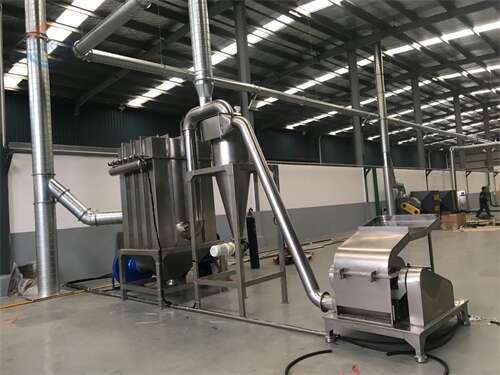
A coal mill pulverizes raw coal into fine powder primarily through mechanical grinding and pneumatic classification, though specific mechanisms vary significantly across mill types. This finely ground coal is essential for efficient combustion in power plant boilers and industrial kilns. Let’s delve deeply into the workings of the two dominant types: Medium Speed Vertical Roller Mills and Double-Inlet Double-Outlet Ball Mills.
I. Medium Speed Vertical Roller Mill (The Predominant Workhorse)
The Medium Speed Vertical Roller Mill (VRM) stands as the industry leader for coal pulverization in modern power generation, prized for its efficiency and flexibility.
- The Grinding System: Crushing Under Immense Pressure
At the heart of the VRM lies the grinding table. Raw coal, typically sized below 30-40mm, enters the mill through a central feed pipe located directly above the rotating grinding table. As the table spins at a moderate speed of around 30 revolutions per minute, powerful centrifugal forces immediately act upon the incoming coal, causing the particles to spread outwards across the table’s surface. Positioned above the table are three large, heavy grinding rollers. These rollers are forced down onto the coal bed by sophisticated hydraulic cylinders, applying immense pressure typically ranging from 50 to 300 tons per roller. This combination of centrifugal motion and massive roller pressure creates a grinding bed between the rollers and the table. As the table rotates, coal particles are dragged beneath the rollers, subjected to intense compressive and shearing forces. This mechanical action crushes and grinds the coal particles against the hard surface of the grinding table. The centrifugal force continuously pushes the crushed material towards the outer edge of the table, ensuring a relatively uniform grinding bed thickness and consistent particle exposure to the crushing forces. - The Drying System: Heat and Airflow for Moisture Removal
Simultaneous with grinding, effective drying is crucial. Hot primary air, heated to temperatures between 200°C and 300°C typically by the boiler’s air preheater, is introduced into the mill housing. This hot air stream enters tangentially through an annular gap (the nozzle ring) surrounding the periphery of the grinding table. As the air jets upwards through the nozzle ring slots, it encounters the crushed coal cascading over the edge of the table. The intense heat of this air rapidly evaporates the surface moisture inherent within the raw coal. Crucially, the velocity of this air stream is carefully controlled. This velocity is the primary factor determining the mill’s capacity to lift and carry the pulverized coal particles upwards towards the classifier. If the air velocity is too low, coarse particles will fall back onto the table; too high, and excessive wear or poor classification can occur. The hot air performs the dual function of drying the coal and providing the transport medium for the pulverized product. - The Classification System: Precision Particle Separation
The hot air, now laden with dried coal powder, rises vertically within the mill housing towards the classifier, typically located in the upper section of the mill. Modern VRMs predominantly employ dynamic classifiers with adjustable rotating vanes or static classifiers with angled guide vanes creating vortex flow. As the coal-air mixture enters the classifier, it encounters these vanes which impart a strong swirling (vortex) motion. Centrifugal forces generated by this spin fling the coarser, heavier particles outwards against the classifier housing walls. Once they lose momentum, these coarse particles fall back down through a reject cone or spout, returning directly to the grinding table bed for further crushing. The finer, lighter particles, which the centrifugal force cannot overcome against the drag of the upward air flow, remain suspended in the air stream. They pass through the classifier vanes and exit the mill via the coal outlet pipes towards the burners. The fineness of the final product coal powder is precisely controlled, often down to 90 microns or less, by adjusting the classifier settings (e.g., vane angle or rotational speed). This closed-loop classification ensures optimal fineness for combustion efficiency.
II. Double-Inlet Double-Outlet Ball Mill (The Robust Contender for Hard Coals)
The Double-Inlet Double-Outlet (DIDO) Ball Mill, a large-diameter, slow-rotating tube mill, remains vital for grinding harder coals where VRMs might face excessive wear.
- The Grinding System: Impact and Abrasion by Tumbling Steel
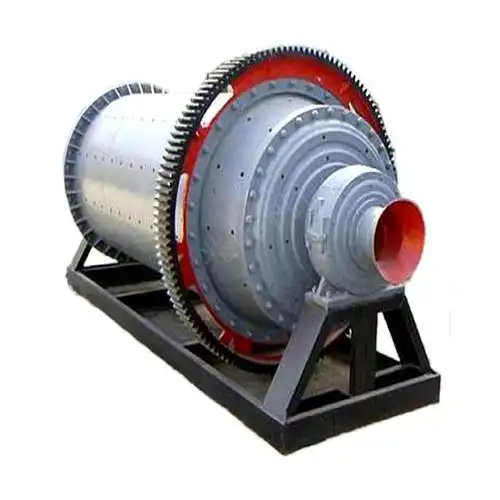
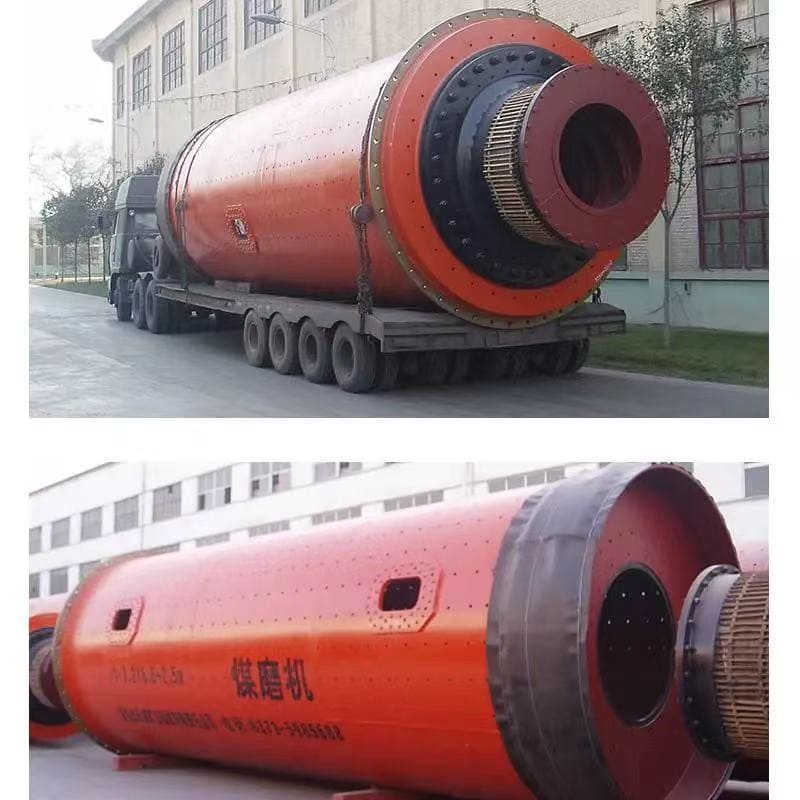
The core component is a massive horizontal cylindrical drum, partially filled with grinding media – typically high-chromium steel balls ranging in size. Raw coal, mixed with hot primary air, is fed into the mill simultaneously through hollow trunnions at both ends. As the large drum rotates slowly (around 15-20 rpm, hence “low-speed mill”), the charge of steel balls is lifted by the mill’s inner liner to a certain height. At the apex of their trajectory, the balls cascade and cataract down onto the coal lumps below. Pulverization occurs primarily through the high-impact forces generated when these balls strike the coal particles, supplemented by abrasive grinding as particles are trapped between cascading balls or between balls and the mill liners. The tumbling action ensures constant particle movement and exposure to the grinding media. The relatively long residence time of coal inside the large drum allows for extensive size reduction, making it particularly effective for grinding harder, more abrasive coal types. - The Drying & Feeding System: Dual Symmetry for Capacity
A key feature of the DIDO design is symmetry. Hot primary air for drying enters the mill co-currently with the coal feed through the hollow trunnions at both ends of the rotating drum. This dual-inlet configuration ensures efficient hot air distribution throughout the entire drum length, maximizing drying capacity and providing ample transport air. Specialized twin-screw feeders or scrolls within each inlet chute ensure consistent coal feeding into both ends of the rotating drum against the incoming air pressure. This symmetrical feeding and airflow design contributes significantly to the mill’s high volumetric capacity. - The Classification System: Dual Outlet Efficiency
The pulverized coal, dried and carried by the air stream, moves towards the center of the drum. It exits through central discharge ports, typically located midway along the drum’s length. The coal-air mixture from each half of the drum then flows upwards towards its own dedicated outlet and classifier assembly. These classifiers are often dual-cone types. The mixture enters tangentially, creating a vortex. Centrifugal force separates coarse particles, which fall back down return pipes into their respective drum halves for regrinding. The fine coal powder exits with the air stream through the central outlet pipes. Crucially, the fineness of the product from each outlet can be independently adjusted using the classifier cones or vanes, providing operational flexibility. This dual-path design enhances classification efficiency and overall mill capacity.
III. Key Operational Differences & Specialized Mechanisms
- Grinding Mechanism & Efficiency:
The fundamental difference lies in how crushing force is applied. VRMs rely on pressure (roll pressure) and shear forces applied directly to a controlled bed of material. This focused energy application makes them significantly more energy-efficient, typically consuming up to 50% less power than ball mills for the same output grinding softer to medium-hard coals. DIDO Ball Mills utilize impact (ball strikes) and attrition/abrasion within a tumbling charge. While less efficient overall due to energy lost in moving the heavy drum and media, this method excels at breaking down very hard, abrasive coals that would cause rapid roller and table wear in a VRM. The impact mechanism is less sensitive to the presence of harder mineral matter (like pyrite) often found in such coals. - Material Handling & System Protection:
Both mill types incorporate crucial mechanisms for handling non-grindable material and protecting against damage:- Reject Handling (“Pyrites” or “Rite”): Heavy, dense, non-combustible material like rocks, tramp metal, or pyrite (FeS2) inevitably enters mills. VRMs utilize a scraper plough assembly mounted under the grinding table. This plough continuously sweeps this “reject” material (often called “pyrites” or “tramp material”) across the nozzle ring and into an external discharge hopper, preventing buildup and ensuring grinding bed stability. Ball Mills rely on the continuous flow of material and air to carry smaller rejects out, though periodic checks of the drum are needed for large tramp metal.
- Roller Retraction (VRM Specific): A critical safety and operational feature of VRMs is the hydraulic roller lift system. If the coal feed is interrupted (e.g., feeder blockage), the grinding rollers would run metal-to-metal on the table, causing severe vibration and potential damage. The hydraulic system can rapidly lift the rollers off the table within seconds, preventing this damaging “metal-to-metal” contact condition. Once feed resumes, rollers are smoothly lowered back into position. Ball Mills lack this specific feature but are generally less sensitive to temporary feed interruptions due to their large internal inventory of coal and balls.
IV. The Complete Coal Milling Process Journey
Understanding the mill’s core mechanics is vital, but it functions within a larger, integrated system:
- Raw Coal Storage & Feeding: Coal is stored in bunkers or stockpiles. Precise gravimetric or volumetric feeders (like belt scales or drag chain feeders) meter the raw coal into the mill inlet at a controlled rate, critical for stable mill operation and preventing overload or starvation.
- Initial Size Reduction (Often Pre-Mill): While mills can handle some larger feed, very big lumps (e.g., >50mm) are often pre-crushed in crushers (like hammer mills or sizers) upstream to ensure efficient feeding and grinding within the mill itself.
- Pulverization & Drying (Inside the Mill): This is the core stage, as described in detail above for each mill type – combining mechanical grinding with hot air drying within the mill’s grinding zone.
- Classification & Recirculation: The integrated classifier performs the vital task of separating the pulverized coal stream. Coarse particles are rejected back to the grinding zone for further size reduction. This internal recirculation loop is key to achieving the target fineness.
- Fine Coal Collection & Transport: The fine coal powder meeting the fineness specification exits the mill classifier suspended in the primary air stream. This coal-air mixture is transported under pressure through pipes to the furnace burners. Burner design ensures the coal is injected and mixed with combustion air for efficient burning. Intermediate pulverized coal (PC) storage bunkers might exist in some systems, but direct firing (mill to burner) is most common in power plants.
V. Critical Control Parameters for Optimal Operation
Achieving consistent, high-quality pulverized coal requires meticulous control over several key parameters:
- Controlled Feed Rate: Precise coal feeder control is paramount. Too much coal overloads the mill, causing excessive vibration, poor fineness, and potential choking. Too little coal leads to metal-to-metal contact (in VRMs), excessive wear, vibration, and high outlet temperatures. Feed rate is constantly adjusted based on boiler demand and mill operating conditions.
- Optimized Grinding Force (VRM Focus): For VRMs, the hydraulic grinding pressure applied to the rollers is a critical variable. Pressure must be high enough to achieve efficient grinding but not so high as to cause excessive vibration or wear. It’s adjusted based on coal hardness, feed rate, and desired fineness. In Ball Mills, grinding force is primarily adjusted by the ball charge level and size distribution.
- Effective Classification: Maintaining classifier performance is essential for product fineness and mill efficiency. Dirty, worn, or incorrectly adjusted classifier vanes/cones lead to poor separation – coarse particles escaping or excessive fines being recirculated. Regular inspection, cleaning, and adjustment are necessary. Fineness targets (e.g., 70-85% passing 200 mesh / 75 microns) are set based on combustion requirements.
- Adequate Drying & Airflow: Sufficient hot primary air temperature (typically 250-350°C inlet) is needed to evaporate surface moisture from the coal. Insufficient temperature leads to wet coal, clogging, and poor combustion. Excessive temperature risks mill fires. The primary air flow rate must be sufficient to dry the coal and transport the pulverized product to the burners at the required velocity, without being so high as to cause excessive pressure drop or poor classification. The mill outlet temperature is a key indicator, carefully controlled (usually between 65°C and 90°C) to balance drying needs against explosion risks.
VI. Conclusion
The coal mill is a complex, dynamic system fundamental to efficient power generation and industrial processes. While the core principle of mechanical size reduction combined with pneumatic drying and classification remains constant, the implementation differs markedly between the dominant mill types. The Medium Speed Vertical Roller Mill, with its efficient bed grinding under pressure and integrated dynamic classification, offers lower power consumption and excellent control for a wide range of coals. The Double-Inlet Double-Outlet Ball Mill, relying on the robust impact and abrasion of tumbling steel balls, provides unparalleled capability for grinding the hardest and most abrasive coals, albeit at higher energy cost. Understanding the intricate workings of the grinding systems, the critical role of hot air for drying and transport, and the precision of particle classification is essential. Furthermore, effective operation hinges on meticulously controlling feed rates, grinding pressures, classifier settings, and air parameters. Continuous technological advancements focus on improving mill efficiency, reliability, flexibility across varying coal qualities, and integration with modern control systems, ensuring coal pulverization remains a cornerstone of thermal energy production.
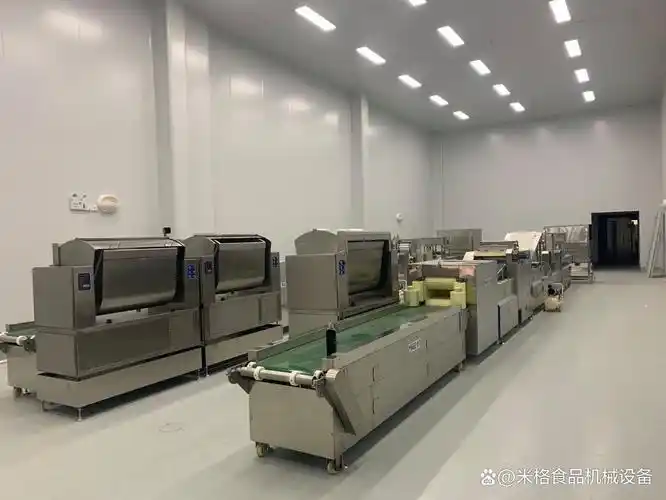
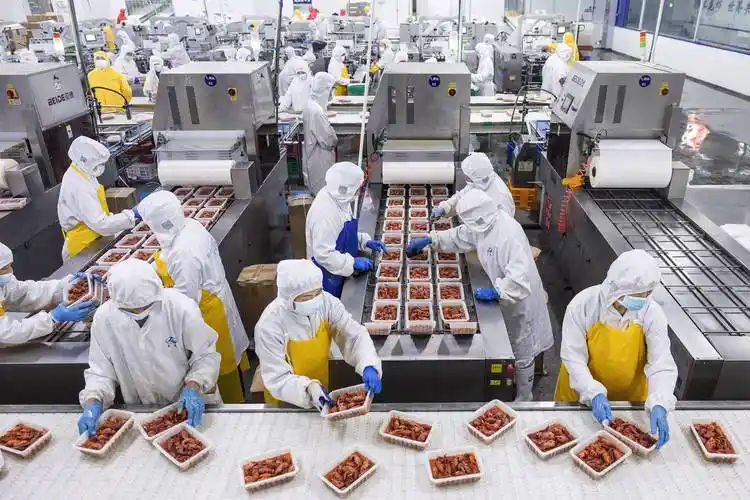
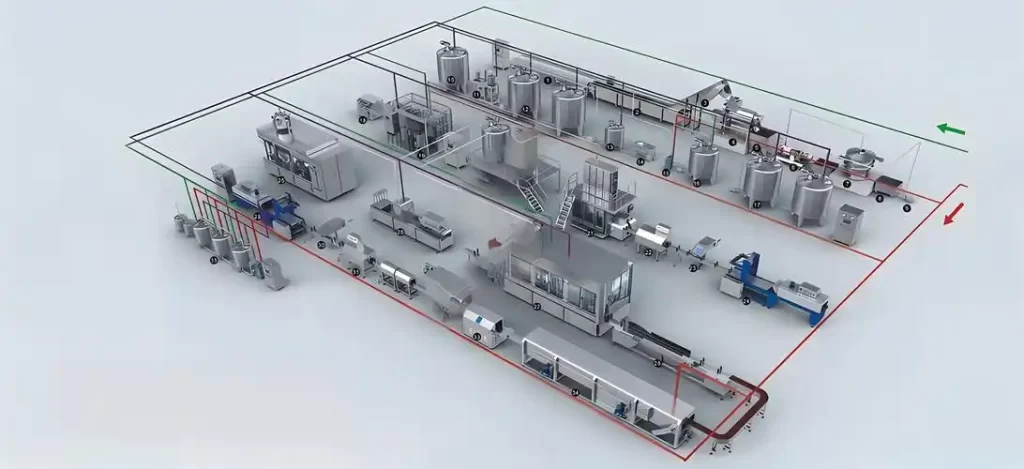
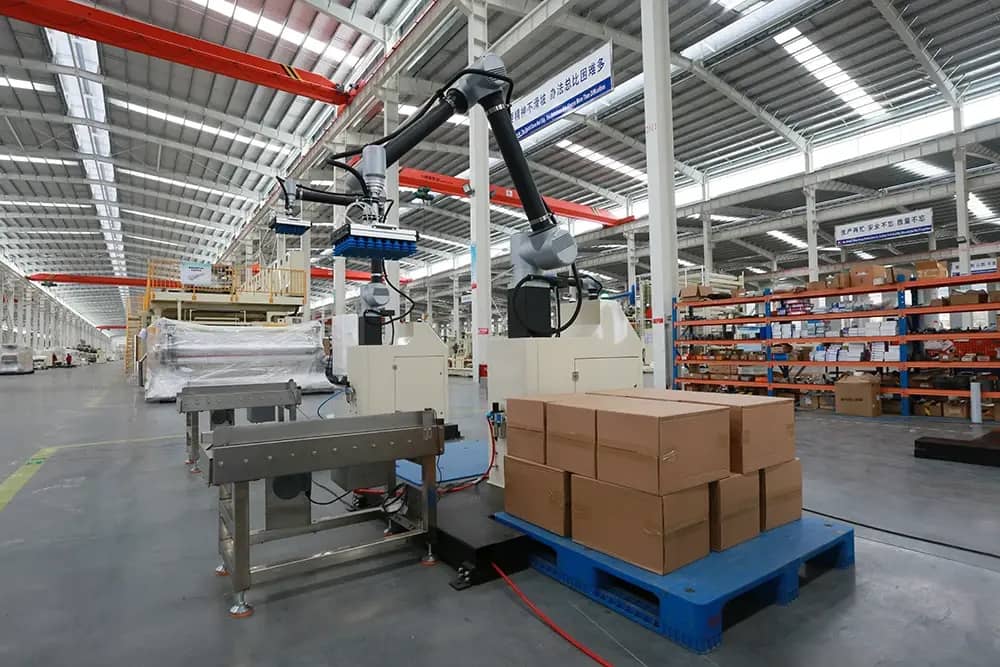
Food Producing Process Flow:
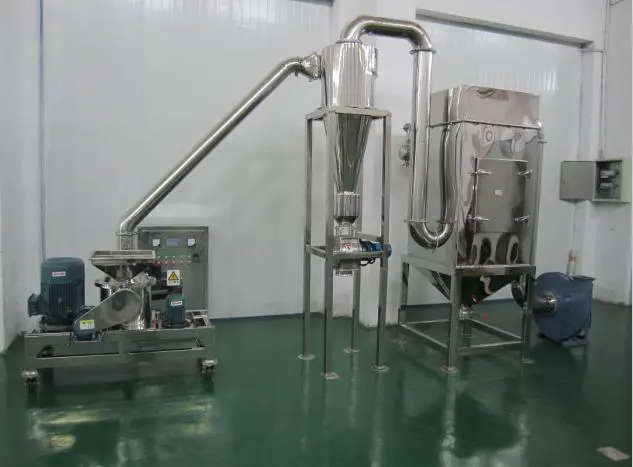
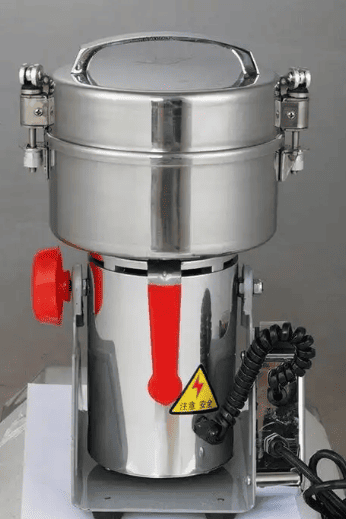
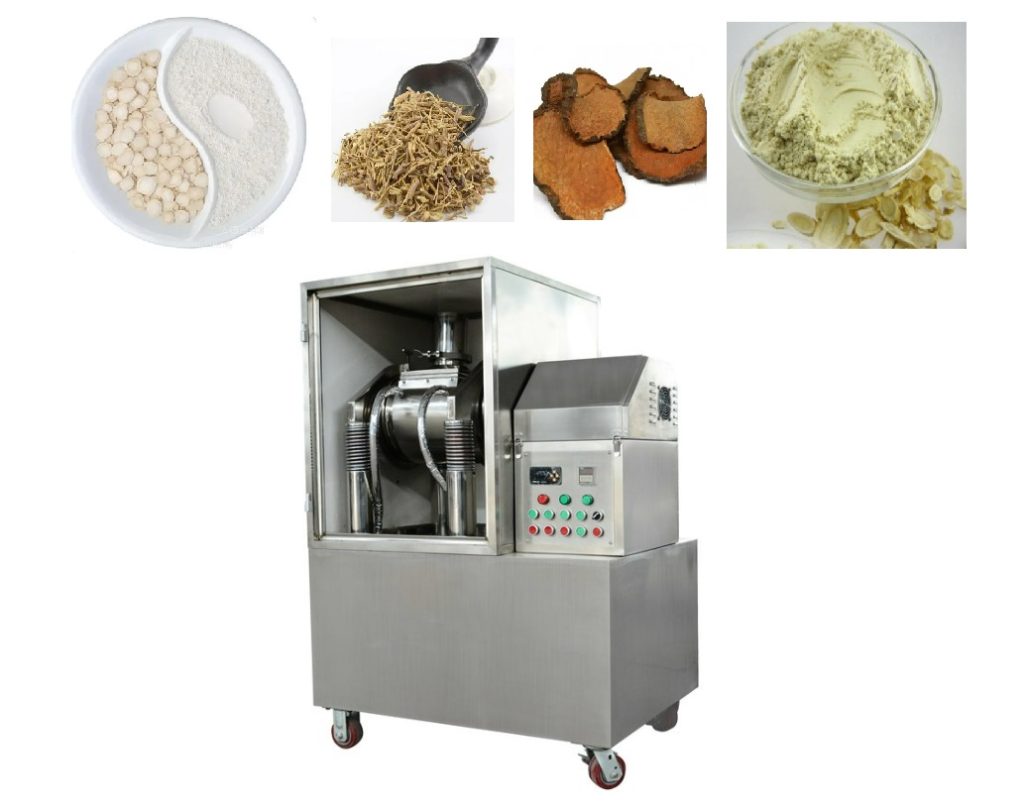
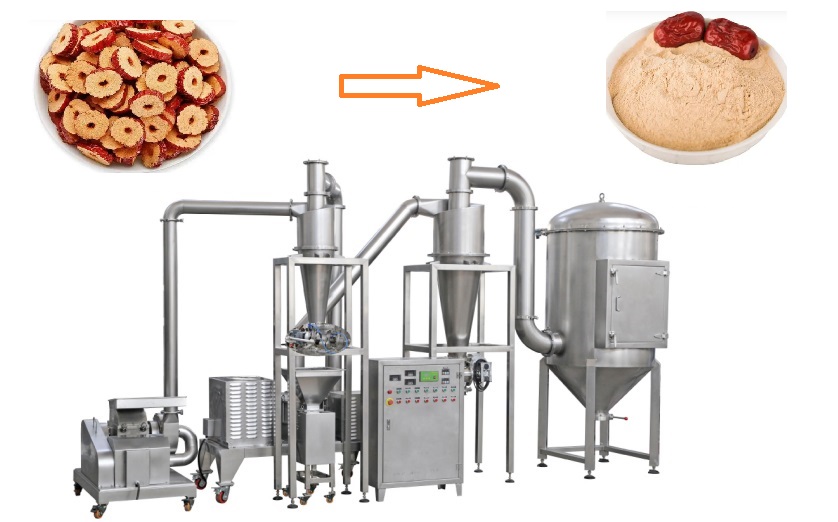
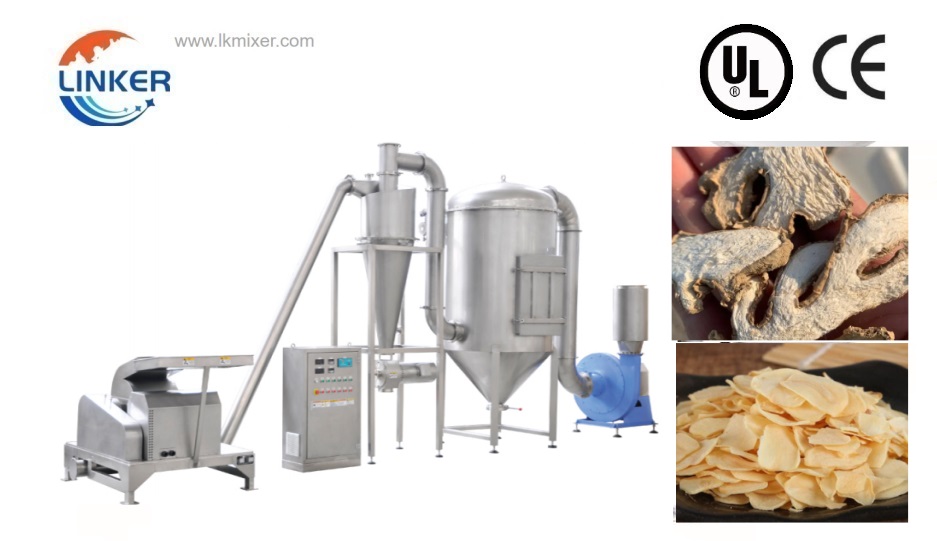
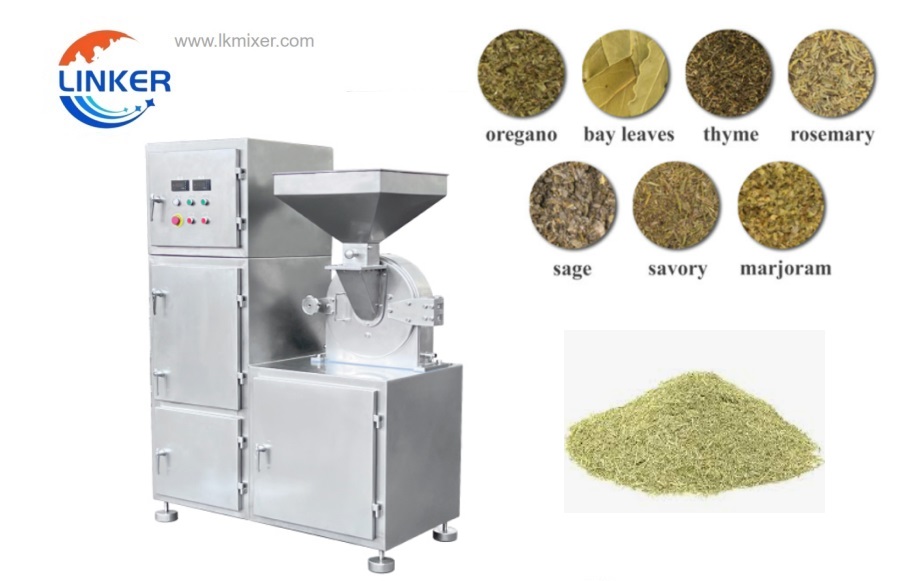
Ultrafine grinding is one of the very key procedure in whole production line. It depends how many mesh that customer need to produce. That’s to say this machine can decide what kind of material will get finally before mxing.
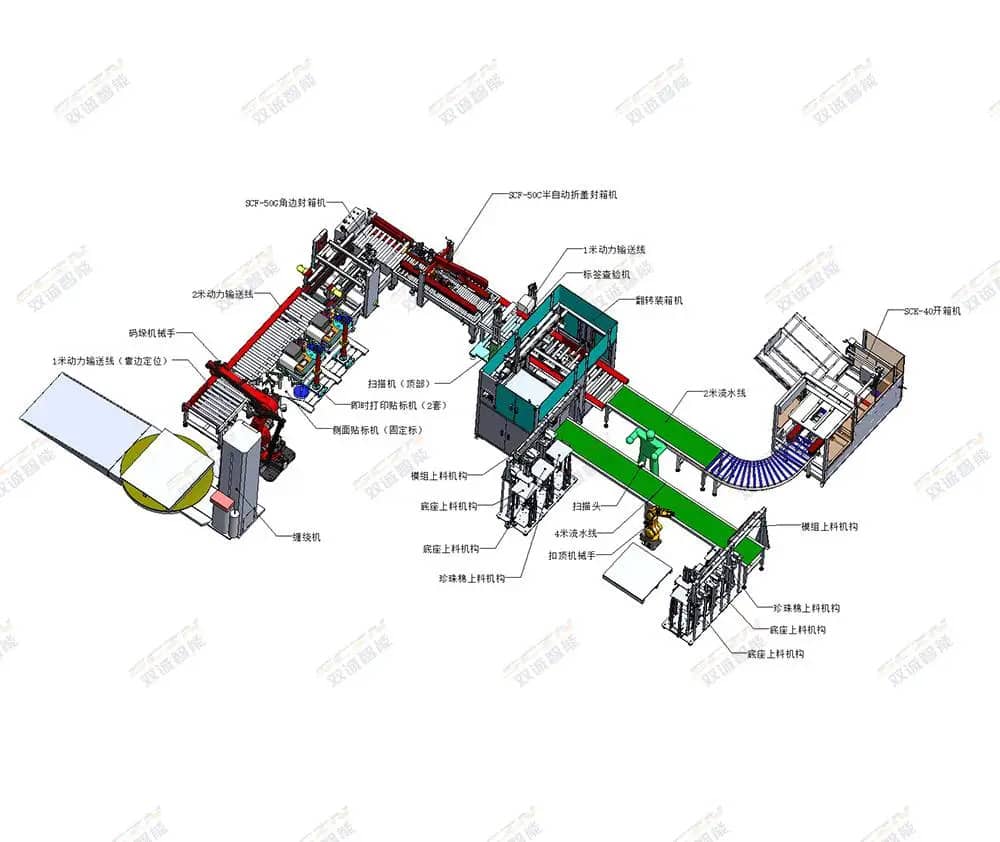
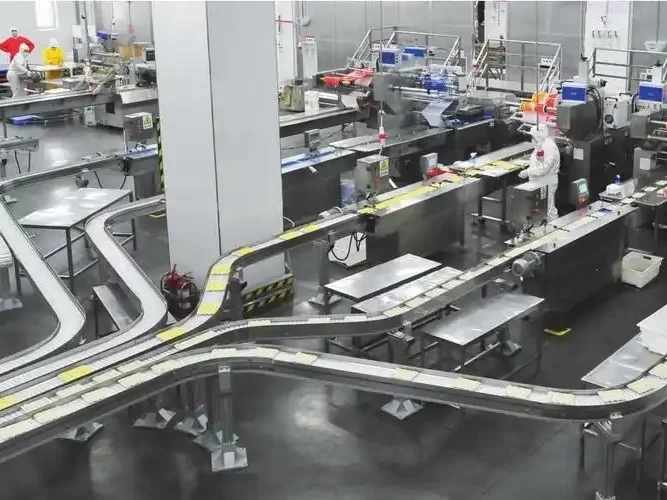
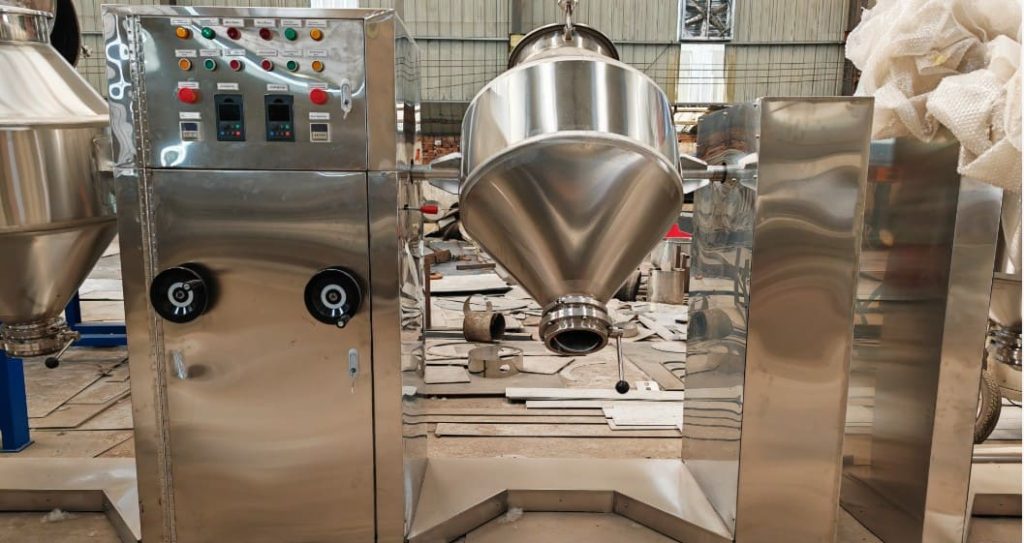
Coarse Crusher Machine —>Grinding Machine —> Vibrating Table Sifter Machine—>Mixing Machine—>Packing Machine —> (Printed Packaging Film Roll or bags ) —> Filling, sealing machine, capping and Labeling Machine —>Pack into Box.

About LKMixer
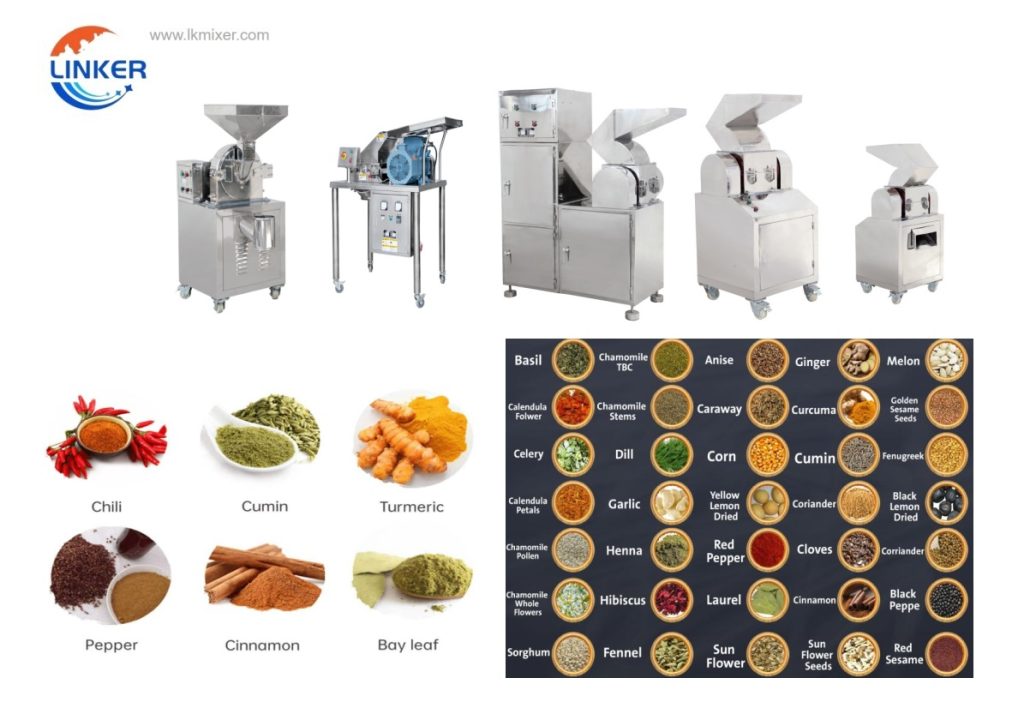
LKMixer is a professional manufacturer for fertilizer production line, grinder, mixer and granulator, shredder. These machines are widely used in food, pharmaceutical, cosmetic, health care products and chemical industries. The Food materials like Peanut, mushroom, seeds, potato, bean, tobacco, salt, cannabis, tea, Sugar, corn, Coffee, rice, pepper, grain as so on. Grinders have many types such as Pulse Dust Grinder which suitable for zero pollution environment, Turbine Mill which is suitable for coffee bean, 12-120mesh all can meet, Ultrafine Grinding Mill covers 80-200mesh, and also Winnowing Dust Grinder or other grinding machines like SF Hammer. Welcome to contact us for details. Contact us for more information. Proposal, catalog, quotation. Mobile/WhatsApp: +86 18019763531 Tel: +86 21 66037855 Email: sales@lkmixer.com
Contact Us
Tel: +86 66037855
Email:sales@lkmixer.com
Working Time: Monday ~Frinday 9:00AM~17:00PM
Please call us Whatsapp, or mail to us.
Grinder for Sale:
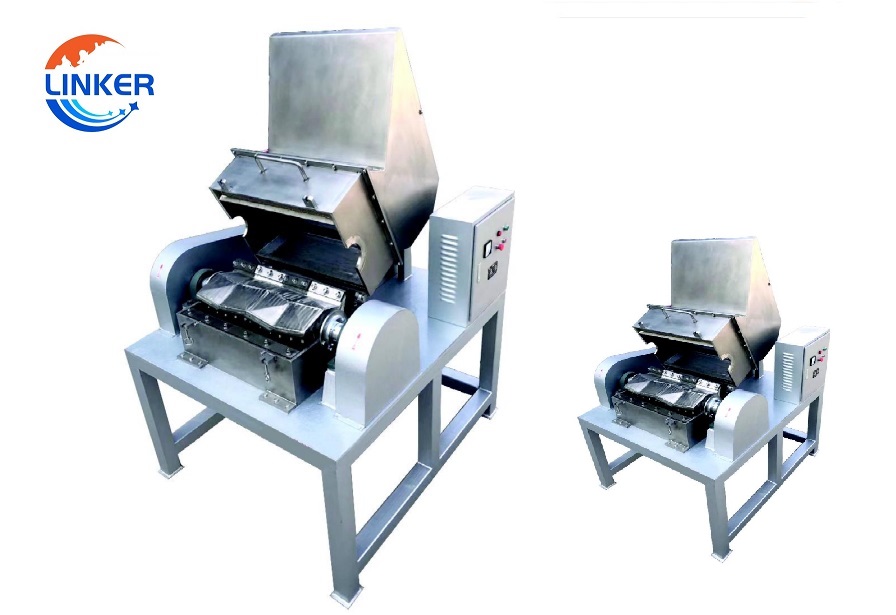
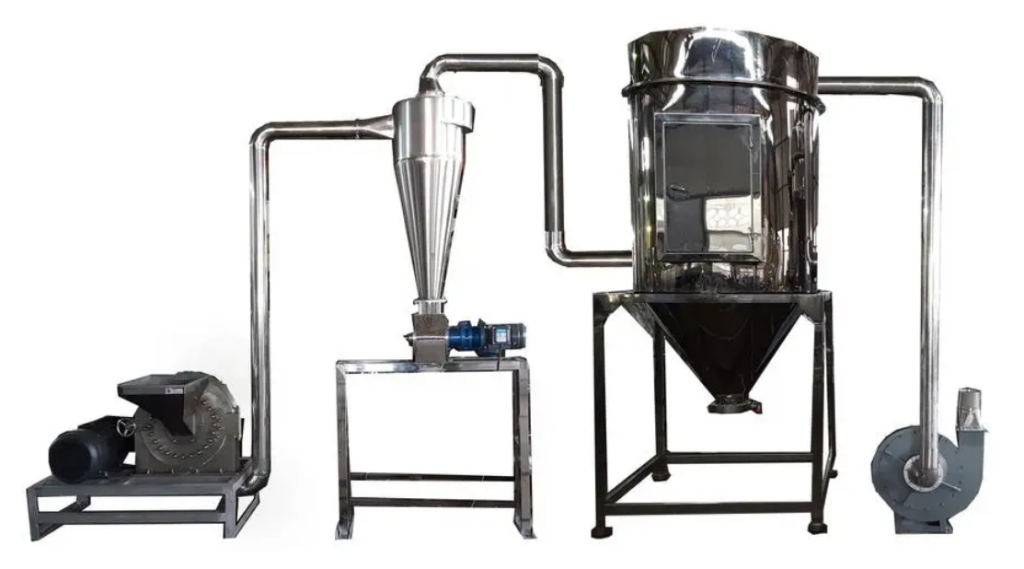
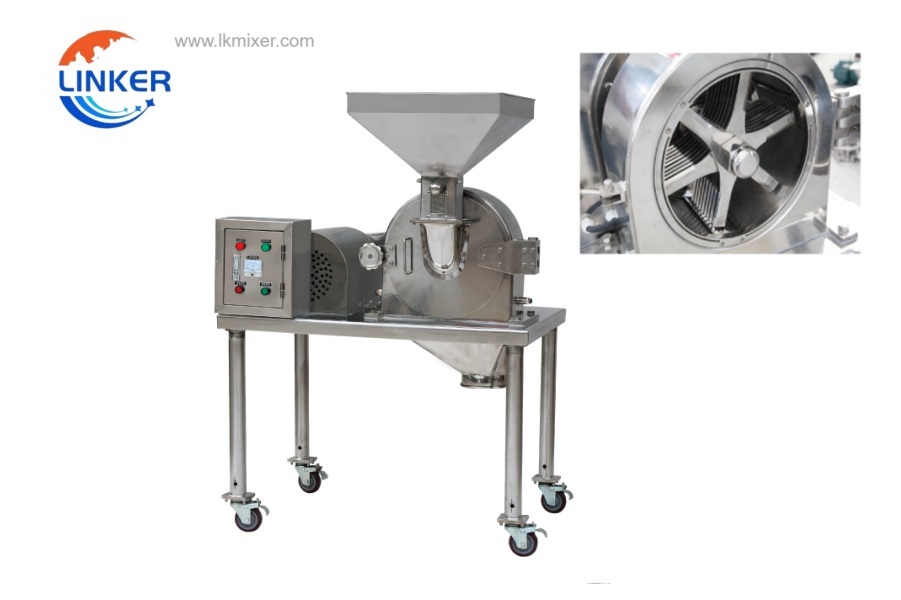
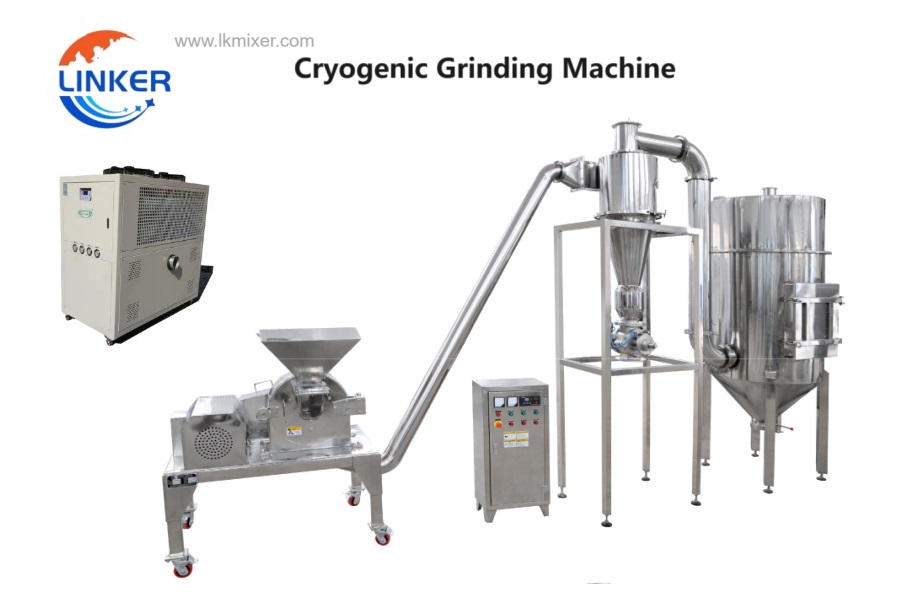
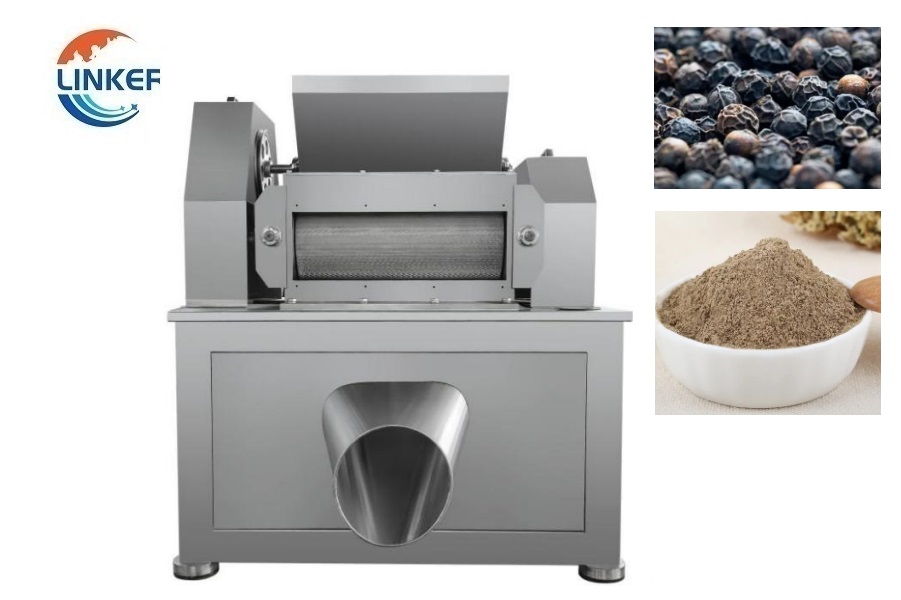
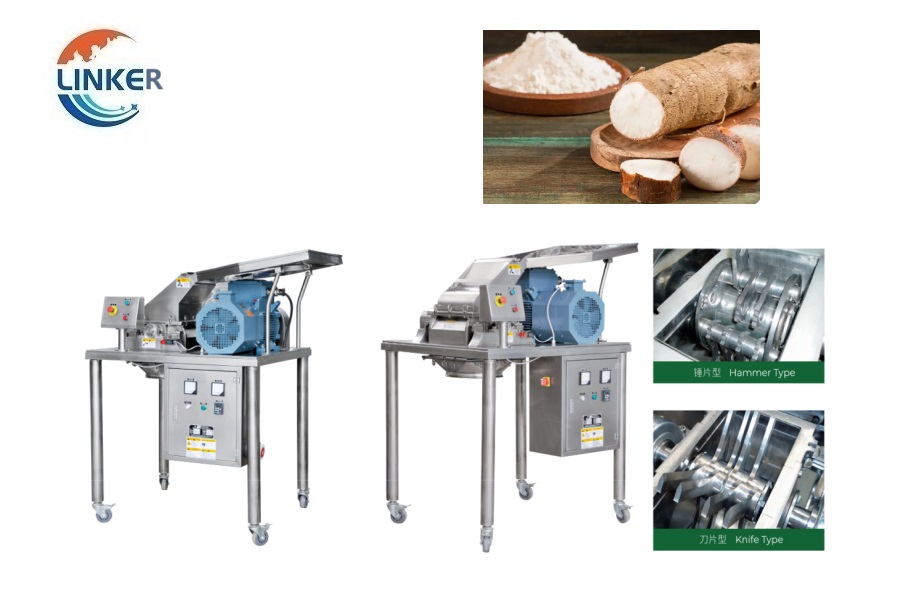
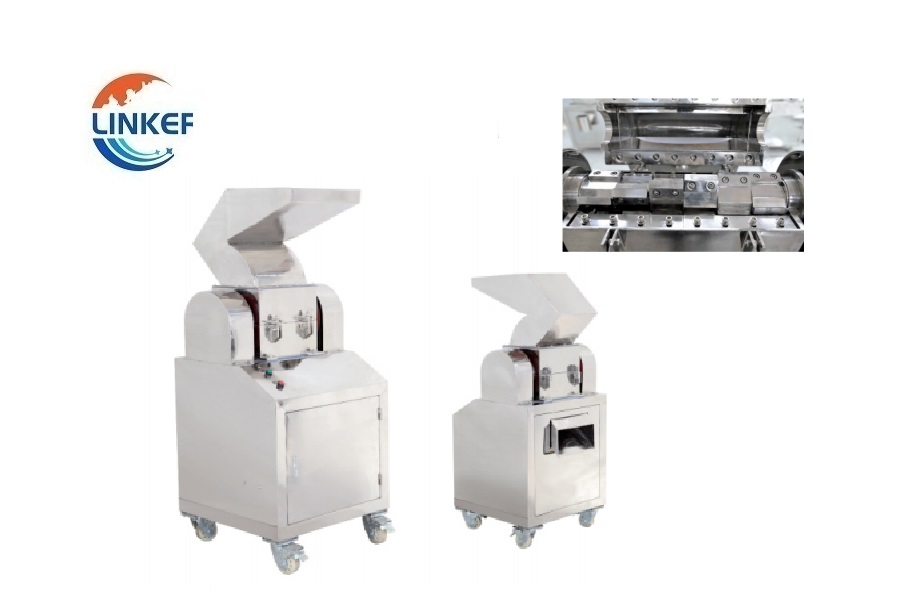
Rubber Powder Grinding Machine
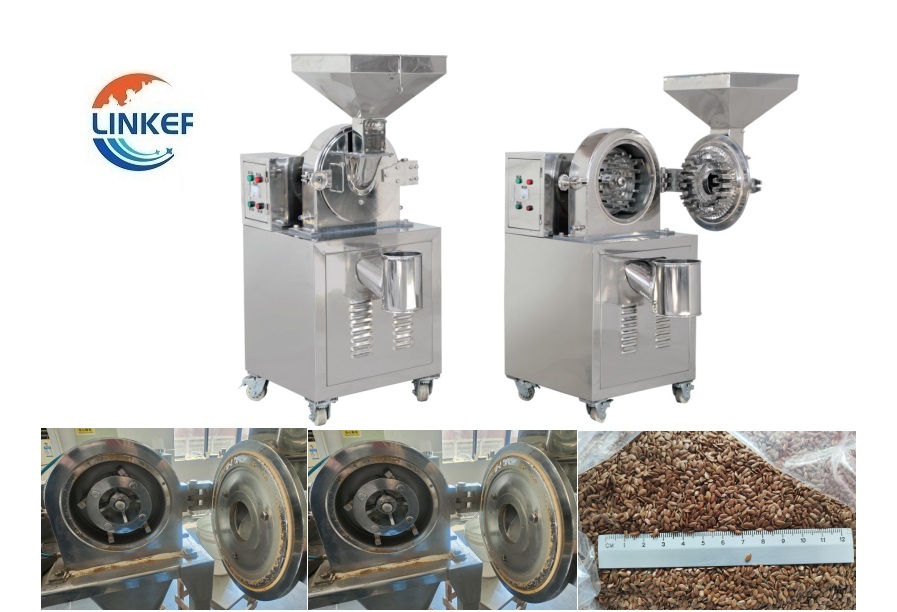
Rubber Powder Grinding Machine Industrial Cumin Seeds Grinder Youtube Video Customization Seeds Grinder According to your…
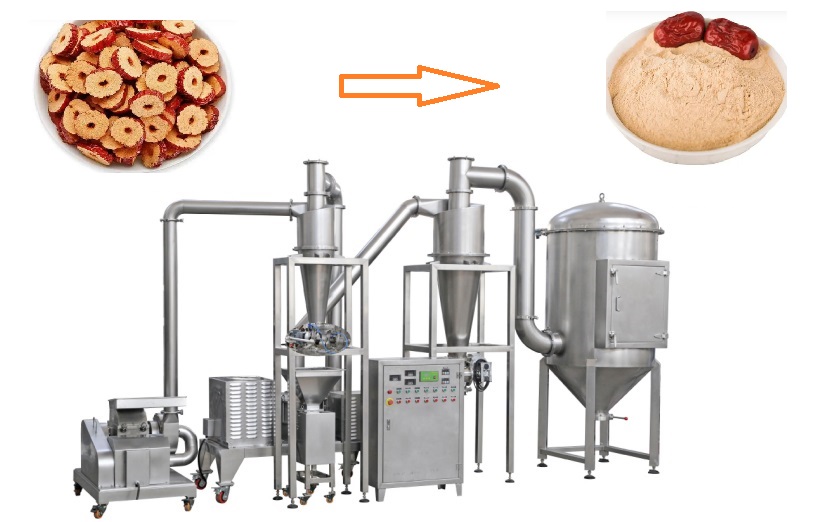
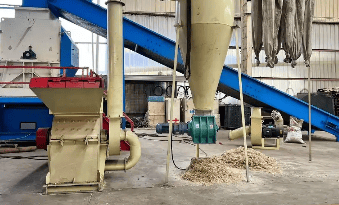
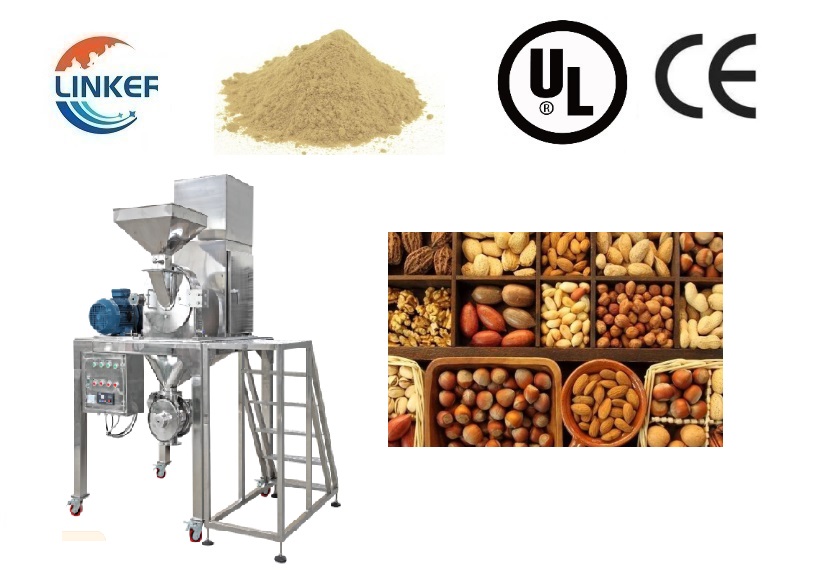
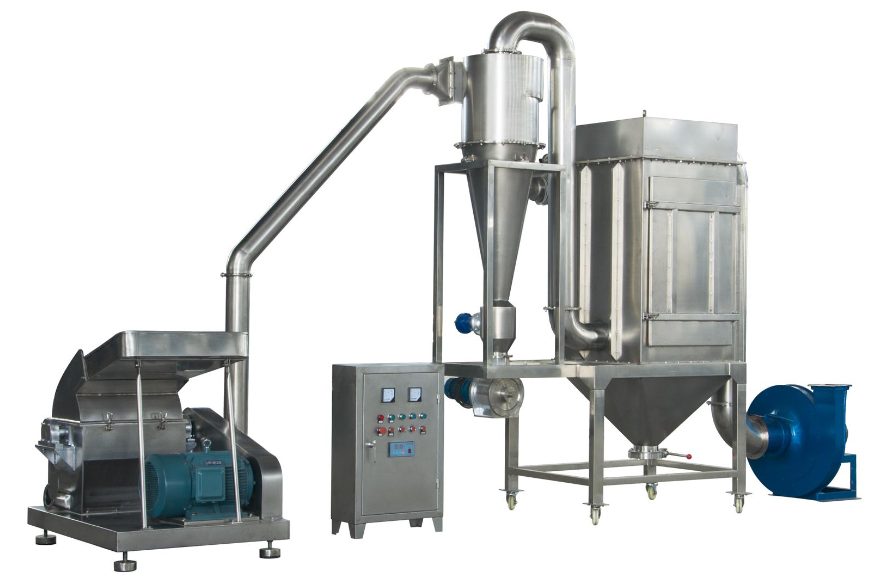
Blenders for Sale:
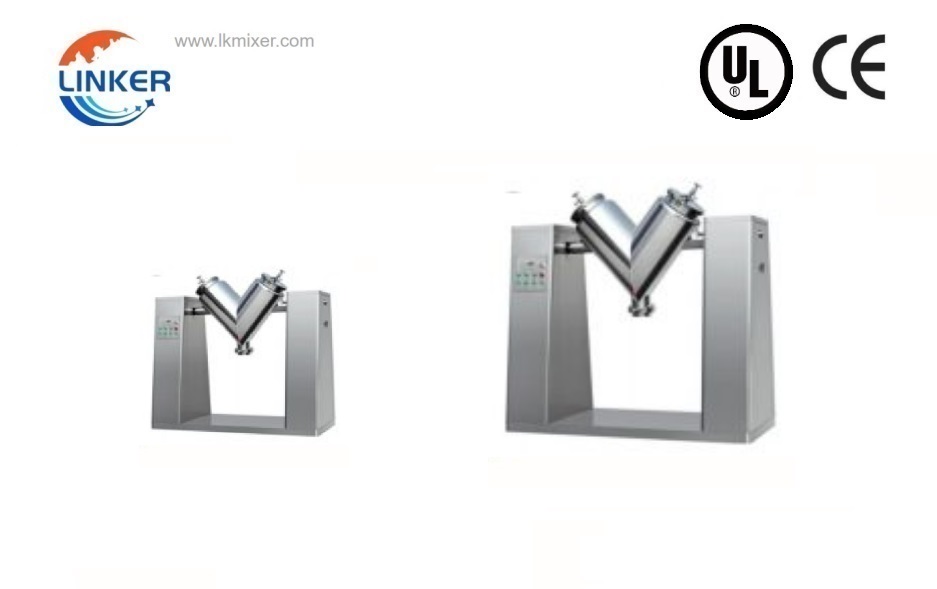
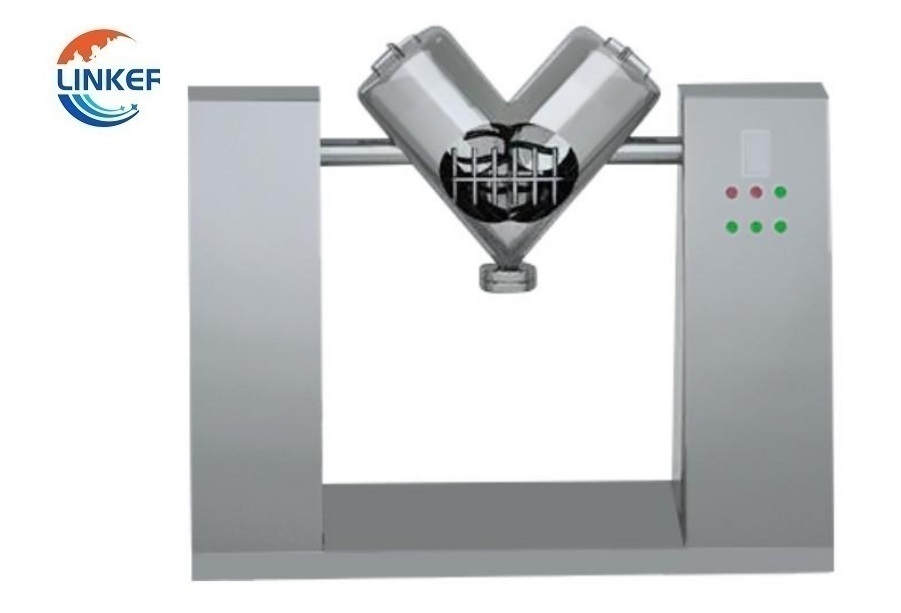
Small Blender 2L 5L 10L 15L 20L
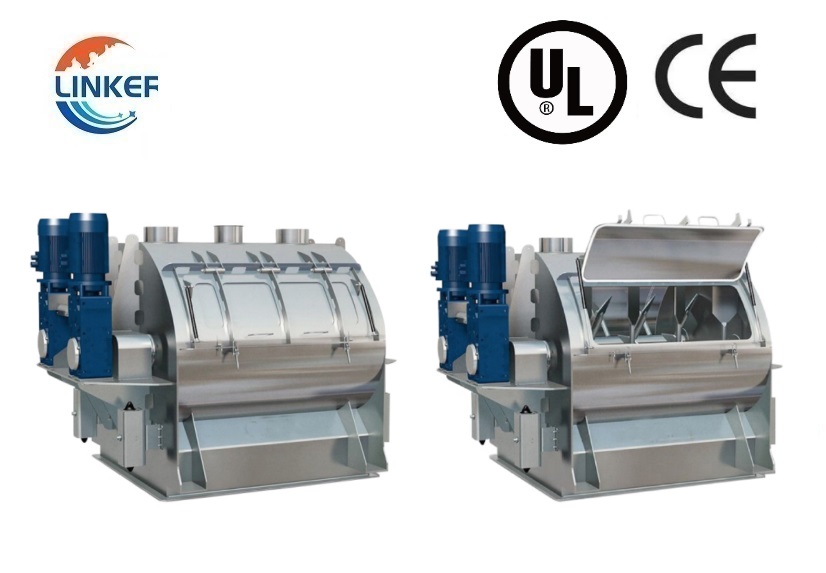
You may also interest in: Small Blender for Sale: LKMixer we have many different model of Small…Solid-Liquid Blender
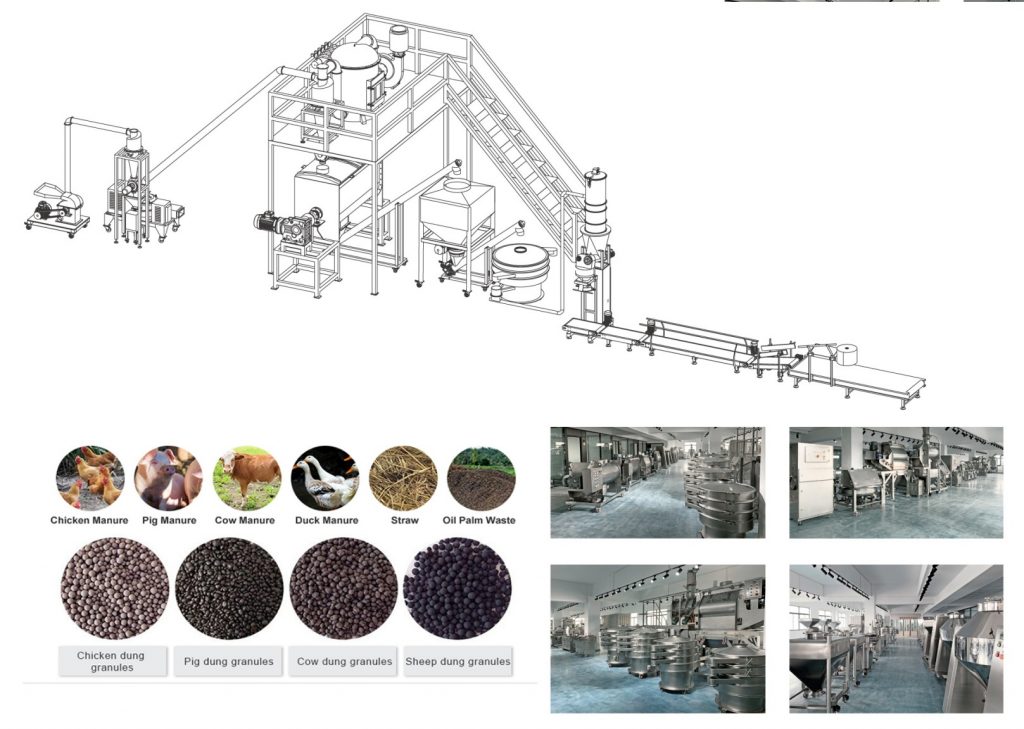
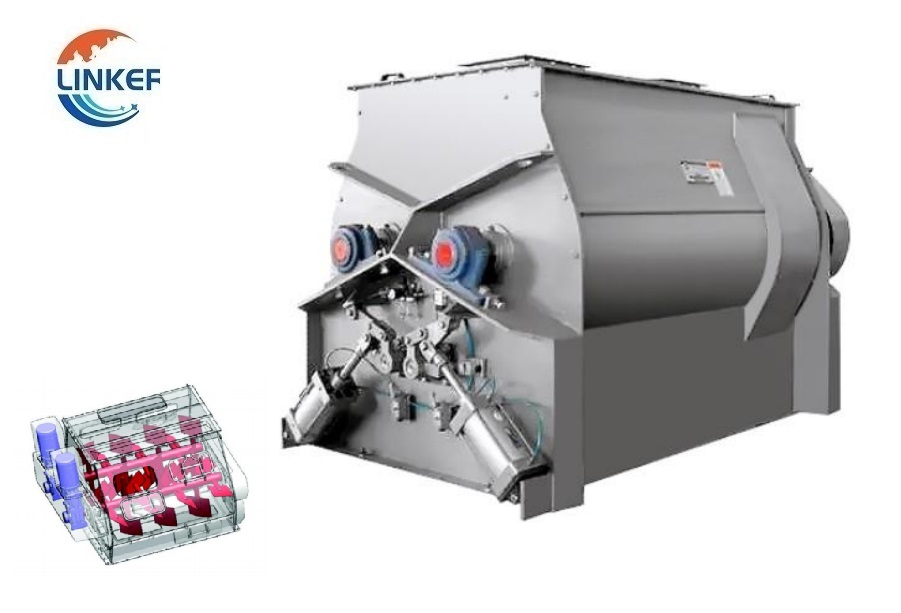
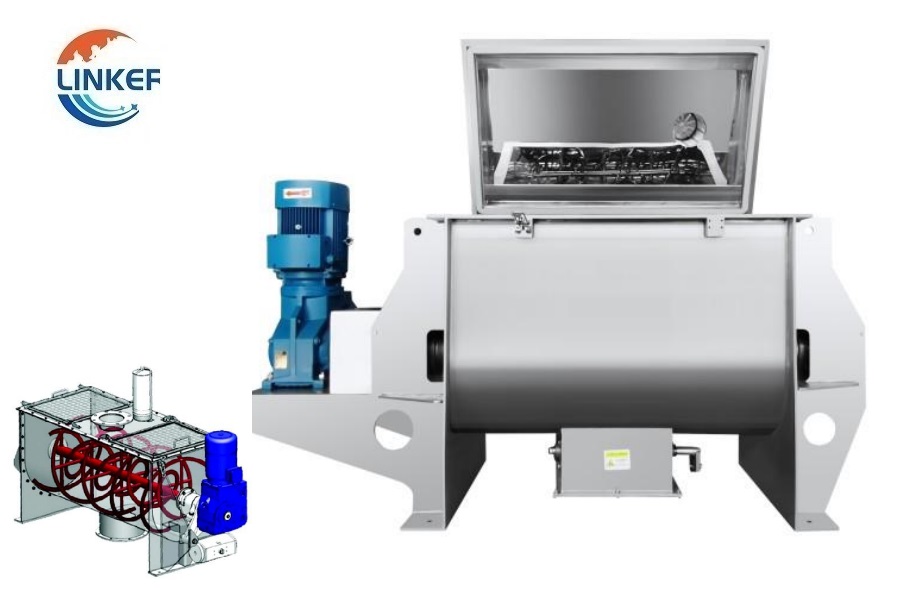
Solid-Liquid Blender for Sale: Solid-Liquid Blender also called Double Shafts Paddle Mixer, it is paddle type and…Fertilizer Production Line
What is fertilizer production line? Fertilizer production line is a whole set of equipment which used to…
Granulator for Sale:
Fluid Bed Granulator
What is a Fluid Bed Granulator? Fluid Bed Granulator is a machine mainly used for pharmaceutical granulation…Dry Granulating Machine
What is a Dry granulating machine? A dry granulating machine uses dry roller press technology to compress…BJB Grinding and Granulating Machine
What is a granulating machine? A granulating machine is an industrial device used to shape powdered or…
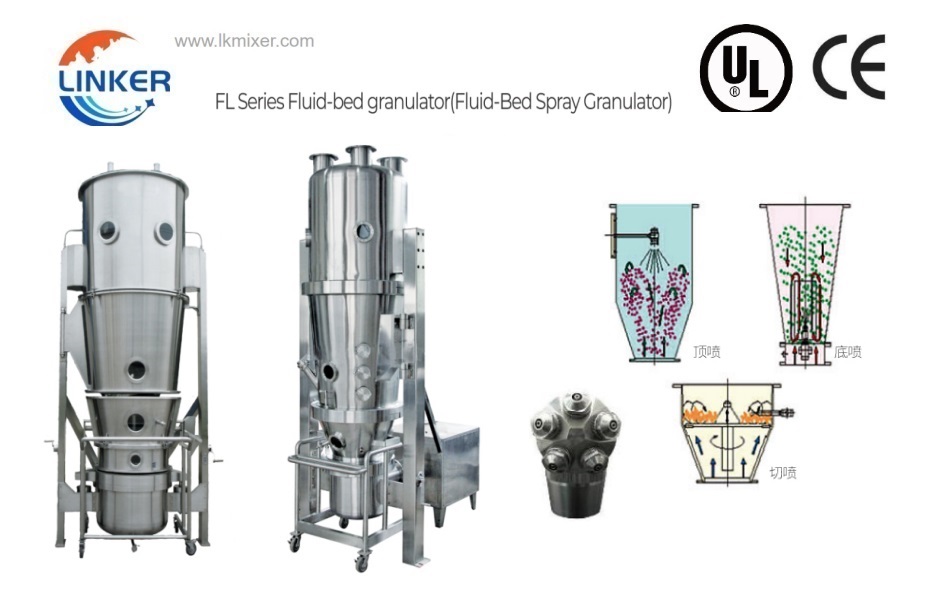
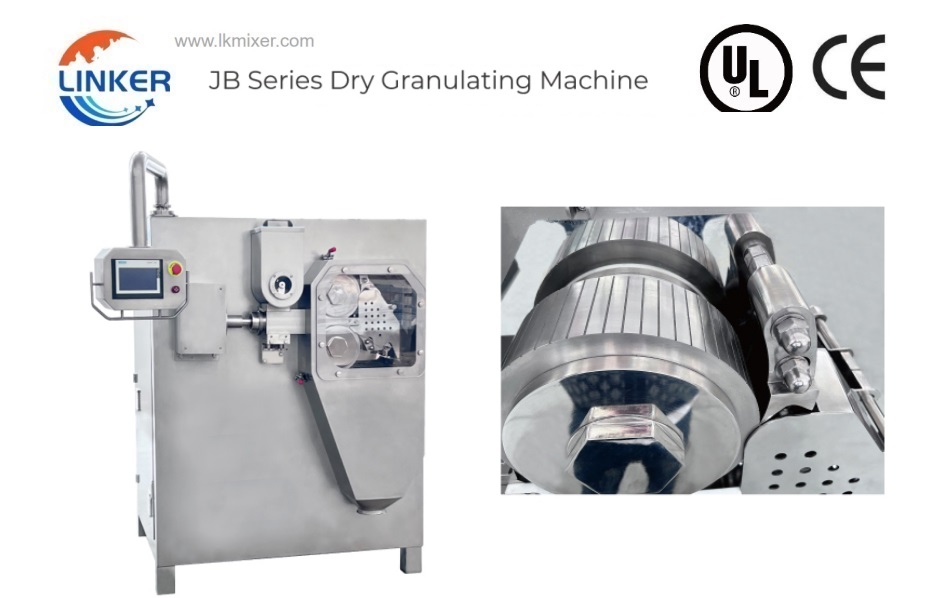
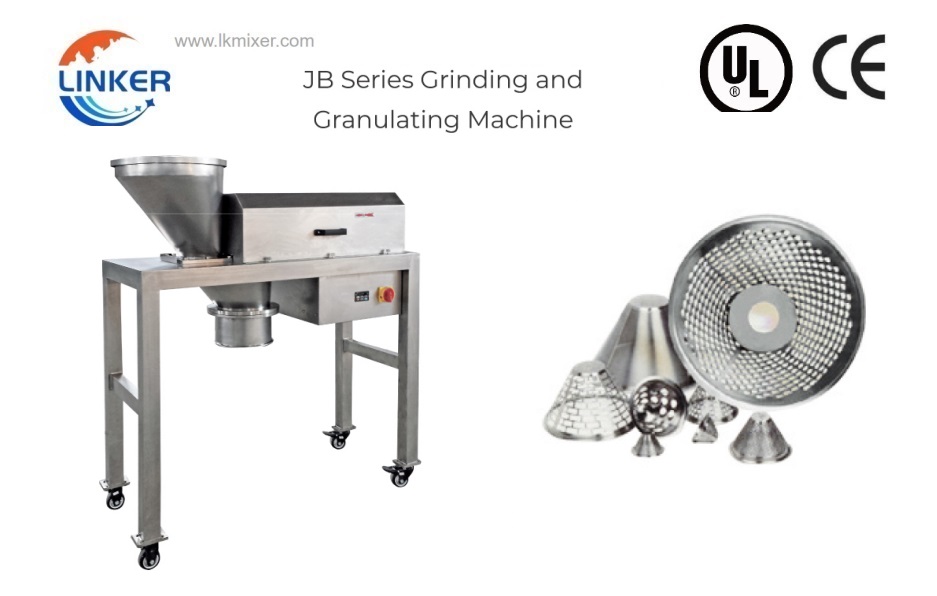
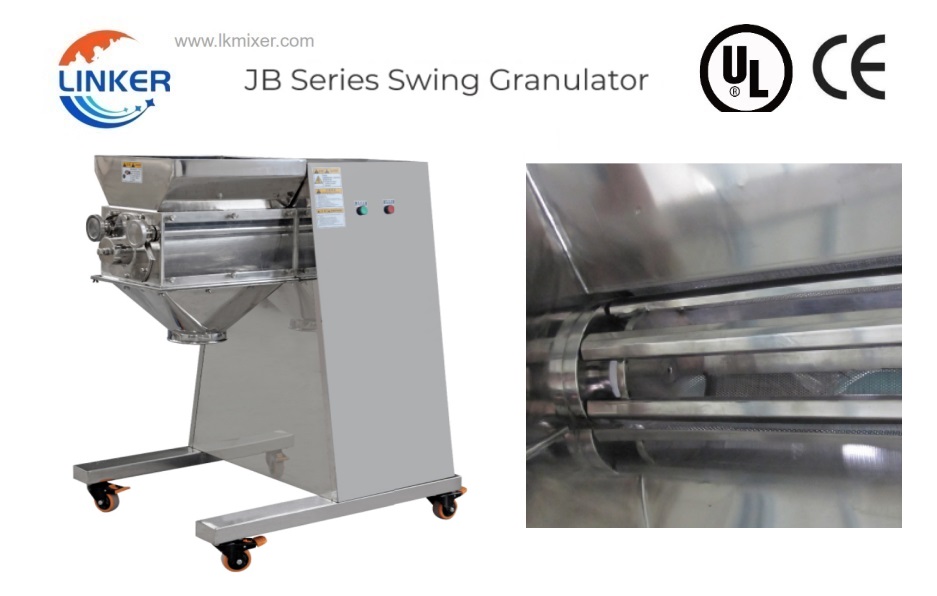
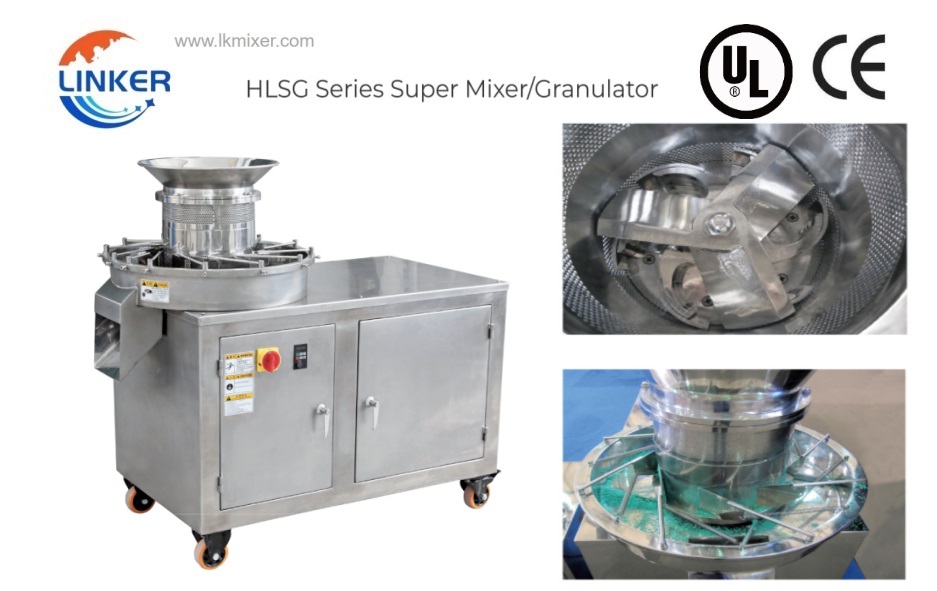
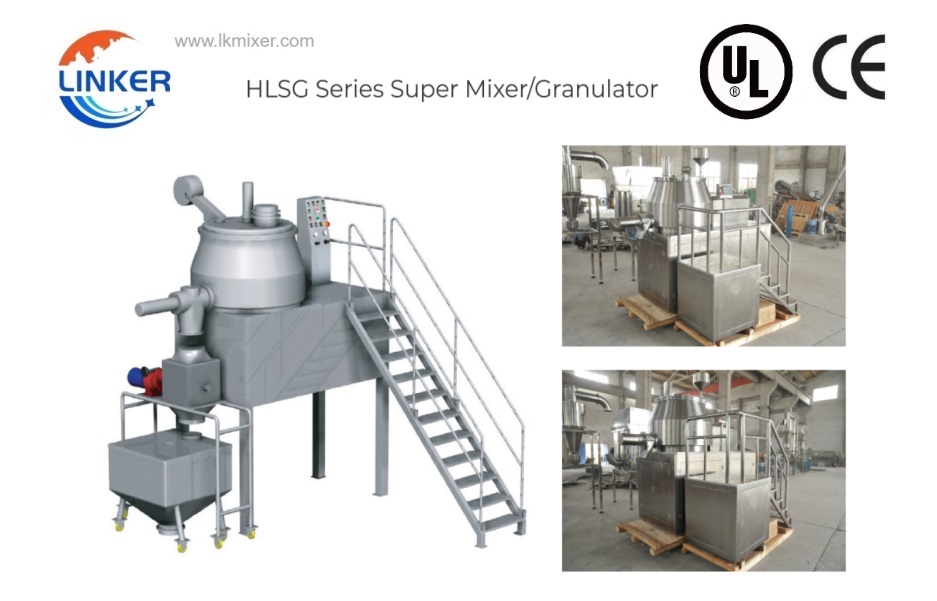
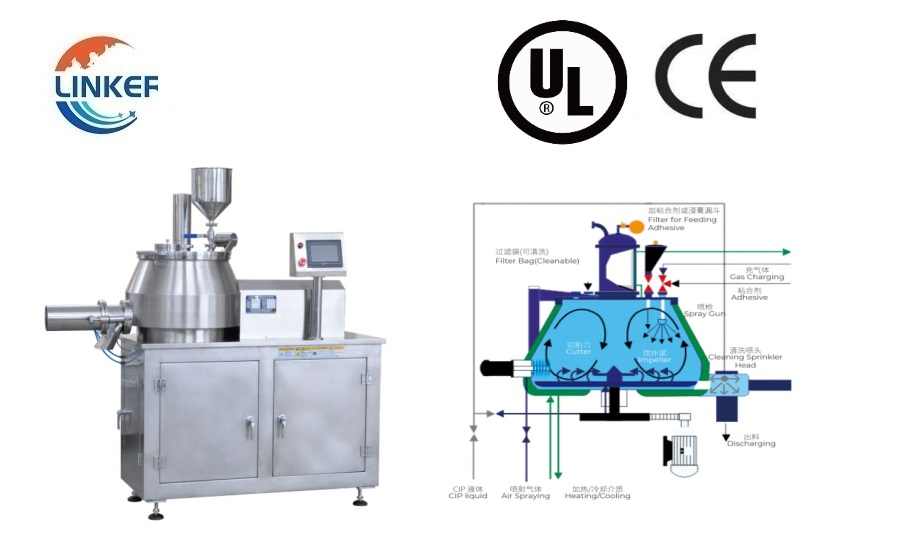
Conveyor and Auto Feeder for Sale:
Powder Feeder System Pump
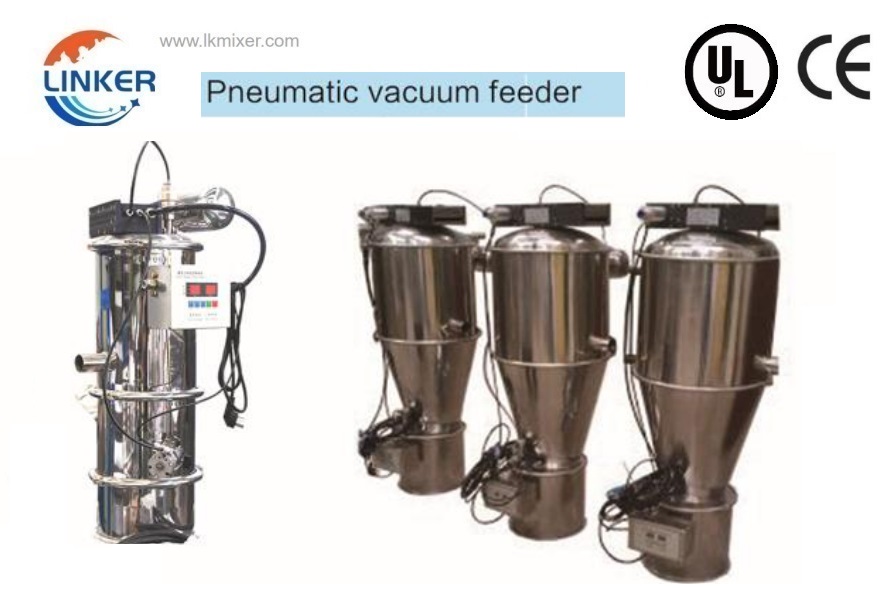
Vacuum Feeder Machine for Sale: Vacuum Feeder is a common used machine to transport the material into…Pneumatic Vacuum Feeder
Vacuum Feeder Machine for Sale: Vacuum Feeder is a common used machine to transport the material into…Electric Vacuum Feeder
Vacuum Feeder Machine for Sale: Vacuum Feeder is a common used machine to transport the material into…
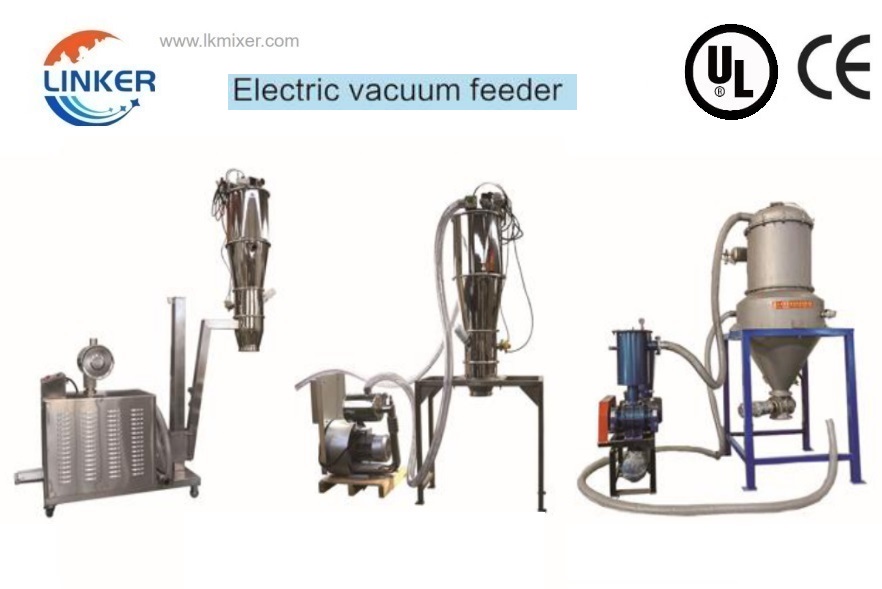
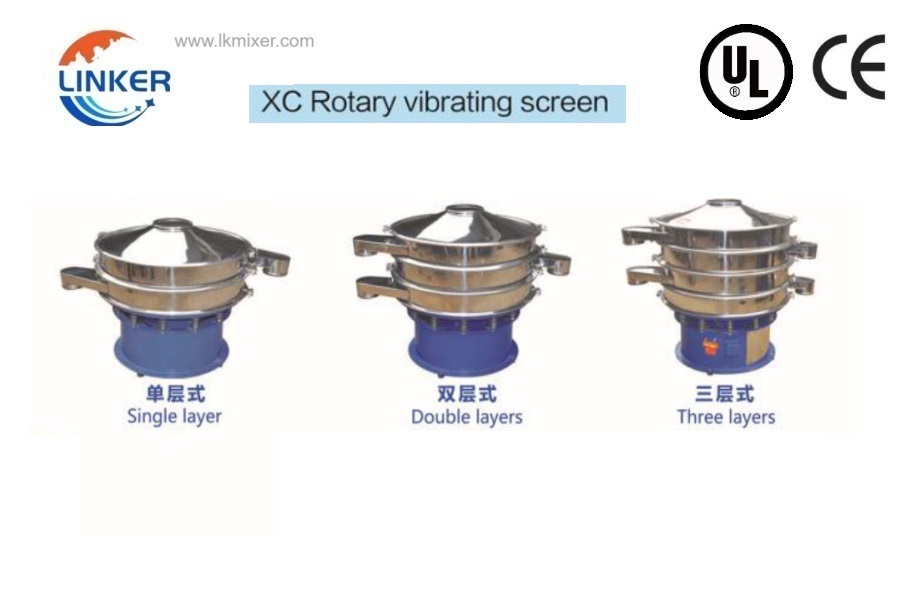
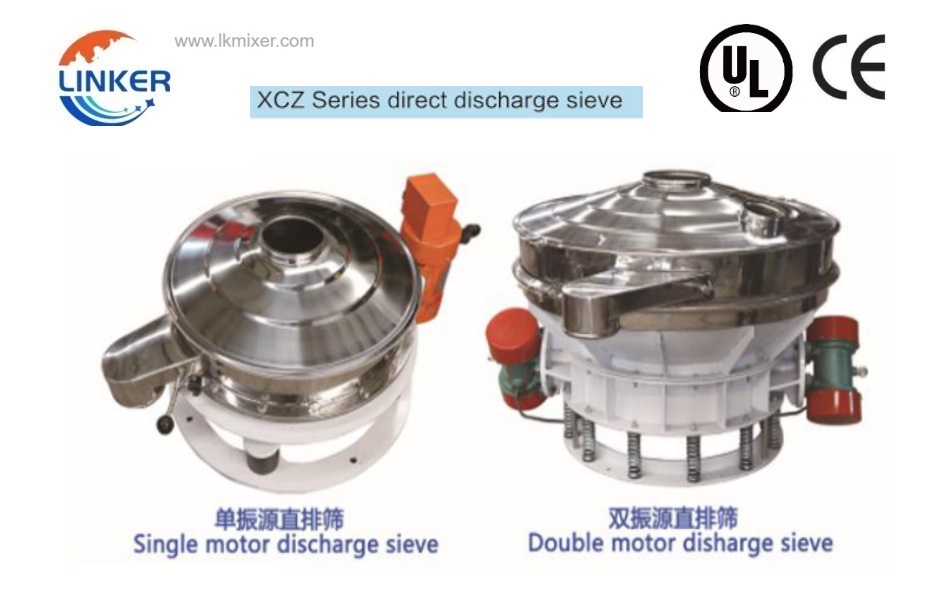
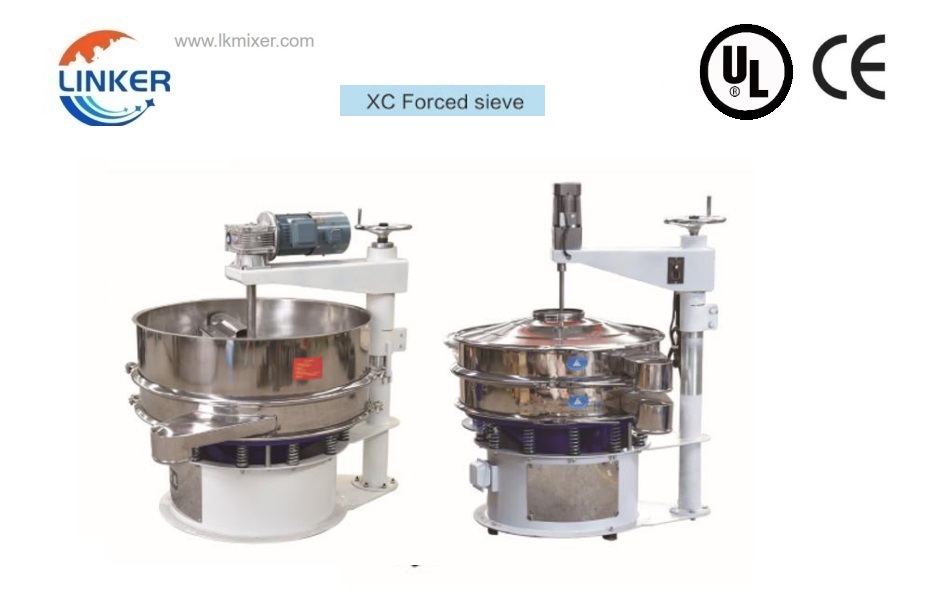
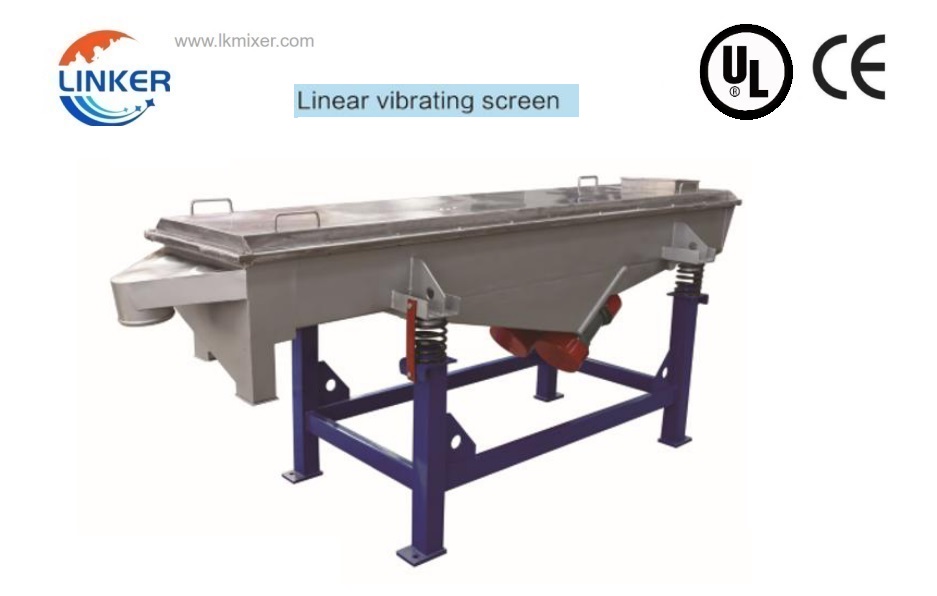
Sifter and screen for Sale:
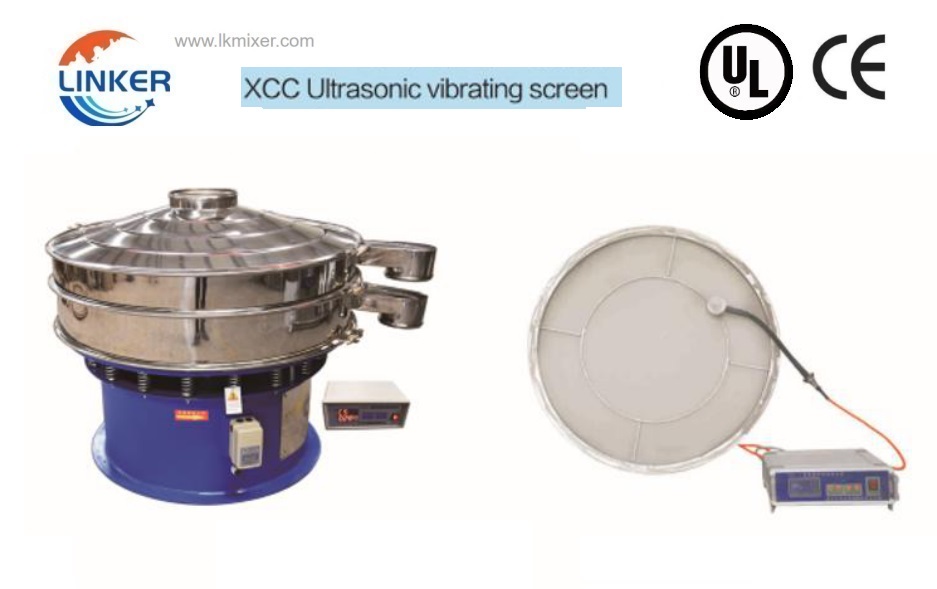
Ultrasonic Screen
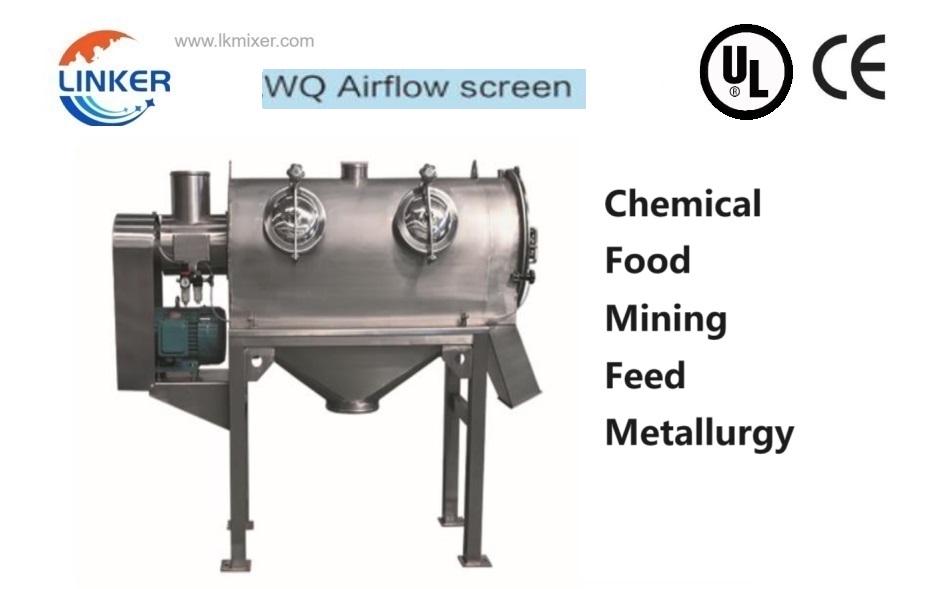
Ultrasonic Screen Machine for Sale: Ultrasonic Screen is a common used machine after the grinding process, it…Rotary Sifter
Rotary Sifter Machine for Sale: Rotary Sifter is a common used machine after the rice grinding process,…Rice Sifter Machine
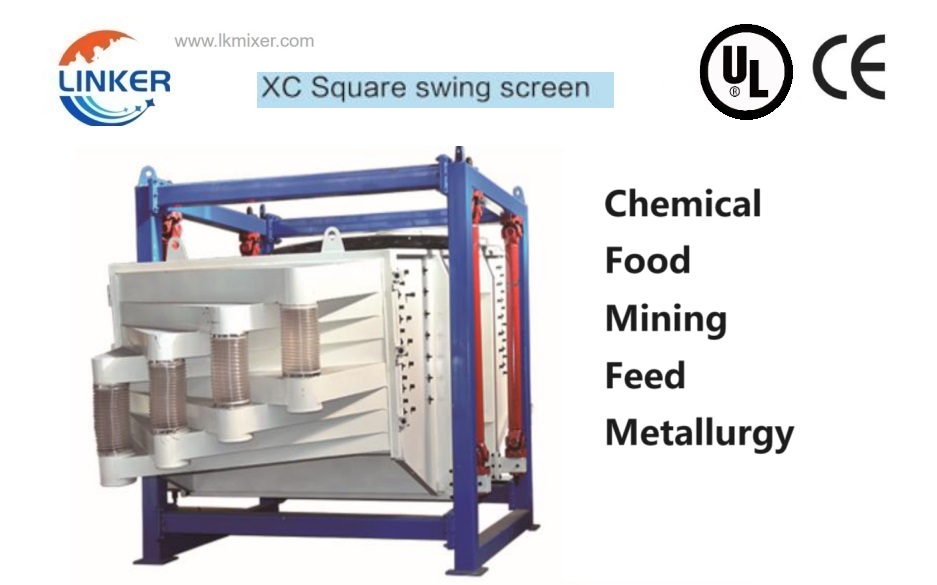
Rice Sifter Machine for Sale: Rice Sifter Machine is a common used machine after the rice grinding…
Auxiliary Machines, Dryers for Sale:
How do people control robotic arms?
How do people control robotic arms? The way people control robotic arms has evolved from a single…What is a robotic arm for humans called?
What is a robotic arm for humans called? Robotic arms for human use are given various professional…How advanced are robotic arms?
How advanced are robotic arms? Robotic arms have advanced beyond the scope of traditional “automated tools” and…


FAQ(Click and See More)
Why Choose Us?
We have 20 years manufacturing experiences; 15600 cubic meters factory area; 5000sets annual capacity; 55 professional engineers;
What’s your main maket?
South America: Brazil, Colombia, Peru, Bolivia, Uruguay, Paraguay ;Romania;
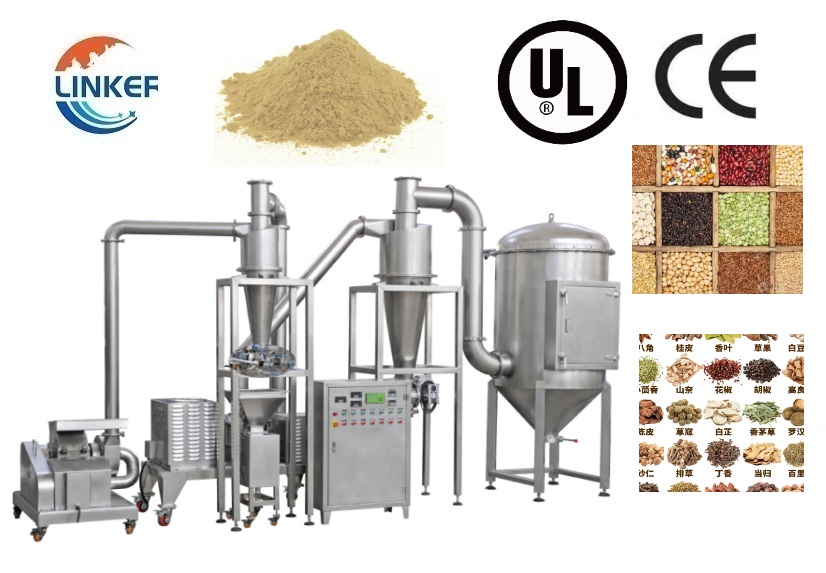
USA with UL Certification
Middle East: Saudi, Arabia, Oman, Turkey
Europe: Russia, Australia, Belarus, Ukraine, Poland
Can you support OEM?
– Yes, OEM or ODM. Machine can be customized according to customer detail requirement, including capacity and voltages, motor certifications.
– Drawing and raw materials also can be customized.
What after-sale services?
– 7*24 customer service online;
– 7*24 engineers online services;
– 12 months warranty services.
WHAT kind of MACHINE YOUR COMPANY HAVE?
CAN YOU GIVE ME GUIDE ON OTHER MACHINE ? TO FULL MY PRODUCTION LINE
YES ! Our f have factory build more than 20 years now, we can design and customize whole line, besides of the grinding machine, mixing machine, we can also fully support to provide the washing machine, cutting machine, drying machine, packing machine, filling machine. Though we are not producing these machine, but our brother companies co-work together for over 20 years, we have rich experience in providing you a full effective production line, fully automatically or semi-automatically.
HOW TO VISIT YOUR COMPANY?
Our Factory located in Jiangsu Province, very near to Shanghai, you can fly to Shanghai Pudong Airport, we pick you up and take you by car 2 hours ride, can reach our factory, welcome your visit.
WHAT’S YOUR BEFORE & AFTER SERVICE ?
1) Before your purchasing, we need to know your detail request, such as what kind of material you want to grind and mixing, what final product powder or granule you want to reach. Because different material and powder sizes request of different machine to do. We can provide professional advice and rich experience help to choose machine. Most of the products we have already did before for other customer, trail test or run mass production, so we knows which machine is best in performance of grinding and mixing. This is of very importance in helping you choose the right model. We also wish this can help our customer a lot. Even the material we didn’t do before, we will prepare the same material and to do the trail test and send video to you for your reference.
2) One Year guarantee of machine quality. If the machine have problem within one year, we will send you the spare parts to you for replacement, but this not including the damage caused by human causes. We also have 24 hours on line guide for customer, if you have operation difficulty, we will guide by video and on line communication with our engineer for your emergency debug.
3) For small machine, we sell with whole machine, it’s no need to install, and easy to operation, no problems for operation. While for large machine, its’s also not difficult to install with video guideline, but if you need, we can assign our technicians to go abroad, the round ticket, food and residents will be paid by customer.
HOW ABOUT YOUR PAYMENT TERM?
Our payment term is T/T. 50% payment in advance, rest of 50% payment finish before the goods shipped. When we finish the machine production we will do trail test and run the machine take videos for your green light. You pay the rest of 50% payment then.
Recommend Reading
Do l need to toast spices before grinding?
Sometimes yes, sometimes no – toasting spices before grinding isn’t always mandatory, but it’s a…What is an ultrafine grinder?
What is an ultrafine grinder? An ultrafine grinder is a specialized grinding device that produces…What are the essential pieces of equipment for a [specific product] line? (e.g., bakery, sauces, beverages, snacks)
A core set of unit operations—ingredient preparation, mixing/combining, processing/cooking, forming, and packaging—are always at the…