
Automatic Ginger Powder Production Line
Ginger Powder Process Flow
- Ginger Washing Machine
- Ginger Pealing and Cutting Machine
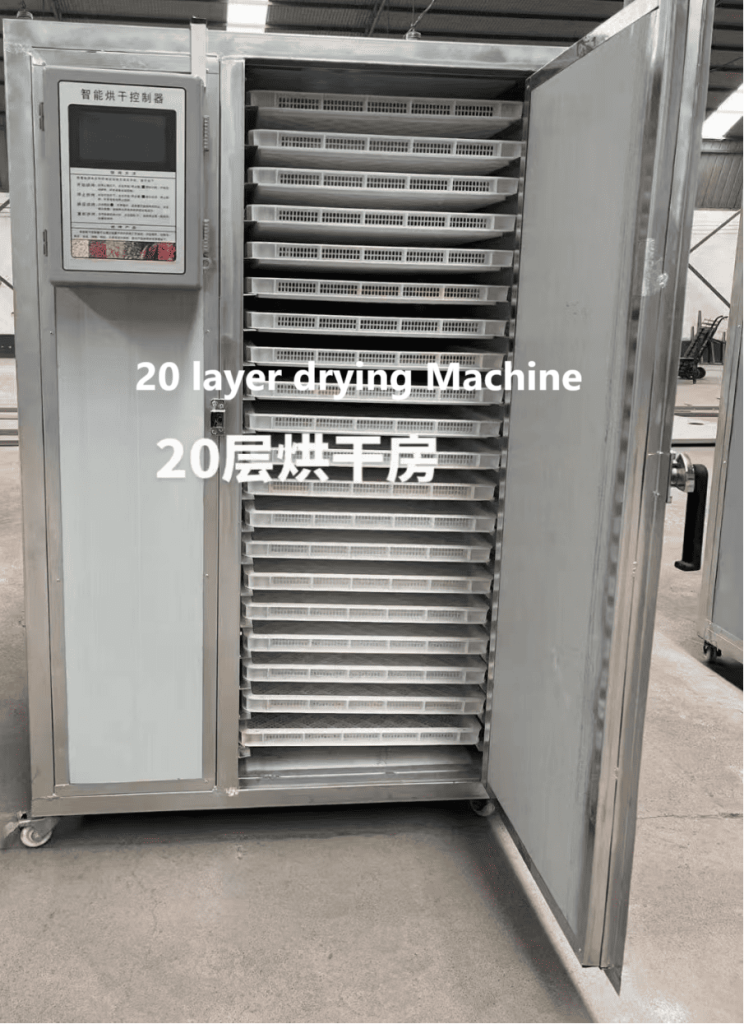
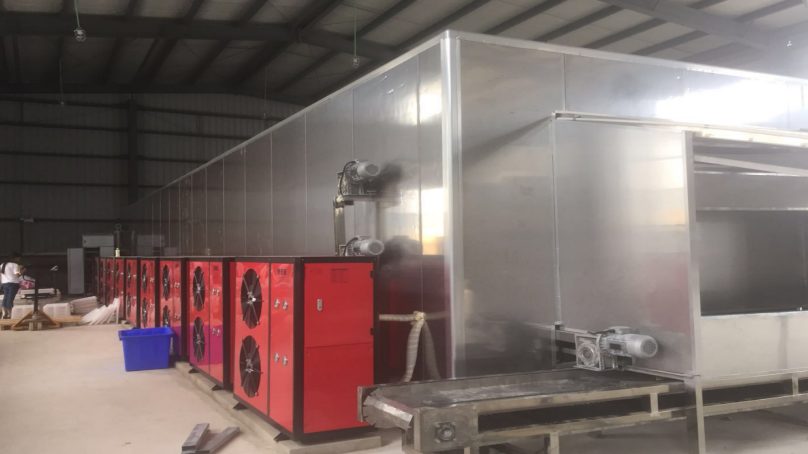
- Ginger Drying Machine
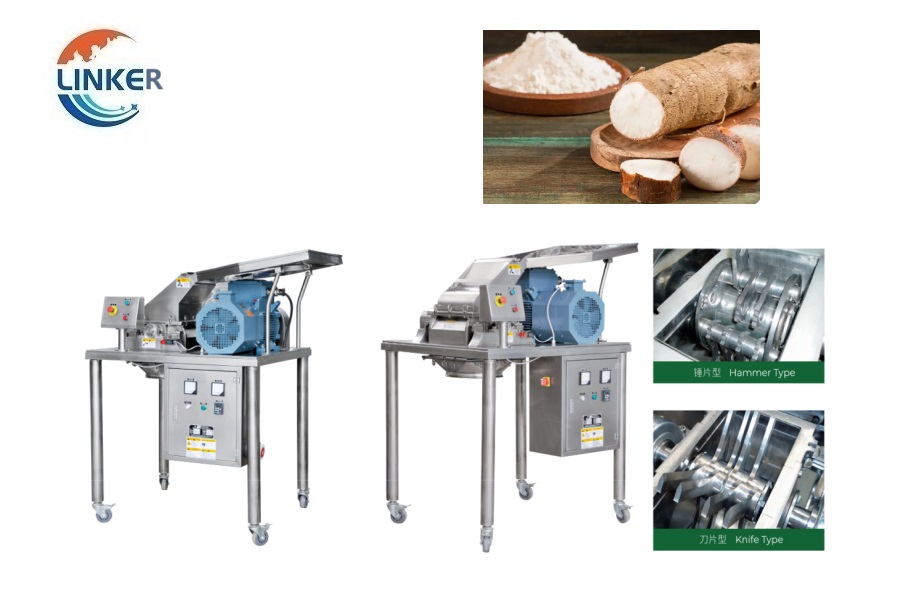
- Ginger Grinding Machine
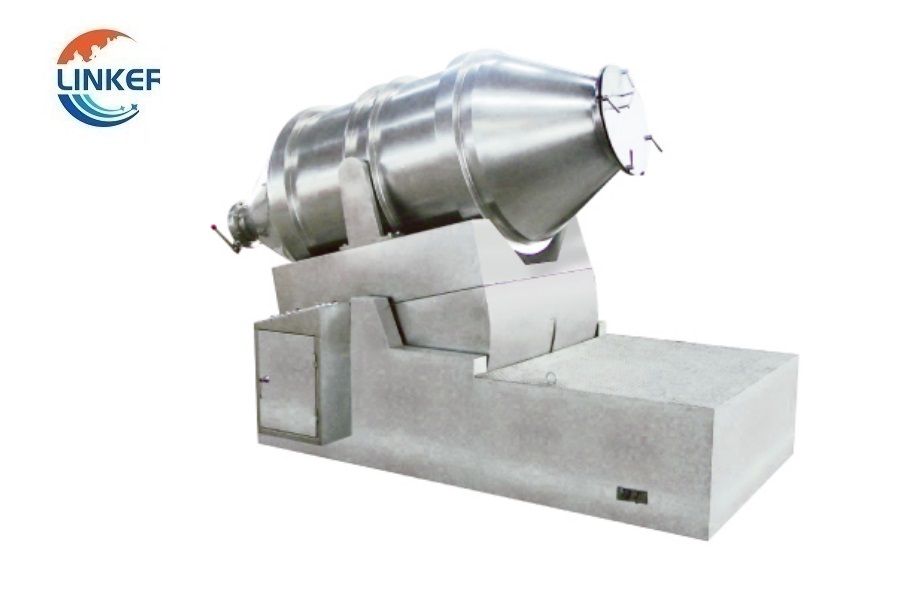
- Ginger Powder Mixing Machine
- Ginger Powder Filling Machine
- Ginger Powder Packing Machine
Ginger Powder Automatic Productino Line Design:x`
The fully automated manufacturing of premium ginger powder from fresh ginger rhizomes for a variety of industries, including seasonings and health supplements, is made possible by an Automatic Ginger Powder manufacturing Line, a highly integrated and sophisticated processing system.
Overview and Fundamental Idea
The smooth integration of an autonomous ginger powder line is its core. Conveyor belts, elevators, and control software connect each stage in this synchronized system, which is more than just a group of independent devices. Raw ginger begins in a bulk charger or feeding hopper and proceeds through the phases of cleaning, slicing, drying, and the key grinding mill without the need for human intervention. Efficiency, cleanliness, and the preservation of ginger’s essential bioactive ingredients, such as gingerols, are the main objectives. The entire system, from the final packager to the stainless steel feed hopper, is designed for food and pharmaceutical-grade production and frequently has certifications like a CE Certificate grinder for market access.
Reception of Raw Materials and Thorough Cleaning
Unloading fresh ginger is the first step in the procedure. To get rid of loose dirt and debris, the ginger is first dry cleaned. After that, it goes through a rigorous wet-cleaning phase, usually in a drum or paddle washer with high-pressure jets. This stage is essential for eliminating any impurities and guaranteeing that the finished powder is safe to eat. Similar thorough cleaning is used for some products, such as tea, coffee berries, or seeds. In order to ensure that only quality raw material proceeds, the cleaned ginger is examined and any leftover inappropriate bits are eliminated, laying the groundwork for efficient peeling and drying.
Pre-Treatment: Blanching, Slicing, and Peeling
The thin, fibrous skin of ginger is removed by peeling, which may change the texture and color of the powder. Steam peelers and mechanical abrasive rollers are frequently utilized. A cutting-type slicer is then used to cut the peeled ginger into uniform pieces. For proper drying, a consistent thickness—typically 2-4 mm—is essential. A blanching phase, in which slices are temporarily submerged in hot water, is included in some lines. This helps maintain the vivid color, slows down the drying process, and deactivates enzymes that cause browning—a problem for apple or banana powder as well. The dehydration procedure can now begin with the slices.
Low-Temperature Dehydration and Drying
Moisture is decreased from around 80% to less than 10% during the crucial and energy-intensive drying phase. Standard equipment includes tunnel dryers or continuous belt dryers with precise temperature control (60–80°C). In order to apply even lower temperatures and better preserve heat-sensitive chemicals and scents, advanced lines may employ vacuum or microwave drying. This method is especially useful for drying the leaves of mushrooms or herbs. When the ginger is properly dried, it becomes brittle and ready for milling, avoiding clogging in the grinding machine. This method can be used to make cassava flour, licorice root powder, or dry fruit powder.
Size reduction and primary crushing
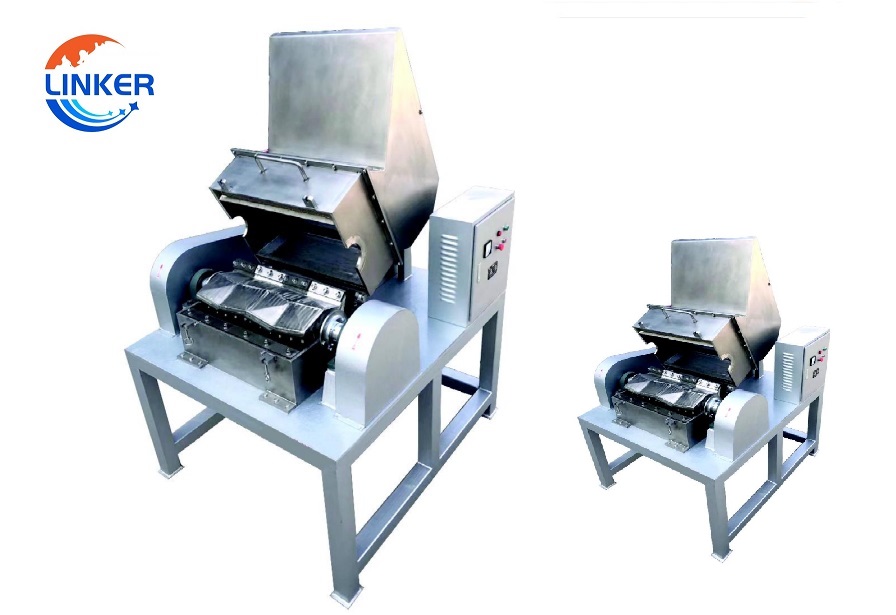
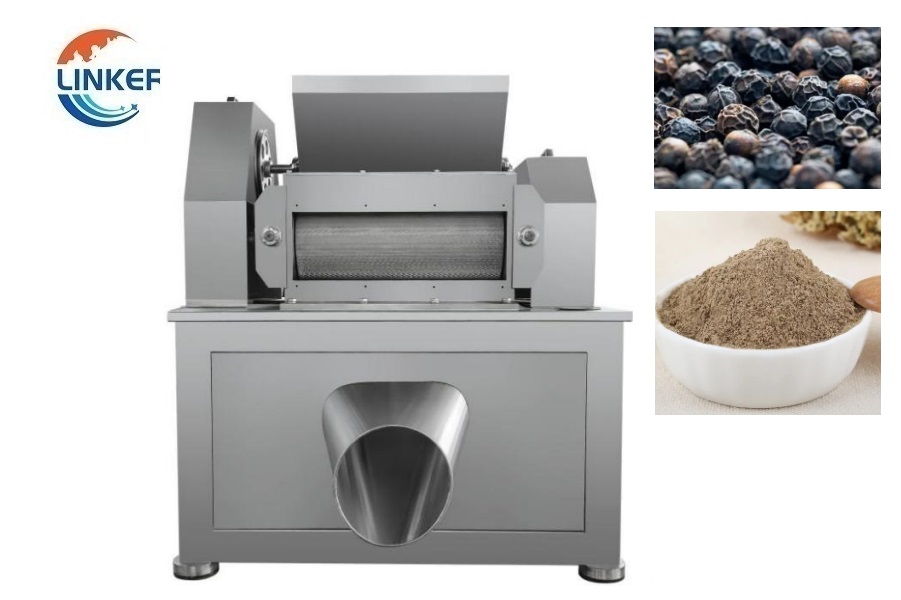
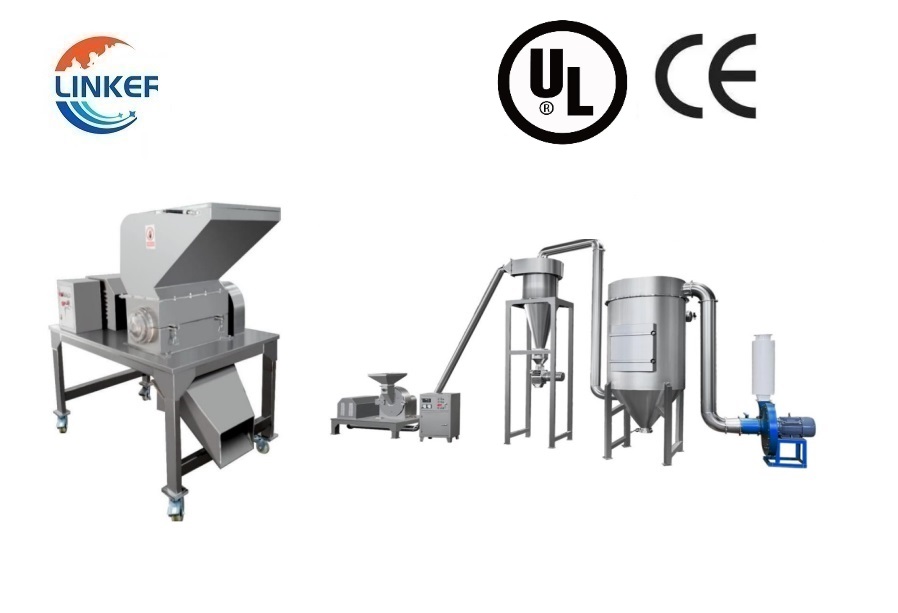
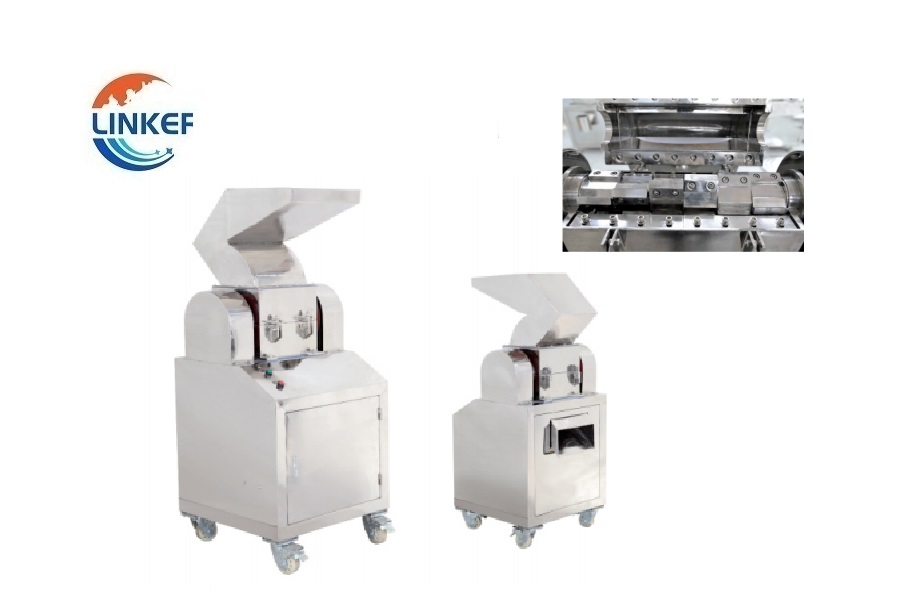
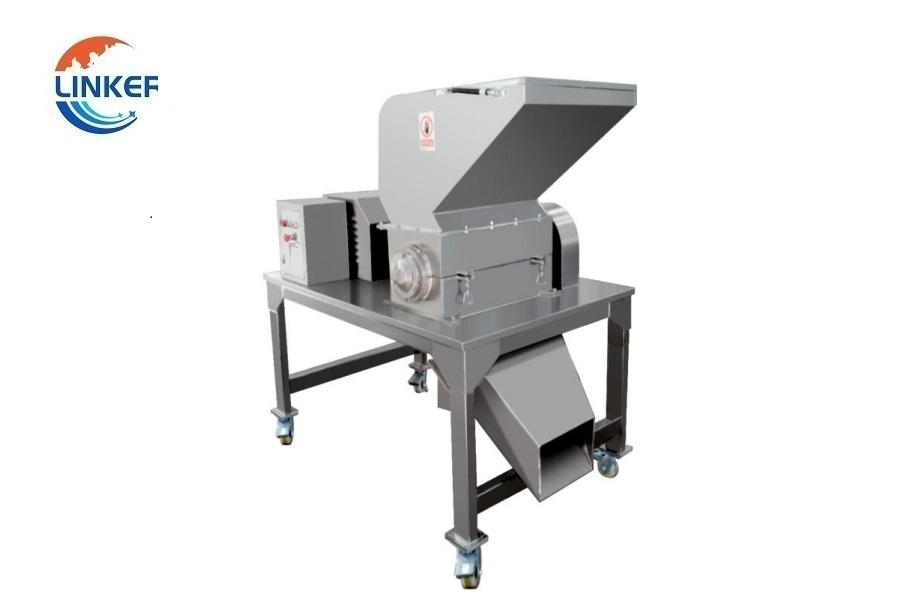
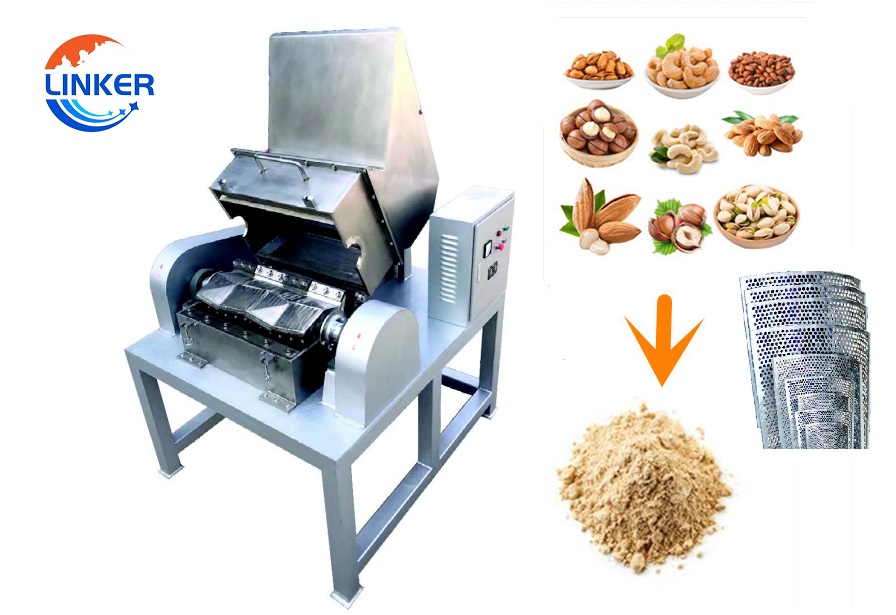
First, the hard, fully dried ginger slices are put into a hammer mill or coarse crusher. The slices become coarse powder or smaller granules as a result of this initial shattering. This stage is crucial because it significantly improves the surface area and facilitates the material’s efficient handling by the fine grinding machine. It lessens the strain on the main mill, which improves particle size control and lowers heat production. Similar to preprocessing for the manufacturing of maize, wheat, or bone meal, a hammer mill with a 200 kg or 500 kg grinder capacity may be utilized here, depending on the scale of the line.
Milling Fine and Ultra-Fine: The Crucial Phase
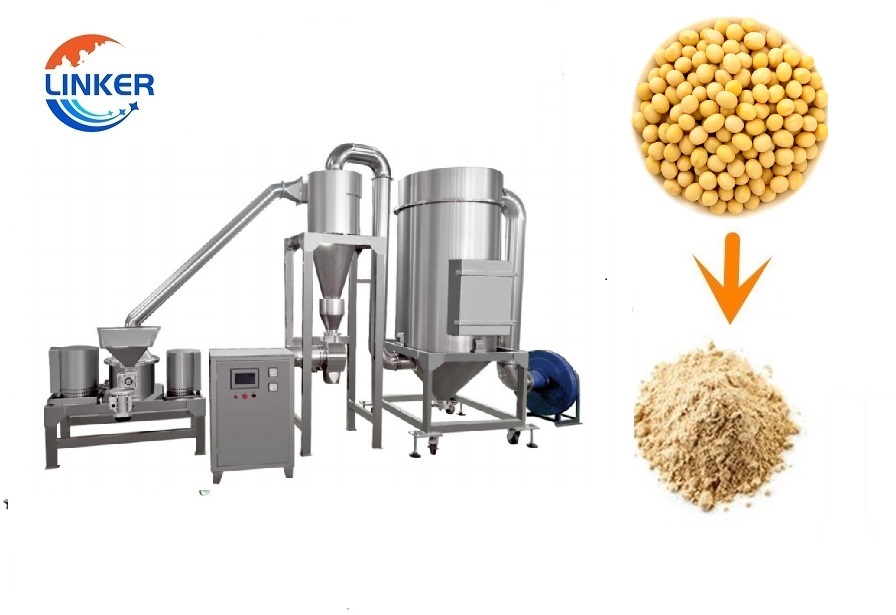
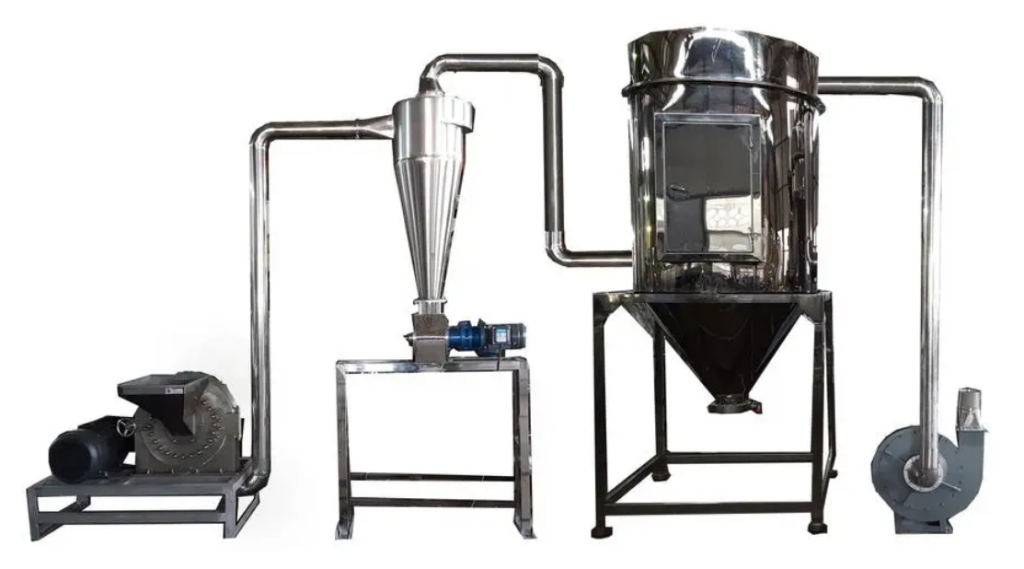
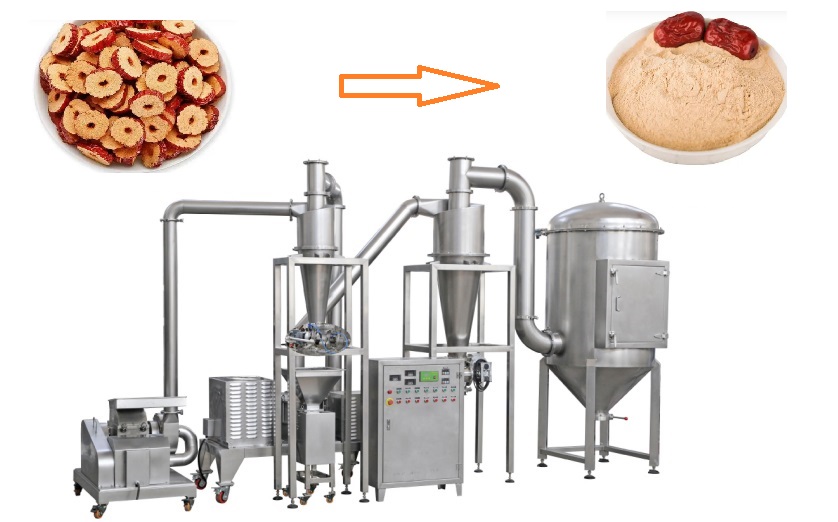
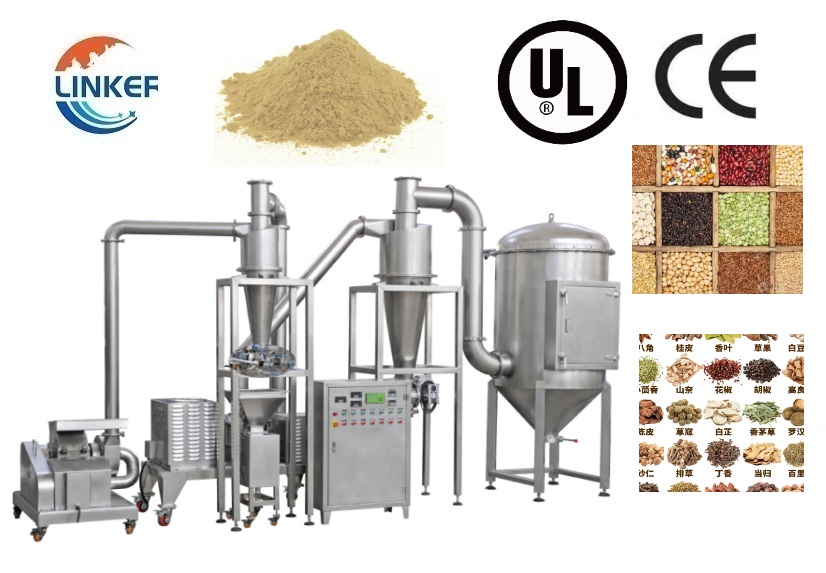
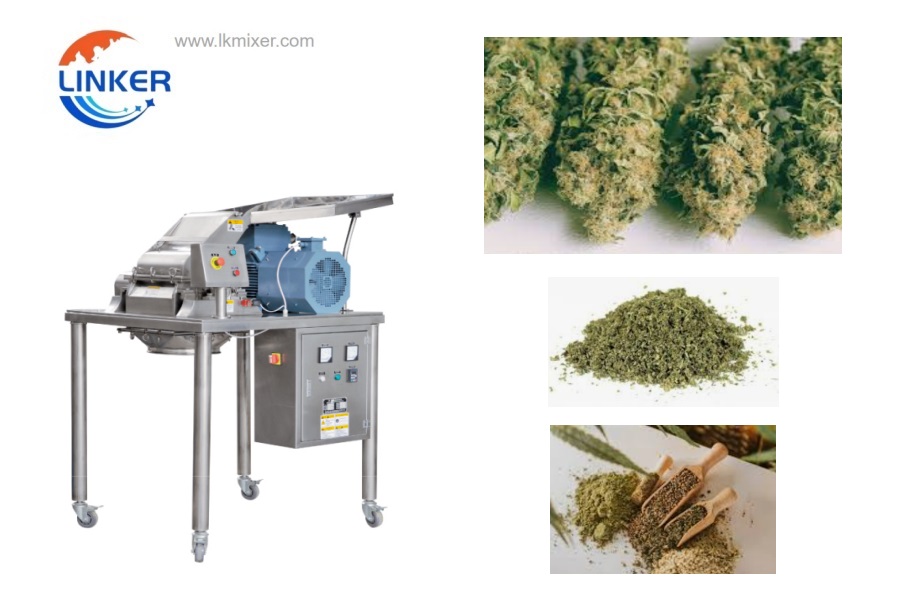
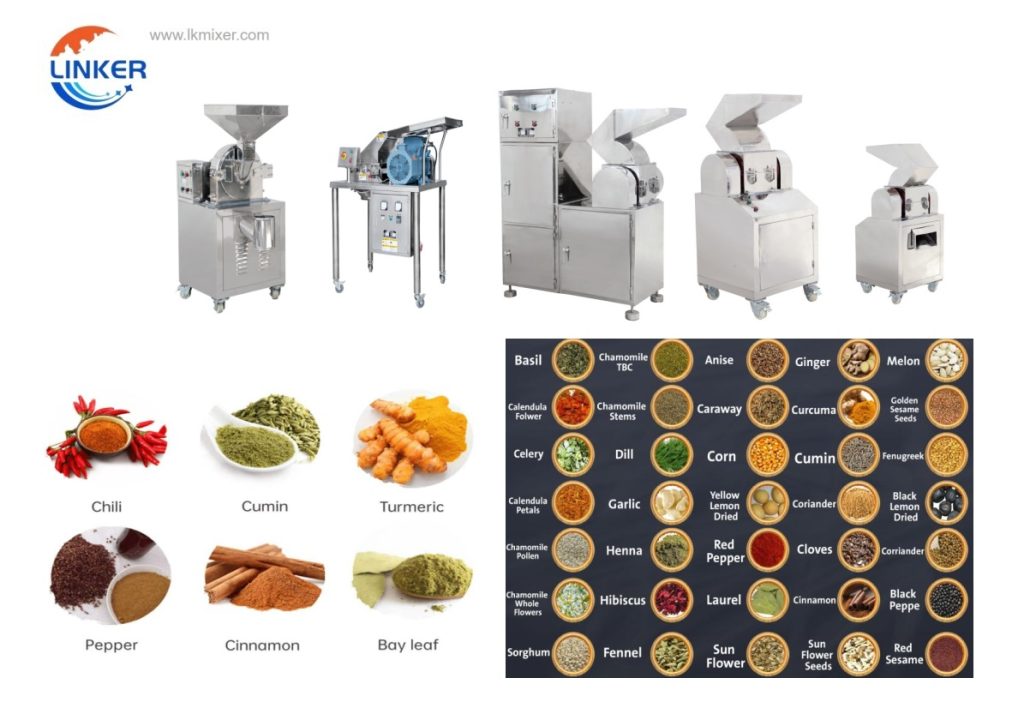
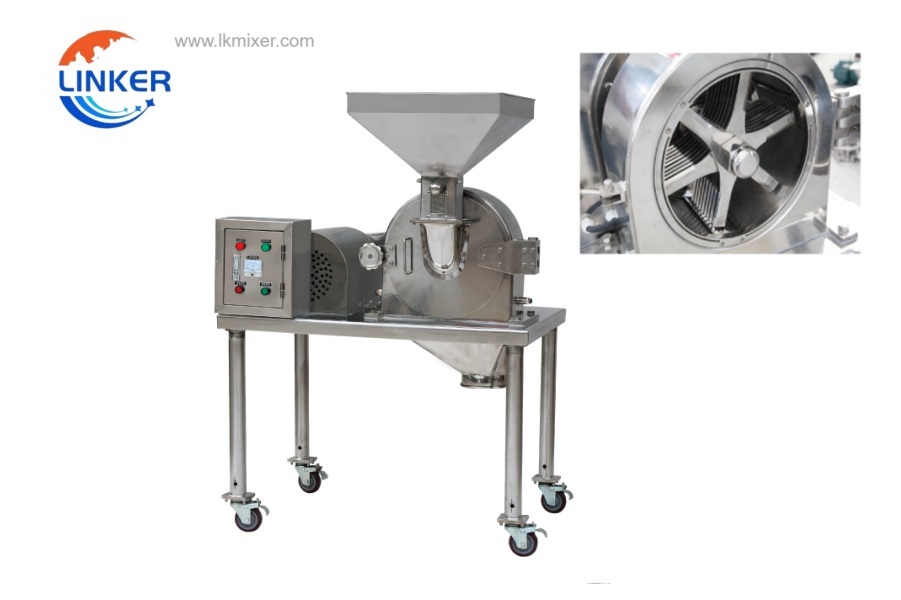
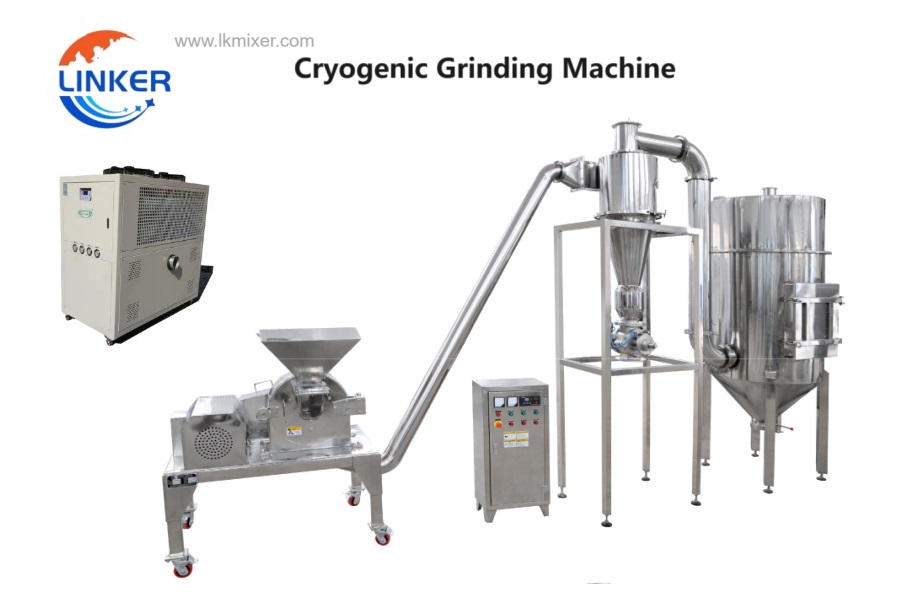
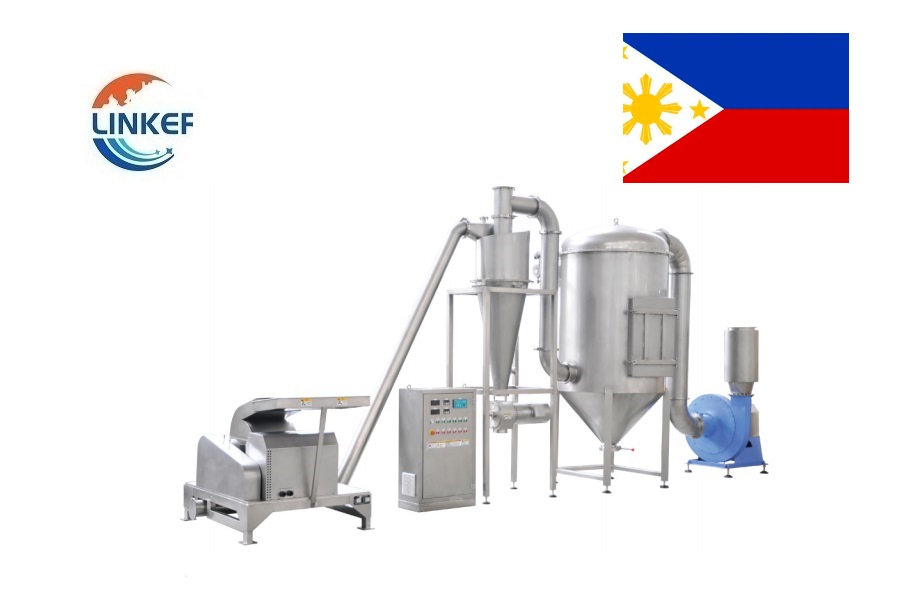
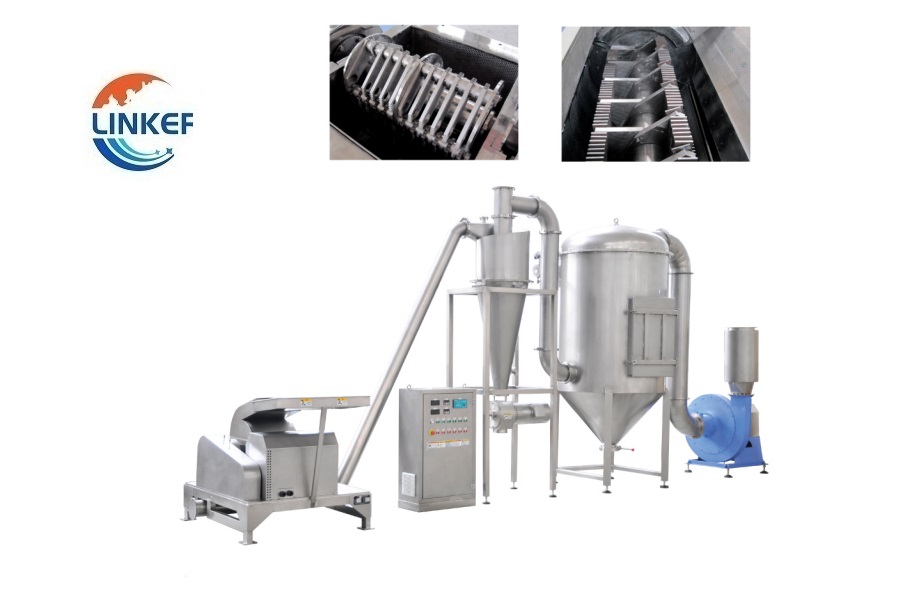
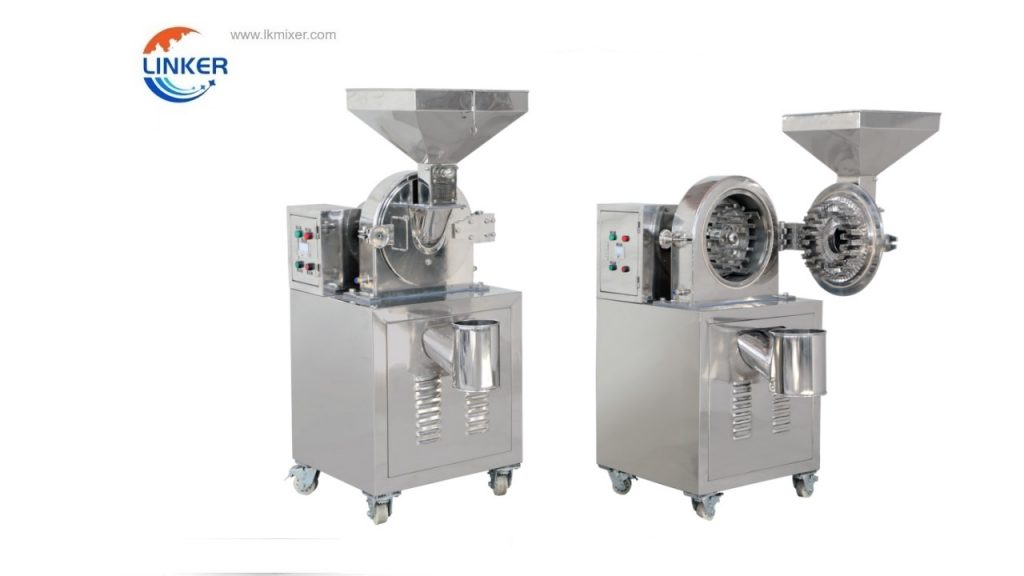
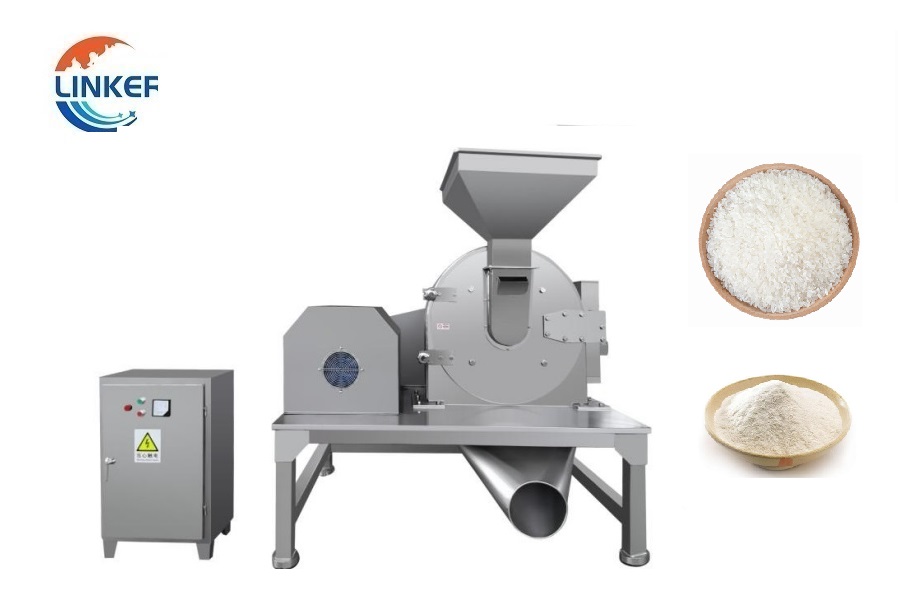
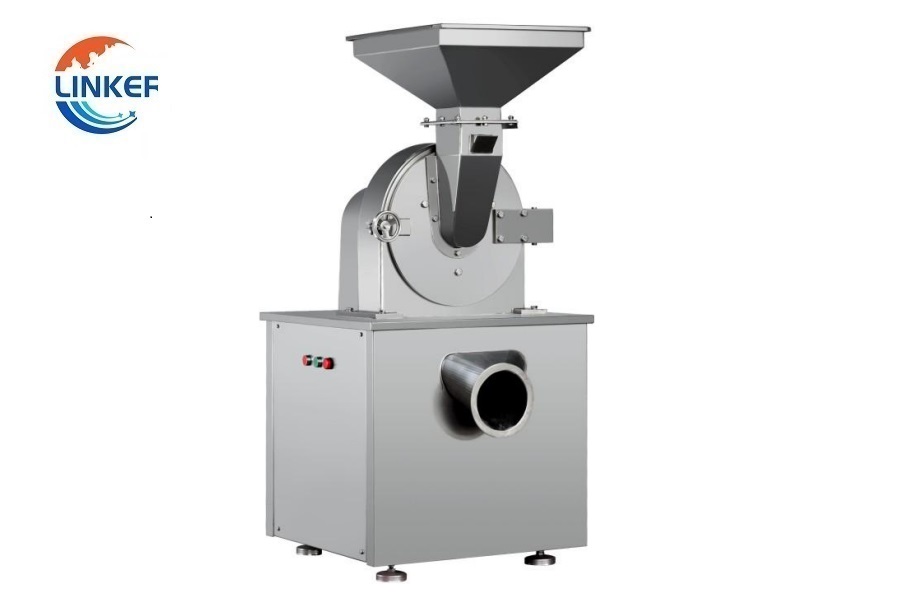
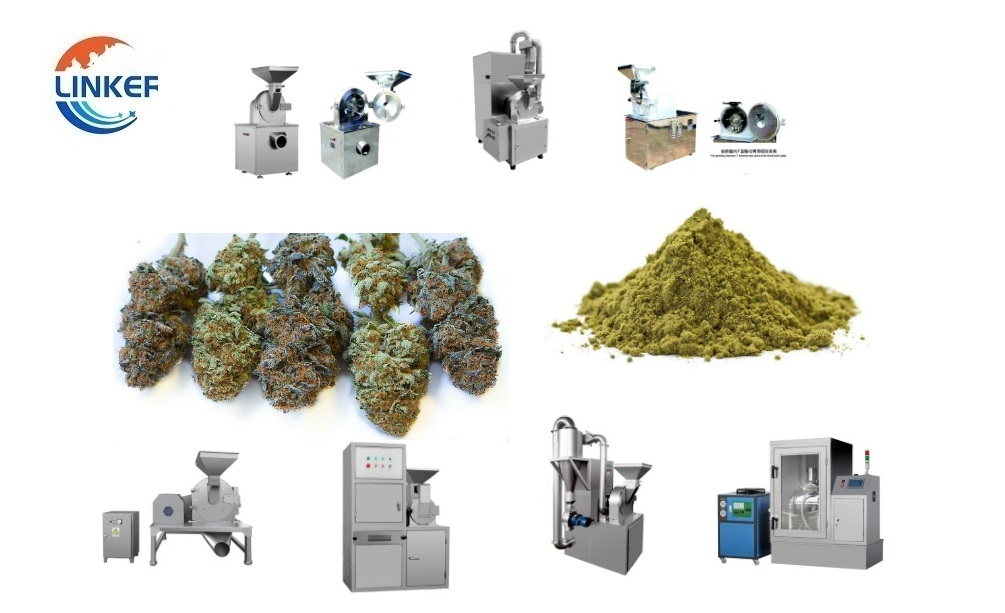
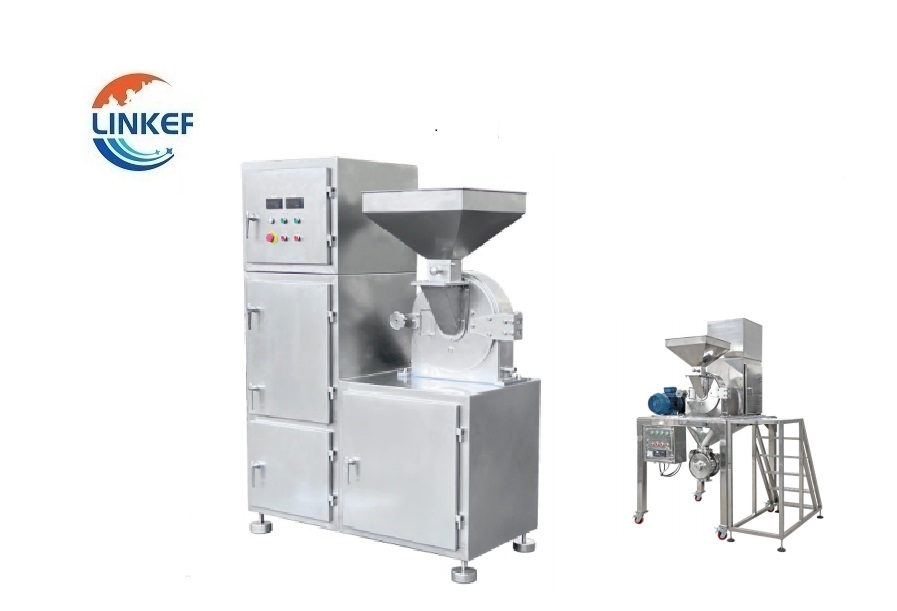
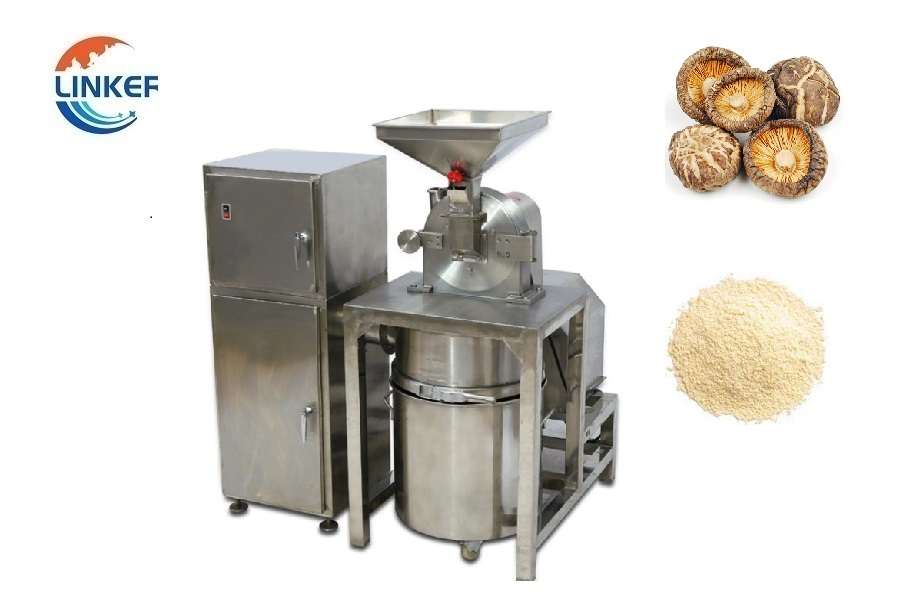
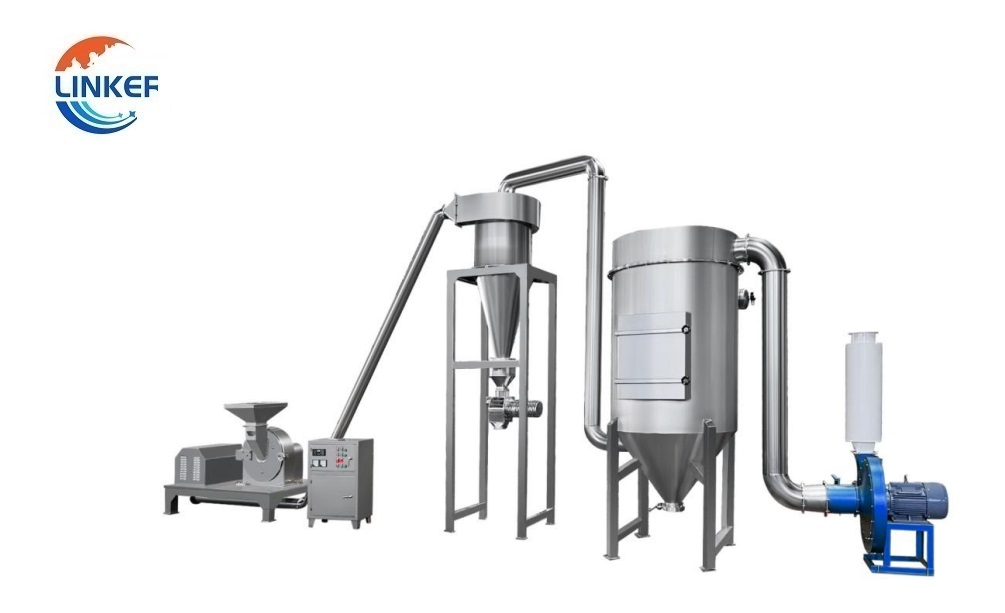
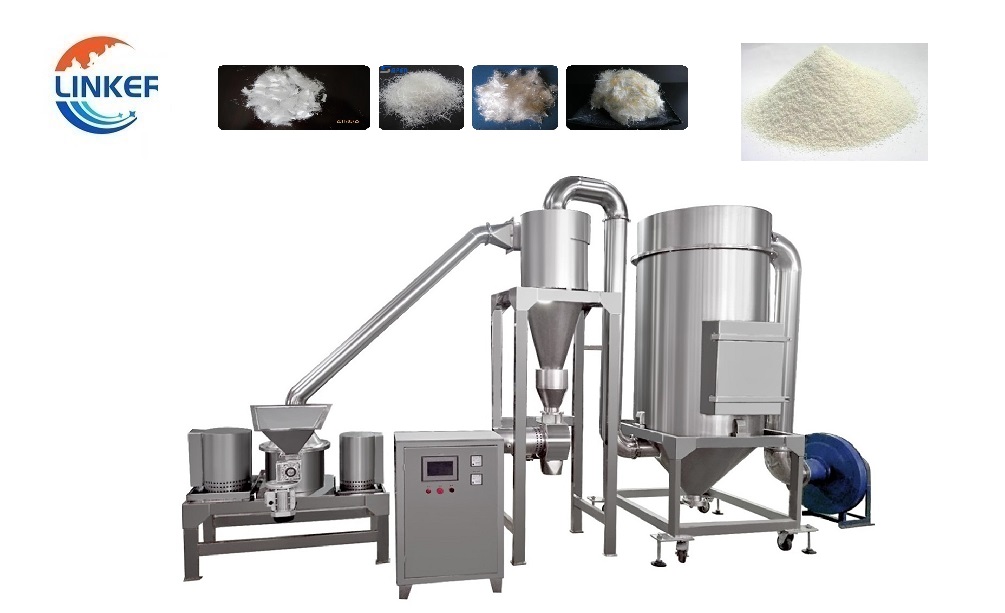
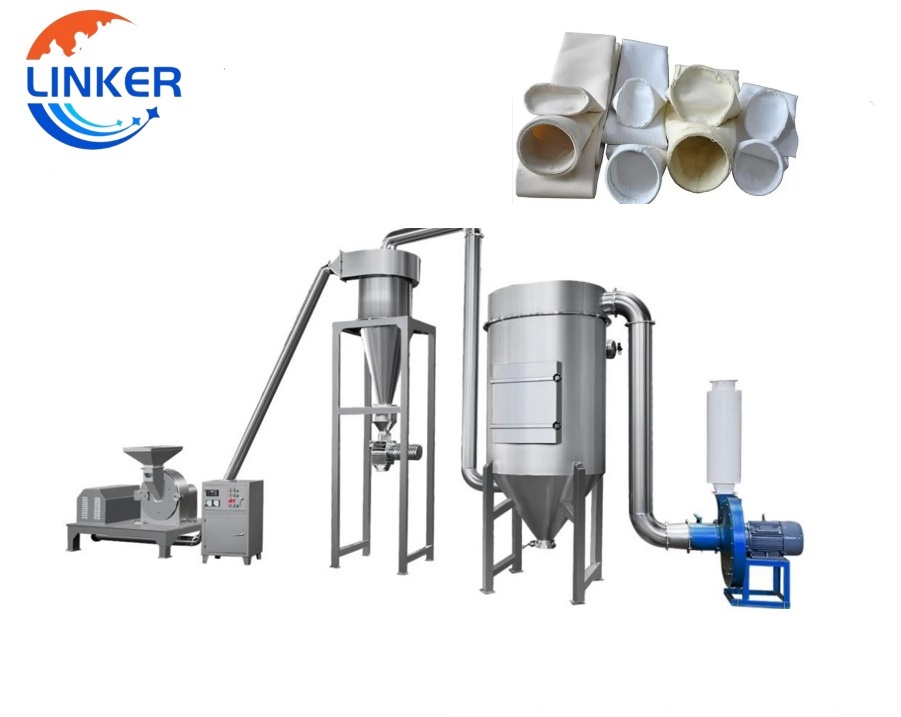
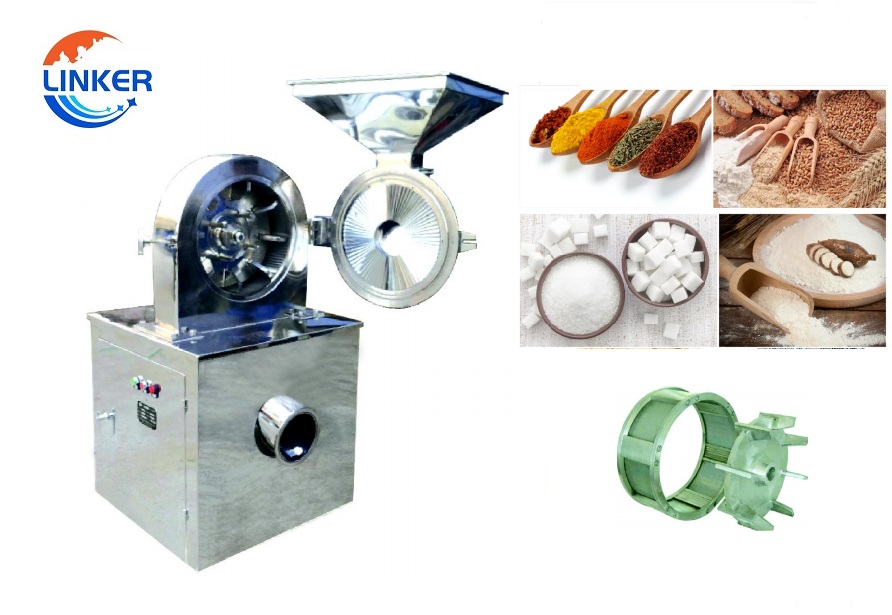
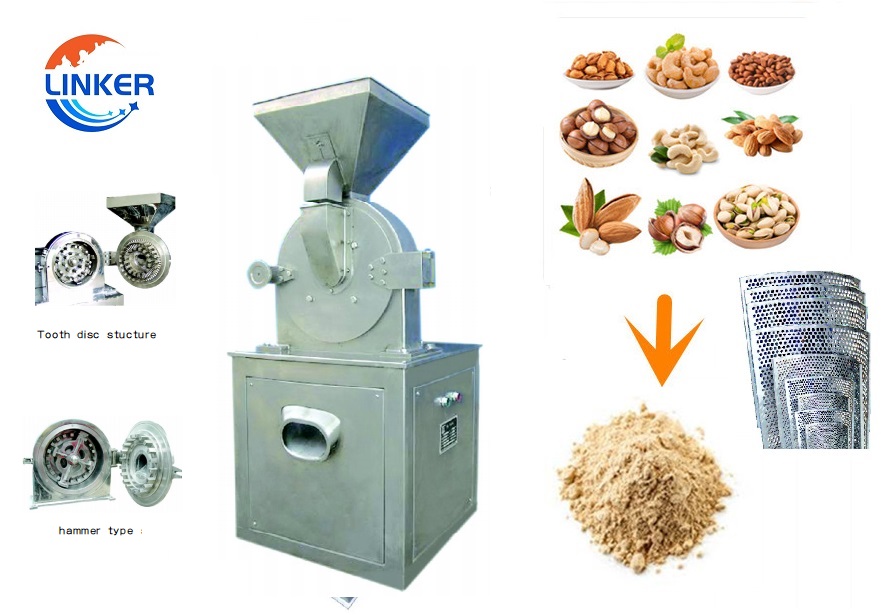
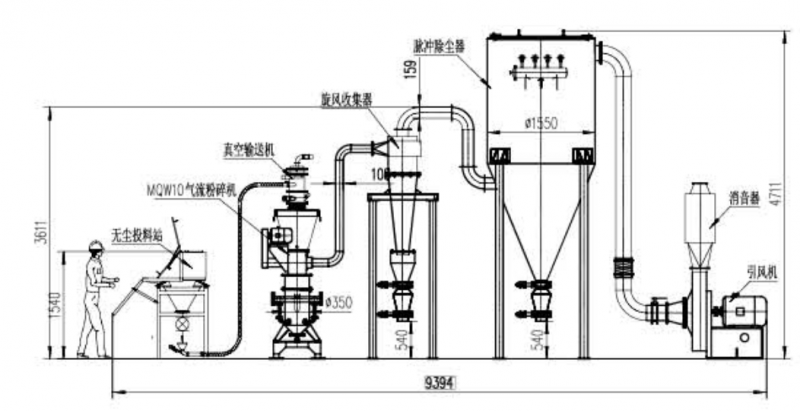
This is the process by which dried ginger turns into powder. The quality and fineness of the powder are determined by the primary grinding machine selection. For spice applications, a universal grinder—such as an airflow pulverizer or turbo grinder—is a common option. Shear and impact are produced by fast rotating blades. A big stainless steel hammer mill combined with a dust collector grinder system is standard for increased capacity and durability. A cryogenic grinding machine is the best option for producing ultra-fine powder (such as more than 200 mesh) and perfectly preserving volatile oils. The ginger is cooled to embrittlement temperatures using liquid nitrogen, which produces finer particles with less heat damage.Black pepper, cannabis (where laws allow the use of an industrial weed grinder), and other heat-sensitive chemical or medication powders are other excellent uses for this technology. A vacuum mill, a vibrating pulverizer, or an ultrafine grinder are other specialist alternatives. To control temperature rise during grinding, an air-cooled crusher can also be incorporated. To maintain a clean environment and increase yield, the entire milling chamber is connected to an effective dust collection or grinder system.
Accurate Sifting and Particle Categorization
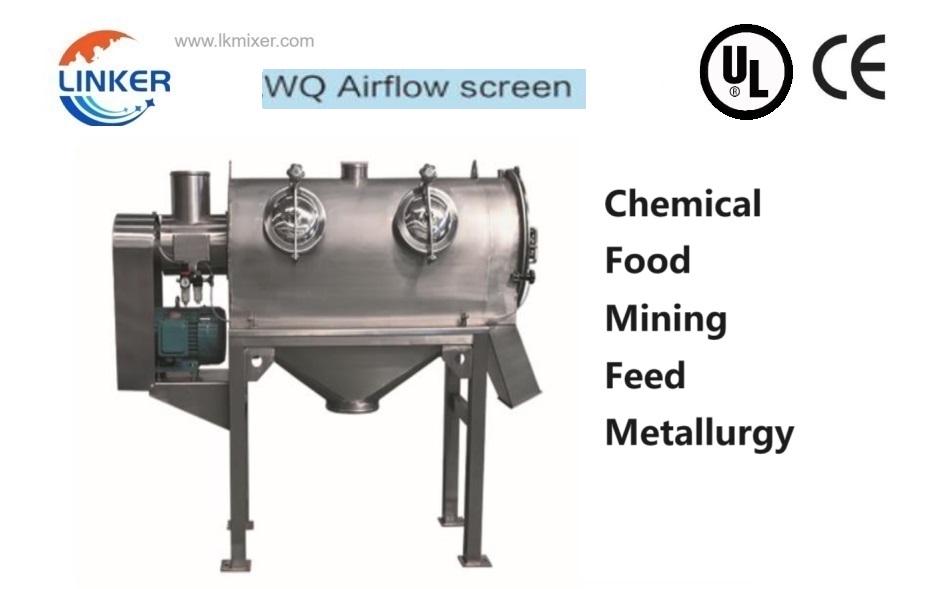
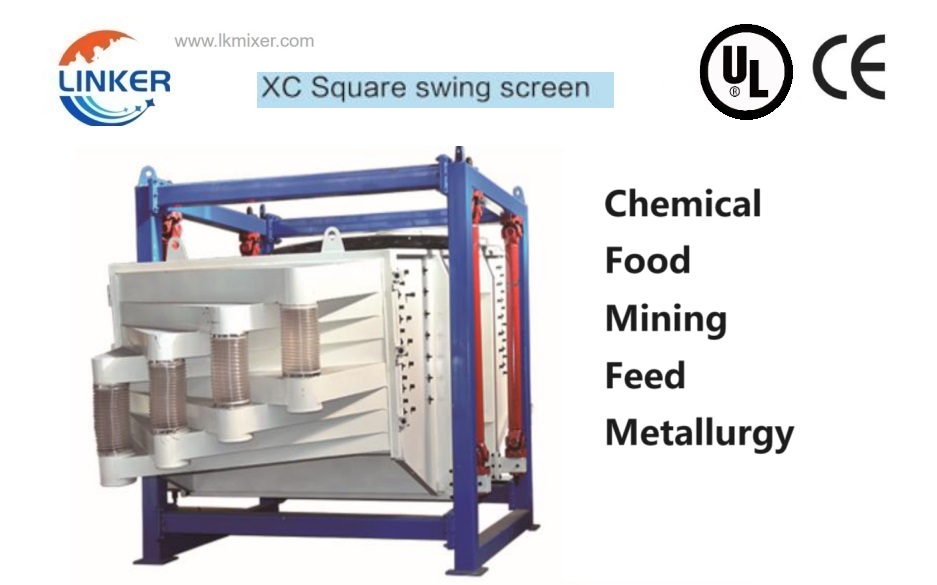
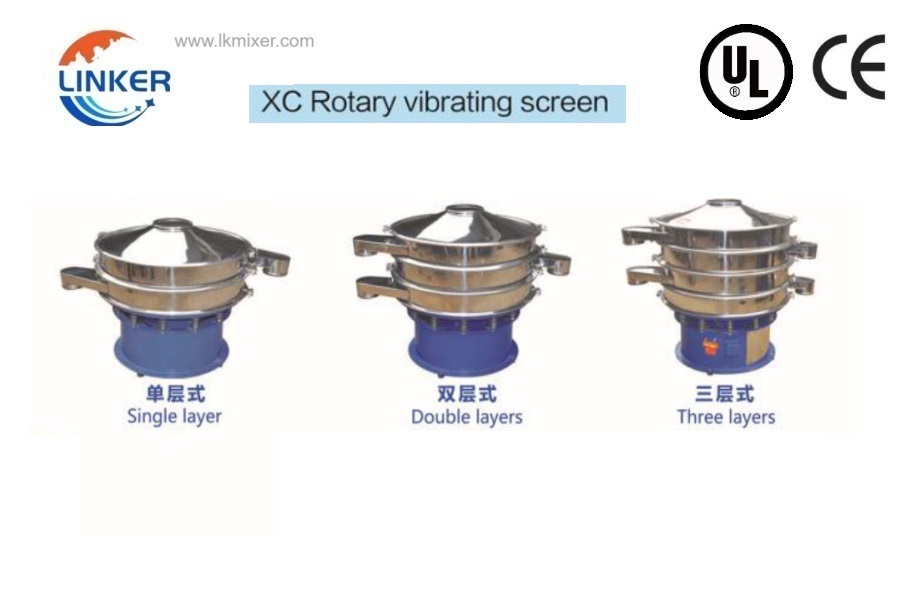
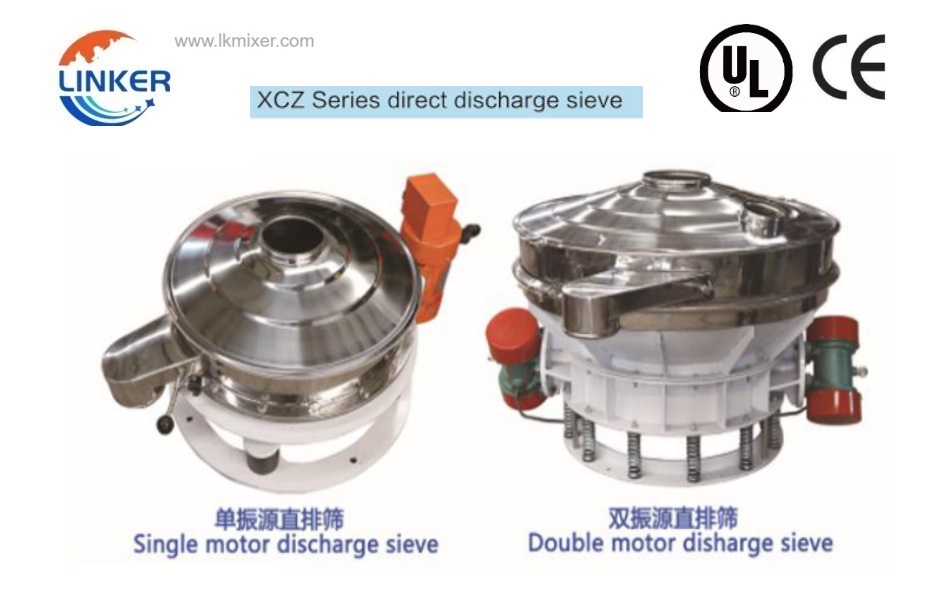
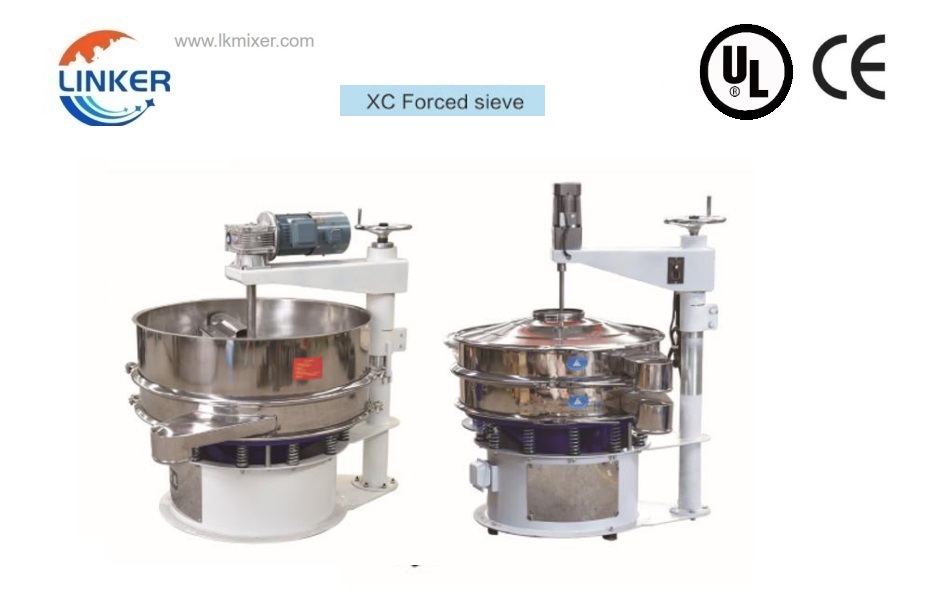
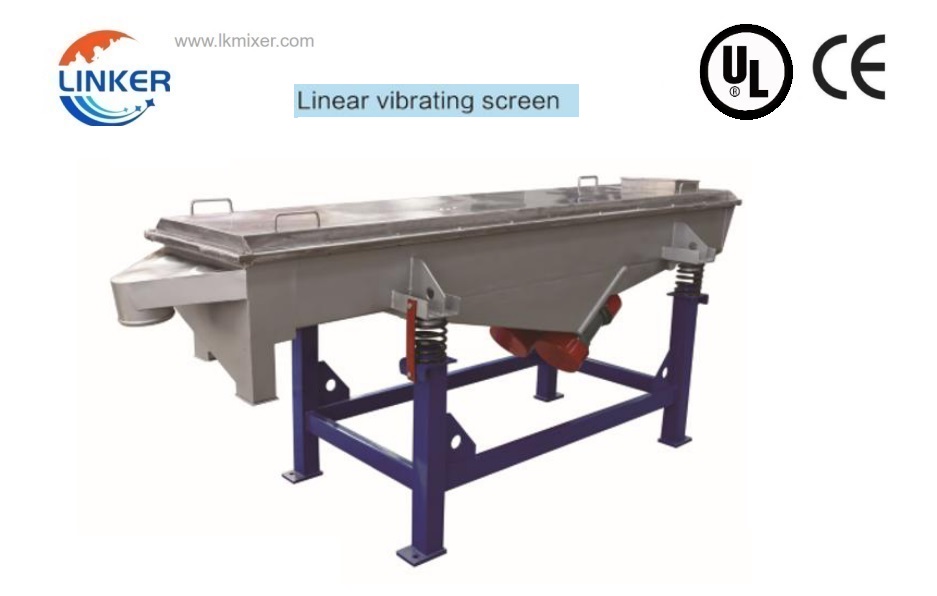
The grinding machine’s ground powder is still uneven. It is fed into air classifiers or vibrating screens. The powder is separated into the appropriate fraction of particle size during this sifting step. The grinder automatically recycles oversized particles for a subsequent pass. Whether the goal is a fine powder for quick drinks or a somewhat coarser one for culinary application, this closed-loop technology is essential to producing a consistent output. The manufacturing of flour, rice flour, salt, sugar, icing sugar, or bean protein powder all require the same level of accuracy.
Safety Screening, Blending, and Mixing
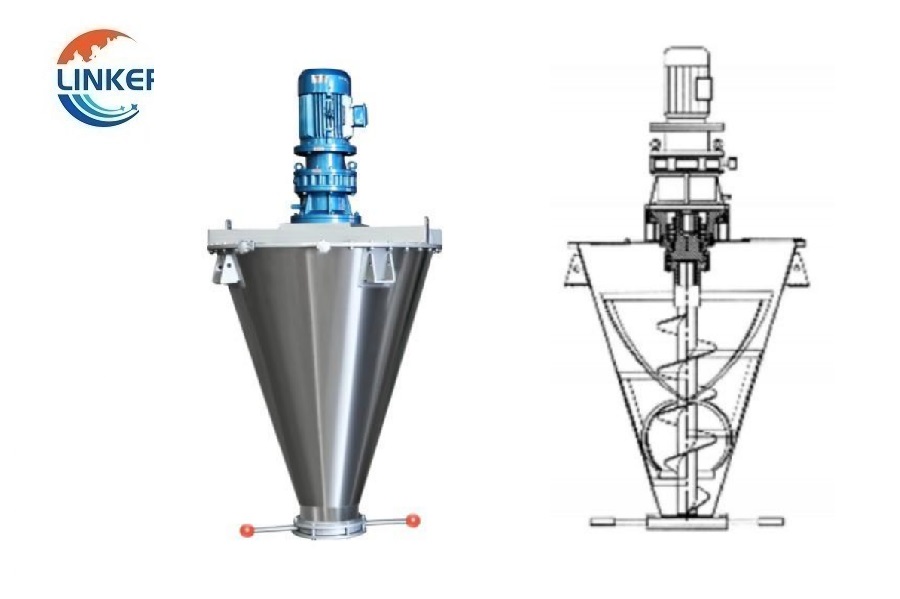
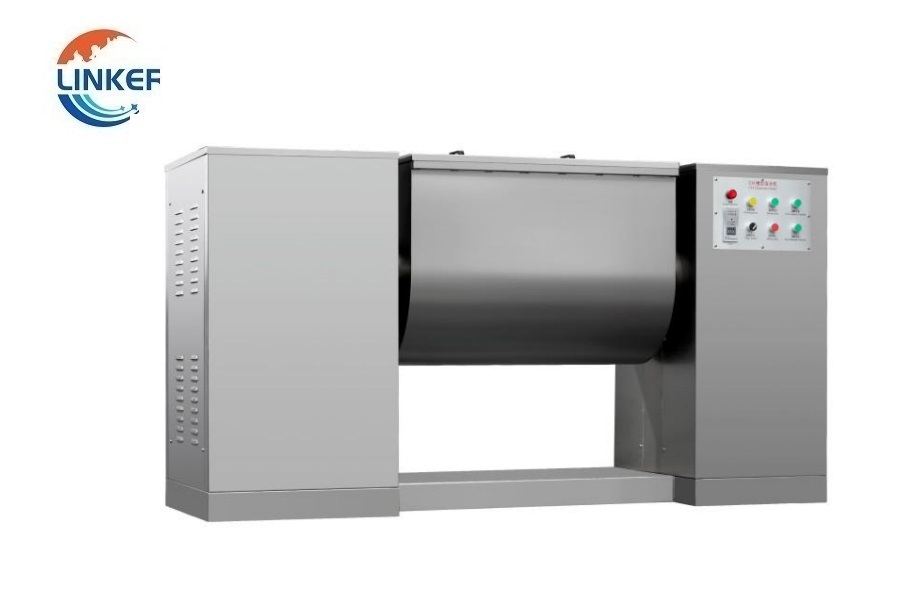
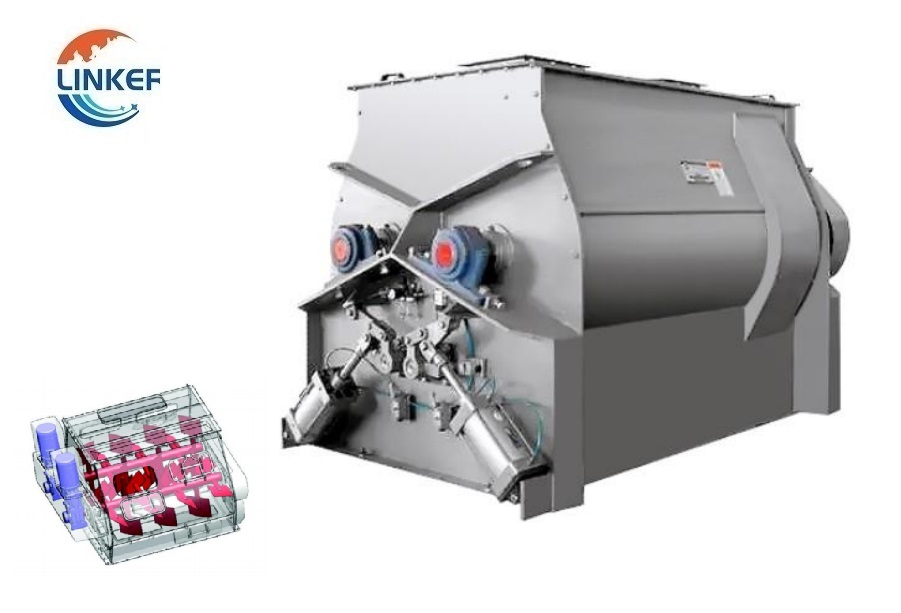
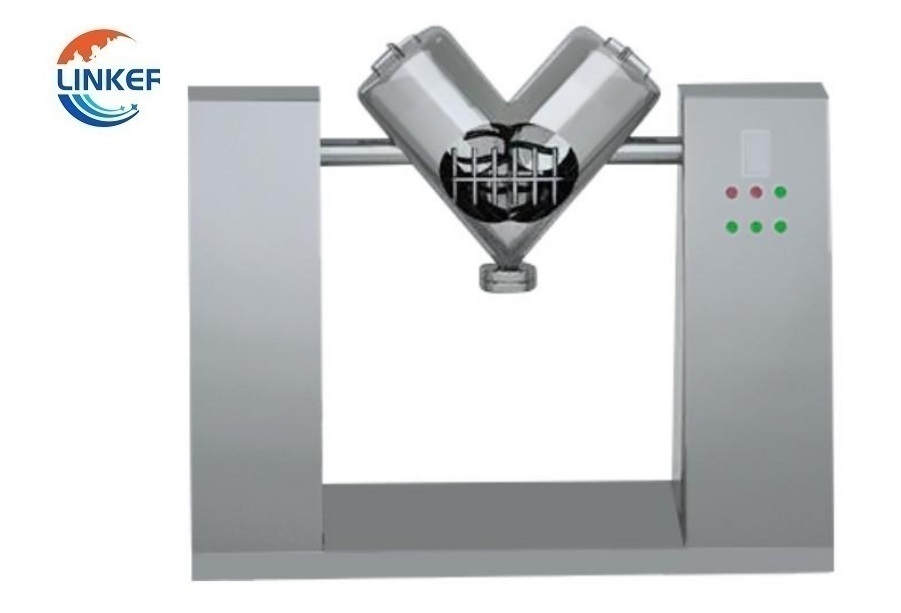
This step is homogenizing the ginger powder with additional ingredients, such as sugar or other spice powders, in a ribbon blender to create blended products, such as ginger-honey or ginger-tea blends. The powder must go through a magnetic separator or metal detector to eliminate any possible metal contamination, regardless of blending; this is an essential step for food safety. This guarantees that the finished product is safe to eat and pure.
Automated Final Handling and Packaging
Automated packaging equipment receive the resulting ginger powder. The powder is precisely portioned into bags, jars, or cans using auger fillers or precision weigh-fillers. Nitrogen flushing, which is essential for oily spice powders, is used in various lines to remove oxygen prior to sealing in order to increase shelf life. For hygienic reasons, stainless steel should be used for the packaging apparatus, just like the grinding machine. After that, filled packets are coded, tagged, and packaged. A central PLC controls the entire line, from the charger to the packager, guaranteeing coordinated, fast, and dependable operation that produces a shelf-ready product that satisfies the highest criteria of the international food and pharmaceutical industries.
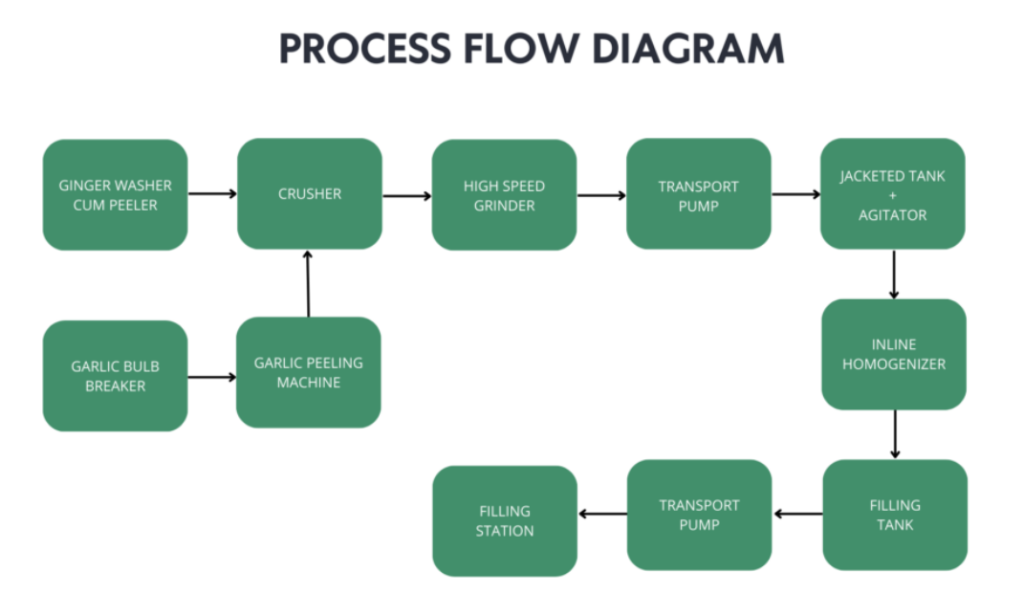
An automatic ginger powder production line is a fully integrated system that ensures consistency, efficiency, and the preservation of essential bioactive compounds like gingerol and volatile oils by converting fresh ginger rhizomes into a high-quality, shelf-ready powder through a continuous, automated sequence of operations.
Preparation of Raw Materials and Initial Receiving
Fresh ginger is first unloaded into a feeding hopper or charger to start the process. To ensure final food safety and quality, the ginger is first visually inspected and manually sorted to remove any rotten, sprouting, or moldy pieces. After that, the rhizomes are usually sorted by size using a rotary grader. This guarantees consistency in later processes, such peeling and slicing, which results in more reliable drying and grinding. Whether producing flour from beans, corn, or cassava, this preparation step is typical in the processing of many agricultural goods.
Extensive Cleaning and Peeling
After sorting, the ginger is put through a multi-step cleaning process. First, heavy soil and debris are loosened and removed using turbulent water and air jets in a bubble washer. For a more thorough cleaning, the surface is then scrubbed with a brush washer. Lastly, the ginger is peeled with an abrasive roller peeler or a steam peeler, which loosens the skin by briefly exposing it to high-temperature steam. After that, any remaining skin and particles are removed using a high-pressure spray system. The end product is ginger that has been peeled and thoroughly cleaned, with a peel removal rate that frequently surpasses 95%. This is necessary to create a pure, light-colored powder that is free of grit.
Accurate Cutting and Color Preservation Procedure
A high-speed cutting type slicer receives the peeled ginger and chops it into uniform slices that range in thickness from 2 to 4 mm. For even drying, uniform thickness is essential because it keeps certain sections from drying too much while others stay damp. Many sophisticated lines contain a blanching process to avoid enzymatic browning, which results in unwanted darkening. Here, the slices are submerged for roughly five minutes in boiling water (90–100°C). In addition to helping to maintain the ginger’s natural yellowish color and deactivating the browning enzymes, this heat treatment can also gently precook the material, increasing the effectiveness of the drying step that follows. Similar blanching is used to prepare fruits for dry fruit powder or vegetables like mushrooms.
Thorough Washing and Peeling
One of the most important steps in maintaining quality is drying. The ginger slices go through a continuous dryer, like a tunnel dryer or a multi-tier conveyor belt dryer. For many hours, they are exposed to regulated, low-temperature airflow, usually between 60 and 80°C. Reducing the moisture content from over 80% in fresh ginger to less than 6% in dried slices is the aim. In order to maximize the retention of heat-sensitive volatile oils and gingerols, state-of-the-art lines may use gradient temperature control, vacuum mills, or even microwave-assisted drying to apply lower effective temperatures. In addition to preventing microbial development during storage, proper drying produces a brittle product that is perfect for milling. Drying tea leaves, herbs, and other spice ingredients is a common application of this technique.
Accurate Cutting and Color Preservation Procedure
A high-speed cutting type slicer receives the peeled ginger and chops it into uniform slices that range in thickness from 2 to 4 mm. For even drying, uniform thickness is essential because it keeps certain sections from drying too much while others stay damp. Many sophisticated lines contain a blanching process to avoid enzymatic browning, which results in unwanted darkening. Here, the slices are submerged for roughly five minutes in boiling water (90–100°C). In addition to helping to maintain the ginger’s natural yellowish color and deactivating the browning enzymes, this heat treatment can also gently precook the material, increasing the effectiveness of the drying step that follows. Similar blanching is used to prepare fruits for dry fruit powder or vegetables like mushrooms.
Low-Temperature Drying and Dehydration
Dehydration and Low-Temperature DryingOne of the most important steps in maintaining quality is drying. The ginger slices go through a continuous dryer, like a tunnel dryer or a multi-tier conveyor belt dryer. For many hours, they are exposed to regulated, low-temperature airflow, usually between 60 and 80°C. Reducing the moisture content from over 80% in fresh ginger to less than 6% in dried slices is the aim. In order to maximize the retention of heat-sensitive volatile oils and gingerols, state-of-the-art lines may use gradient temperature control, vacuum mills, or even microwave-assisted drying to apply lower effective temperatures. In addition to preventing microbial development during storage, proper drying produces a brittle product that is perfect for milling. Drying tea leaves, herbs, and other spice ingredients is a common application of this technique.
The Core Grinding Stage of Primary Crushing and Fine Milling
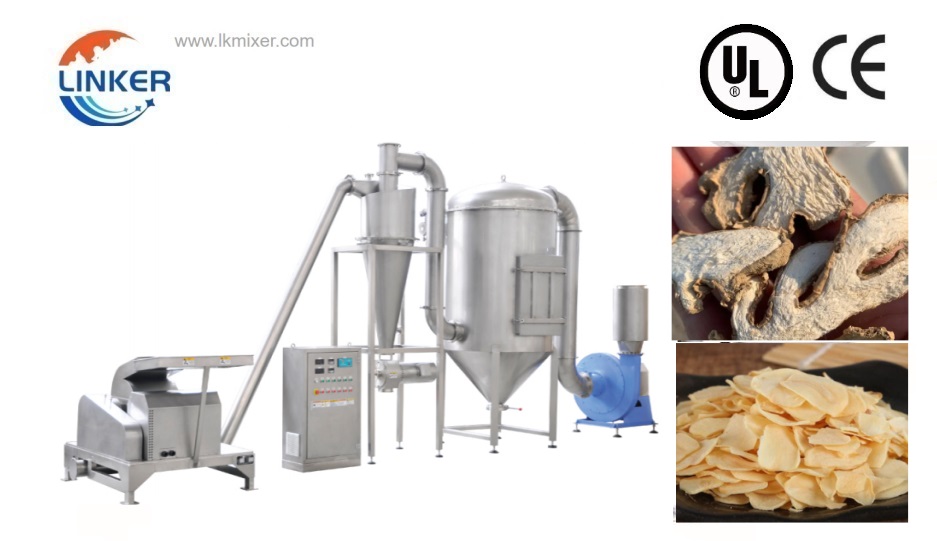
For initial size reduction, the bone-dry, brittle ginger slices are first fed into a hammer mill or coarse crusher. In addition to preparing the material for fine grinding and avoiding overload on the main mill, this breaks them down into tiny granules. The fine grinding machine is the center of the powder production process. A universal grinder, turbo grinder, or airflow pulverizer are frequently used for standard ginger powder (60–120 grit). The material is ground up by these fast machines using shear and impact pressures. An ultrafine grinder or a cryogenic grinding machine is used to produce ultra-fine powder (300 mesh or higher).This method is ideal for heat-sensitive materials like black pepper, licorice root, or cannabis (where an Industrial Weed Grinder might be specified). Cryogenic grinding uses liquid nitrogen to cool the ginger to extremely low temperatures, making it more brittle and allowing for finer particle size with minimal heat damage. To preserve hygienic conditions and recover product, the entire grinding area is enclosed and linked to a dust collection grinder system. For durability and food safety, equipment such as dry ginger grinding machines or dry fruit powder grinders are usually made of massive, stainless steel components. Important devices frequently have a CE Certificate grinder for conformity with worldwide market standards.
Safety screening, blending, and sifting
A vibrating pulverizer or sifter receives the ground powder from the grinding machine in order to classify it. As a result, the powder is divided into the appropriate range of particle sizes. Fine powder passes through, while oversized particles are automatically recycled back to the grinder for further processing. A crucial step in food safety is to eliminate any possible ferrous metal impurities from the sifted powder by passing it through a magnetic tube or over a strong magnetic plate. If the final product is a blend, the pure ginger powder is then mixed with other ingredients, such as sugar, salt, or other spice powders, in a V-blender or ribbon mixer to ensure perfect homogeneity.
Automated Packaging and Ultimate Quality Control
Automated packing devices receive the final powder. The powder is precisely dispensed into bags, jars, or cans by precision weigh fillers, which frequently use auger or cup mechanisms. Many lines incorporate nitrogen gas flushing into the package prior to sealing for shelf-stable products, particularly those containing volatile oils, in order to displace oxygen and prevent oxidation. Cappers, labelers, and coders are all seamlessly connected with the packing machinery. A centralized Programmable Logic Controller (PLC) controls the entire line, from the first charger to the last bag. This enables operators to monitor and control all parameters through a touchscreen, guaranteeing a high-speed, dependable, and efficient production flow that satisfies the exacting requirements of the international food, spice, and pharmaceutical industries.
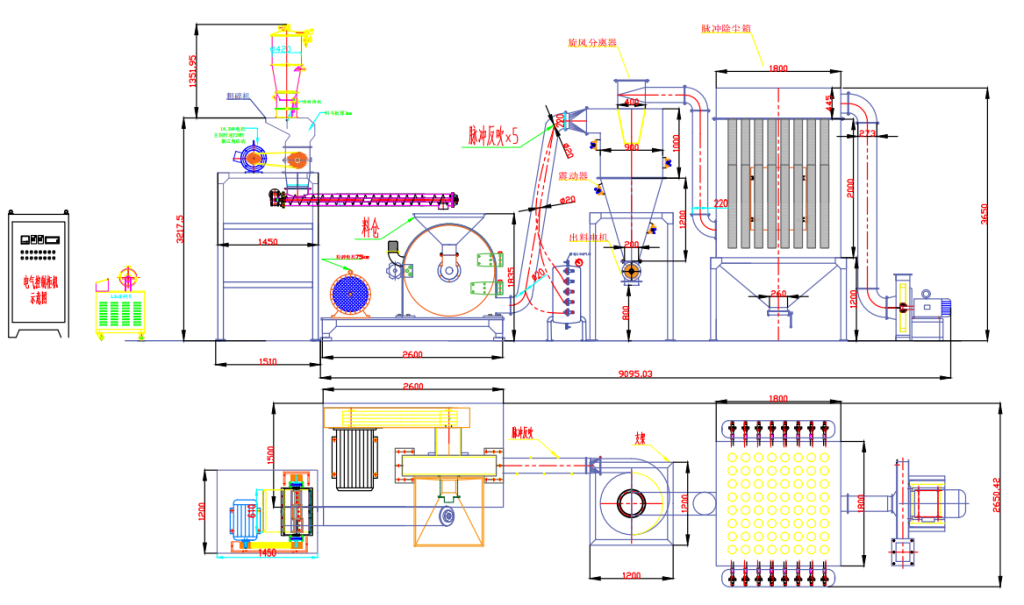

Parameters:

Model Name | SG-600 | |
| Crushing Capacity(kg/h) | 1000~2000 | |
| Power(kw) | 11 | |
| Feeding Size(mm) | <5mm | |
| Fineness(mesh) | 20~40mesh |
Model Name | SG-800 | |
| Crushing Capacity(kg/h) | 2000~4000 | |
| Power(kw) | 15 | |
| Feeding Size(mm) | <5mm | |
| Fineness(mesh) | 20~40mesh |
Trade Capacity
| International Commercial Terms(Incoterms): | FOB, CIF, CFR | Terms of Payment: | LC, T/T, PayPal, Western Union |
| Average Lead Time | 60 working days | Main Markets | North America, South America, Europe, Southeast Asia/ Mideast, East Asia(Japan/ South Korea), Australia, Domestic |
| Nearest Port: | Ningbo Port; Shanghai Port | Factory Address: | JiangSu, China |
Ampere of Motors Customization for Seeds Grinder:
| KW | HP | Ampere |
| 75kw | 100HP | 135A |
| 55kw | 75HP | 99A |
| 30kw | 40HP | 54A |
| 22kw | 30HP | 39A |
| 2.2kw | 3HP | 3.9A |
| 1.5kw | 2HP | 2.7A |
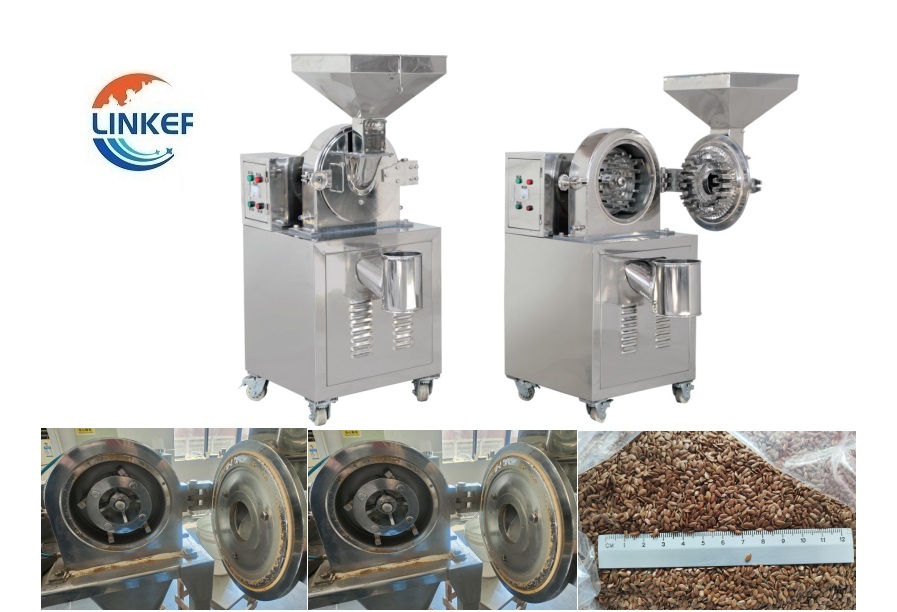
Test Report for Flax Seed Grinder:
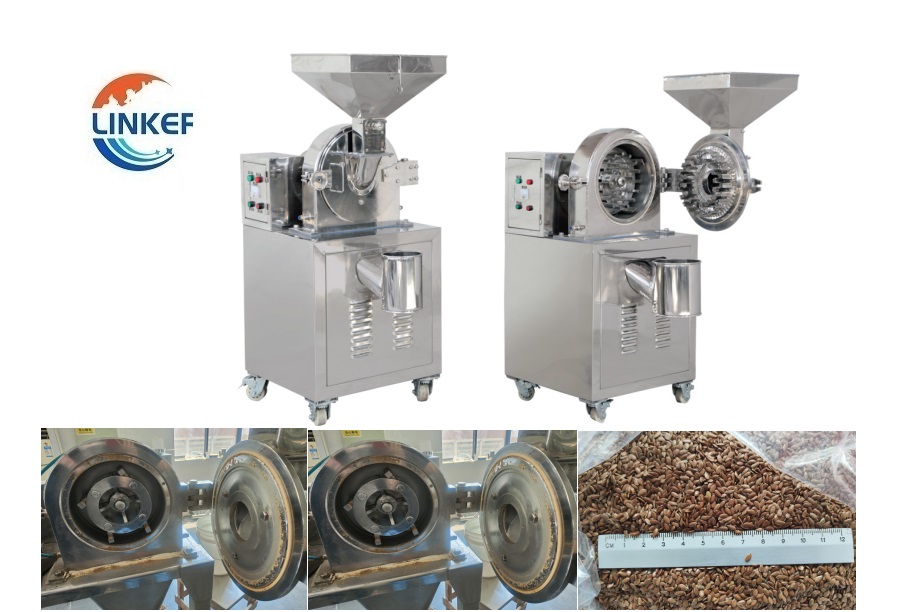
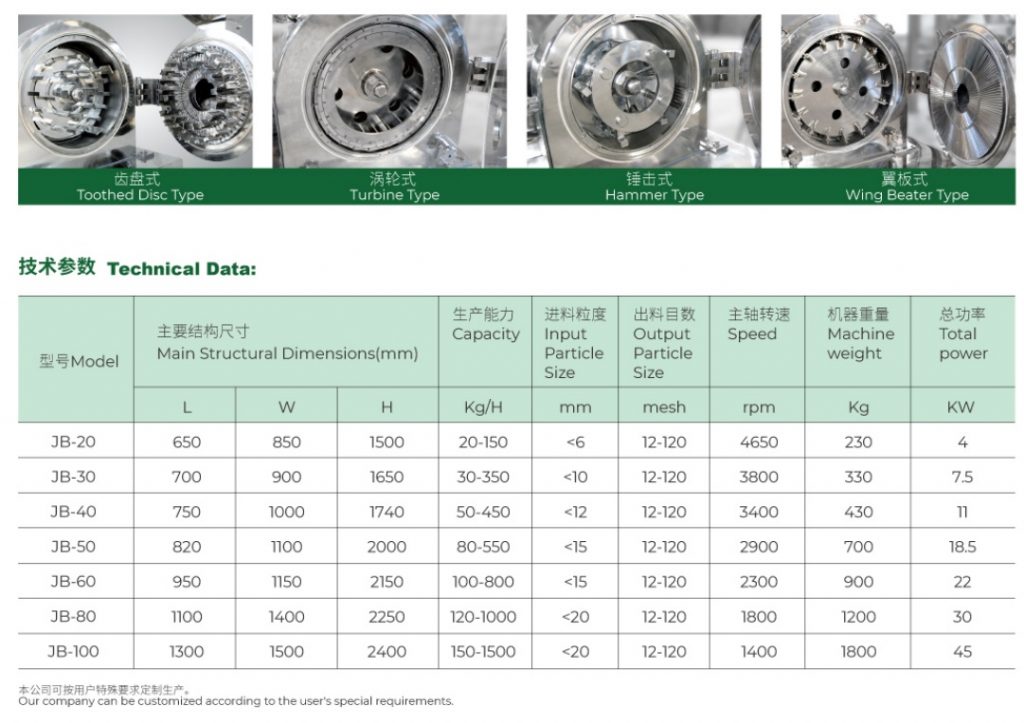
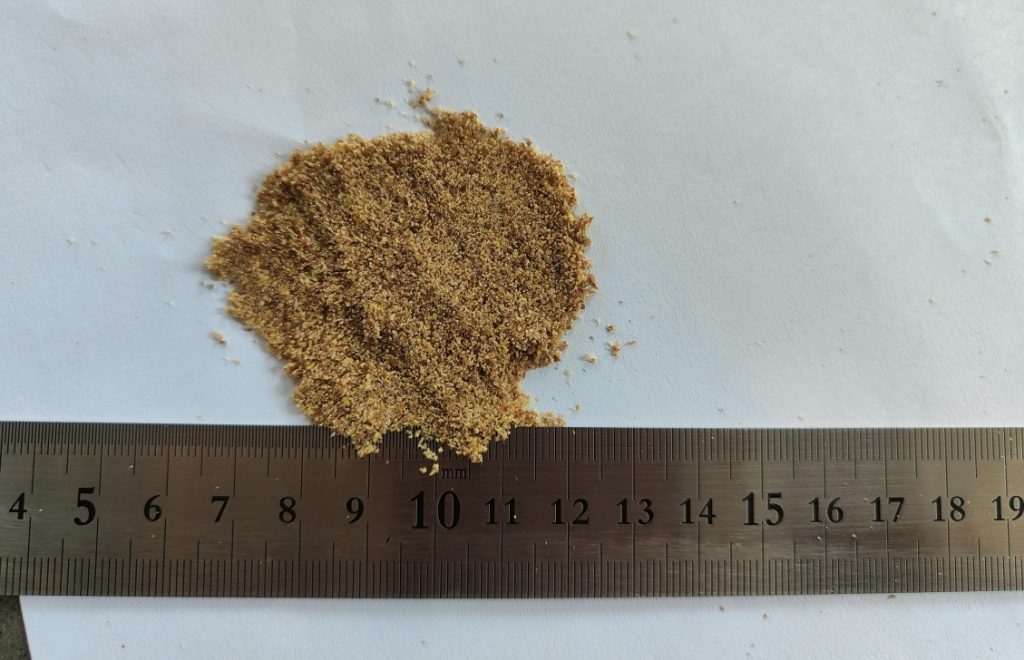
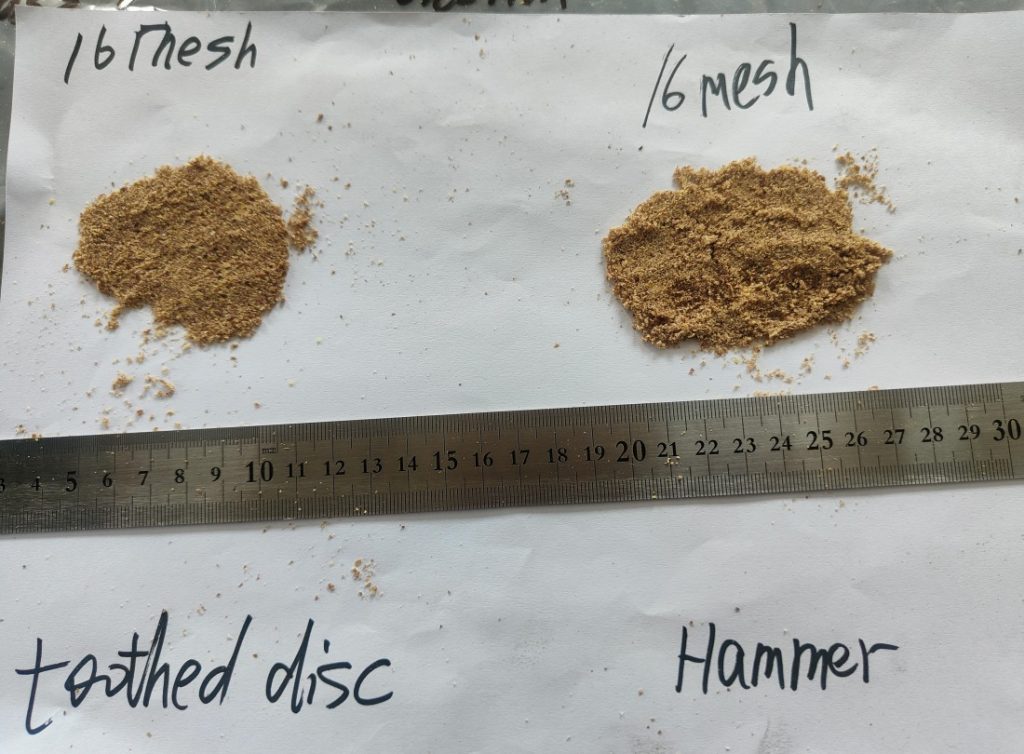
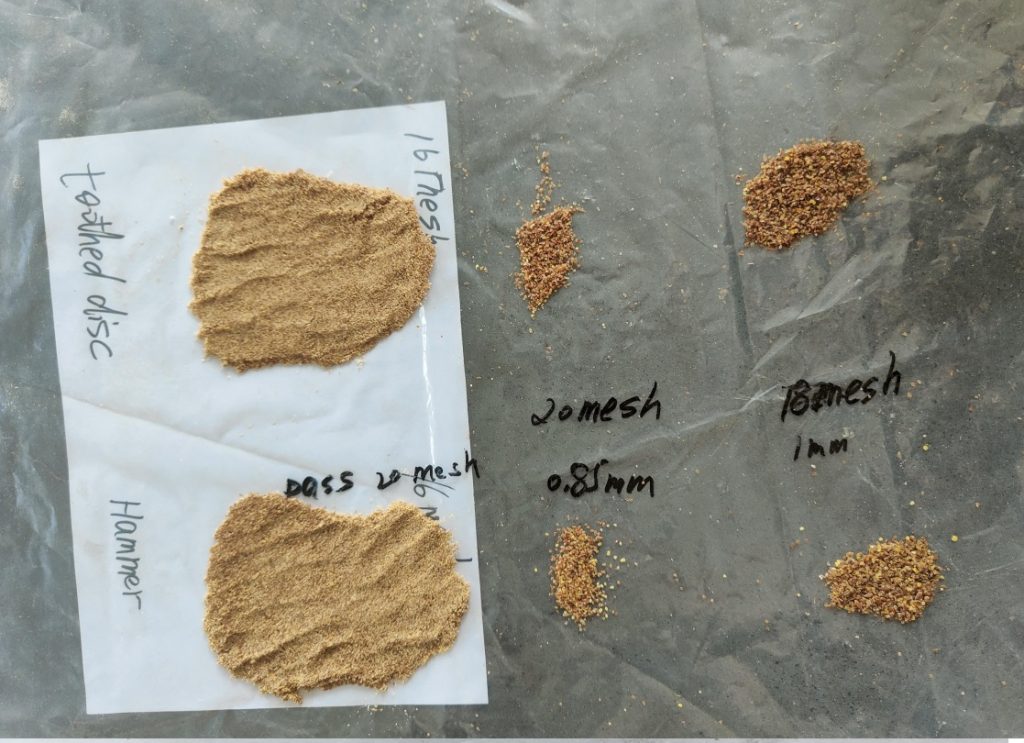
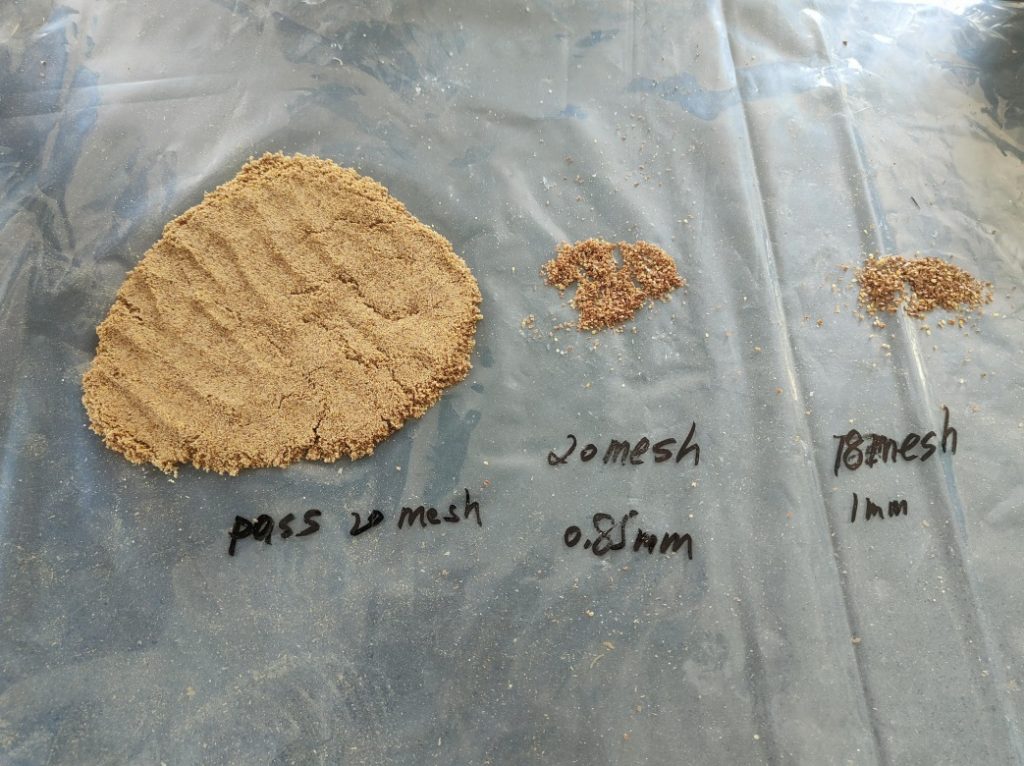
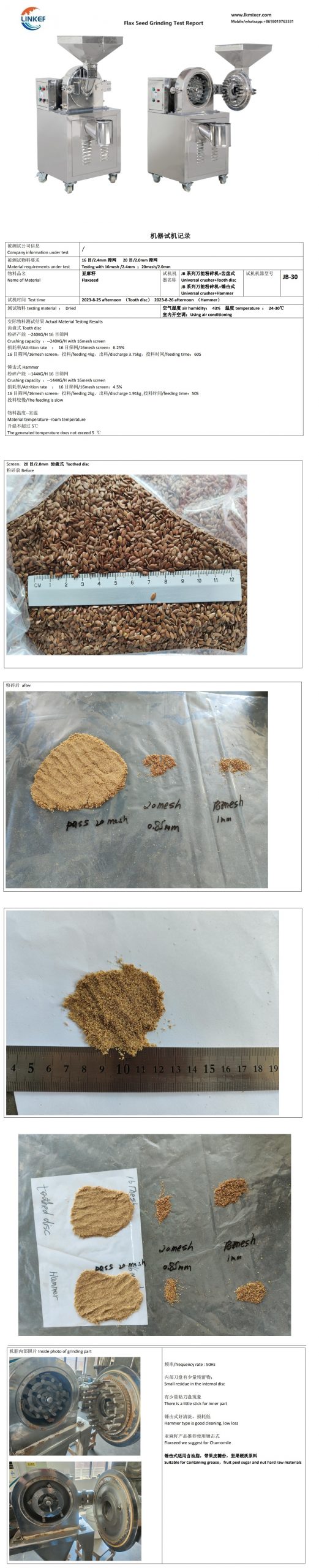
A flax seed grinder is a type of seed nut grinder specifically designed for grinding flax seeds. Flax seeds are small, hard seeds that are packed with nutrition and are commonly used in baking and cooking. Grinding flax seeds helps to unlock their nutrients and make them easier to digest.
Flax seed grinders typically feature sharp blades or burrs that rotate to crush the flax seeds into a fine powder. This powder can then be used in a variety of recipes, such as smoothies, baked goods, and yogurt toppings. Some flax seed grinders are manual and require hand-cranking, while others are electric and feature powerful motors for faster grinding.
When choosing a flax seed grinder, it’s important to look for one with durable blades or burrs that can withstand the hard texture of flax seeds.
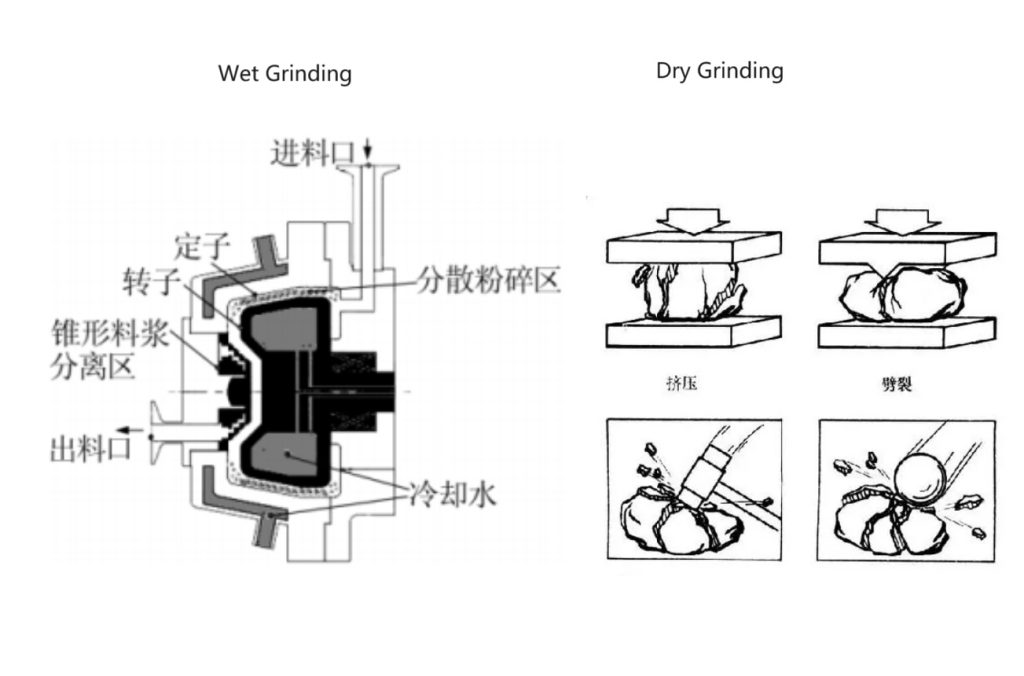
There are 3 ways of cooling down the grinder: water cooling system; air cooling system and liquid nitrogen freezing system. You can choose the right one if the grinder gets too hot. When machines goes too hot, the metal can expand, causing the grinding wheel to get stuck.
| Business Type: | Manufacturer/Factory | Main Products: | Mill, grinder, granulator, mixer, Crushing Equipment |
| Number of Employees: | 100 | Year of Establishment: | 2014.05 |
| Production Capacity | 5000Set/Year | After-sales Service: | Technical Support; on-line teach lessons |
| R&D Capacity: | ODM, OEM | Annual Output Value: | US$5 Million – US$10 Million |
| No. of R&D Staff: | 5 | No. of Production Lines: | 6 |
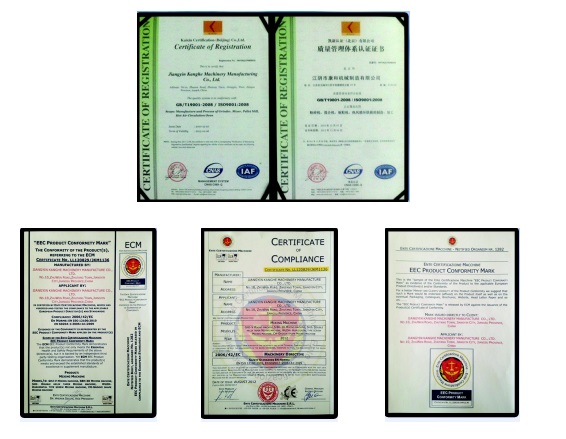
LK Mixer is a professional manufacturer for grinder, mixer and pulverizer. These machines are widely used in pharmaceutical, cosmetic, health care products and chemical industries. Our main product including granulating machine, grinder, mixer, dryer, etc. All mechanical products in accordance with the China GMP design requirements. And also we have other certifications such as CE, UL for motors.
Business Philosophy
“Quality is the main policy of sales” and “integrity is the principle of success” are the business philosophy of our people. We carry out one-year warranty, lifelong maintenance service, with technical consultation, with material test machine and other services, and long-term supply of equipment. Welcome new and old customers to negotiate cooperation!
Certifications:
Customer Side Machine Groups Showcase Videos:
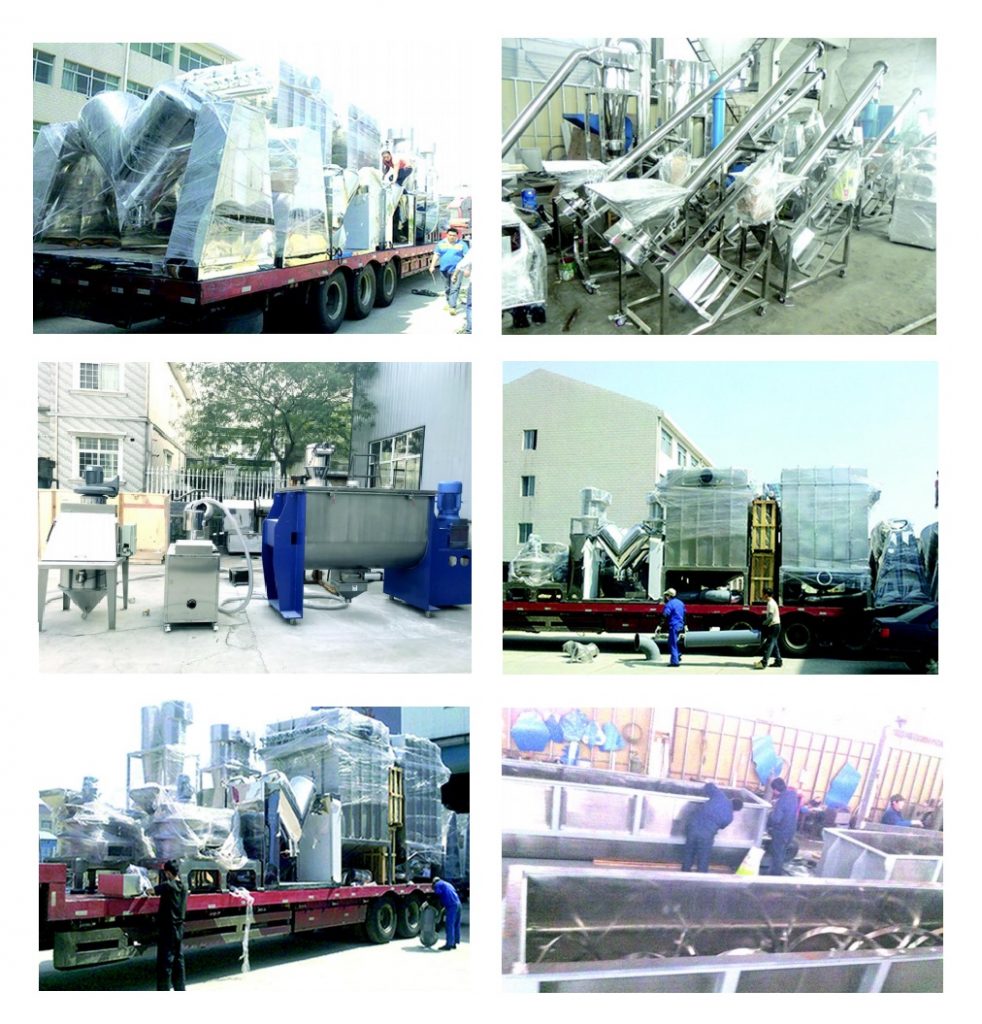
Dust Collector Shipment
Shipment – Packing Method
Two Large Industrial Grinder Ready to Ship
Domestic Shipment Show Case:
Operation Instruction
General Provisions
The operation instructions for a commercial grinder may vary depending on the specific model and manufacturer. However, here are some general guidelines that may apply to many high speed grinders:
- Safety precautions: Before operating the high speed grinder, it is important to review all safety precautions and warnings provided in the user manual. Safety precautions may include wearing appropriate personal protective equipment, such as eye protection and hearing protection, and avoiding loose clothing or jewelry that could become caught in the grinder.
- Preparation: The high speed grinder should be placed on a stable and level surface, and all necessary components should be assembled according to the manufacturer’s instructions. The grinder should also be connected to a power source that is appropriate for its voltage and wattage.
- Loading the grinder: The material to be ground should be loaded into the grinder according to the manufacturer’s instructions. Overloading the grinder may cause damage to the machine and result in poor grinding performance.
- Starting the grinder: The grinder should be started according to the manufacturer’s instructions. This may involve pressing a button, turning a dial, or flipping a switch. The user should ensure that their hands are clear of the grinder and that the material to be ground is positioned properly.
- Adjusting the speed and settings: The speed and other settings of the high speed grinder may be adjusted according to the material being ground and the desired outcome. The user should follow the manufacturer’s instructions for making adjustments to the grinder.
- Monitoring the grinding process: The user should monitor the grinding process to ensure that it is progressing smoothly and that the material is being ground to the desired size and consistency. Any issues or abnormalities should be addressed promptly to prevent damage to the machine.
- Shutting down the grinder: When the grinding process is complete, the grinder should be shut down according to the manufacturer’s instructions. The user should ensure that the machine is completely stopped and that all moving parts have come to a complete stop before attempting to clean or service the grinder.
Overall, the operation instructions for a commercial grinder may involve a number of steps and safety precautions. It is important to carefully review the manufacturer’s instructions and follow proper operating procedures to ensure safe and effective use of the machine.
Preparation Work
Before running a commercial grinder, there are several important preparation steps that should be taken to ensure safe and effective operation of the machine. Here are some general guidelines for preparing to run a high speed grinder:
- Read the user manual: The first step in preparing to run a high speed grinder is to carefully read the user manual provided by the manufacturer. The user manual will provide important information about the specific model of grinder being used, including its features, specifications, and safety precautions.
- Select the appropriate grinding wheel: The grinding wheel used in a high speed grinder should be selected based on the material being ground and the desired outcome. It is important to use the correct type of grinding wheel to prevent damage to the machine and ensure optimal grinding performance.
- Inspect the grinder: Before running the grinder, it is important to inspect it for any signs of damage or wear. The user should check for loose or missing components, cracks or other signs of damage to the machine’s housing or other parts, and any other issues that could affect the grinder’s operation.
- Install the grinding wheel: The grinding wheel should be installed according to the manufacturer’s instructions, making sure that it is securely fastened and aligned properly. The user should also check the wheel for any cracks or other signs of damage before installation.
- Secure the workpiece: The workpiece to be ground should be securely clamped or held in place before starting the grinder. This will help to ensure safe and effective operation and prevent the workpiece from becoming dislodged or damaged during grinding.
- Connect the power source: The high speed grinder should be connected to a power source that is appropriate for its voltage and wattage. It is important to use a properly grounded power source to ensure safe and reliable operation of the machine.
- Test run: Before beginning actual grinding operations, it may be useful to perform a test run to ensure that the grinder is functioning properly and that the grinding wheel is aligned and balanced properly. The user should follow the manufacturer’s instructions for performing a test run.
By following these preparation steps, users can ensure safe and effective operation of a high speed grinder and achieve optimal grinding results.
Treatment of inspection
Inspection of a commercial grinder is an important maintenance procedure that helps ensure safe and effective operation of the machine. Here are some general guidelines for inspecting a high speed grinder:
- Disconnect power source: Before performing any inspection or maintenance on a high speed grinder, the power source should be disconnected to prevent accidental startup.
- Check for wear and damage: The user should inspect the grinder for any signs of wear or damage, such as cracks in the housing, worn or damaged grinding wheels, or loose or missing parts. Any issues should be addressed promptly to prevent further damage to the machine.
- Check alignment and balance of grinding wheel: The grinding wheel should be inspected for proper alignment and balance, as these factors can affect the quality of the grinding operation. If the grinding wheel is not properly aligned or balanced, it should be adjusted or replaced as necessary.
- Check for proper lubrication: The high speed grinder should be inspected for proper lubrication, as inadequate lubrication can cause excessive wear and damage to the machine’s moving parts. The user should follow the manufacturer’s instructions for lubrication, and add lubricant as necessary.
- Inspect electrical components: The electrical components of the high speed grinder, including the wiring, switches, and control panel, should be inspected for any signs of wear, damage, or loose connections. Any issues should be addressed promptly to prevent electrical problems.
- Test run: After completing the inspection, it may be useful to perform a test run of the high speed grinder to ensure that it is functioning properly and that any issues have been addressed.
By following these inspection guidelines, users can help ensure safe and effective operation of a high speed grinder and minimize the risk of damage or injury during grinding operations.
Operation Attention
Running a commercial grinder can be a dangerous operation if proper precautions are not taken. Here are some general guidelines for safe operation of a high speed grinder:
- Personal protective equipment: The user should wear appropriate personal protective equipment, such as safety glasses, hearing protection, and gloves, to prevent injury from flying debris, noise, and contact with the grinding wheel.
- Secure workpiece: The workpiece being ground should be securely clamped or held in place to prevent it from becoming dislodged during grinding.
- Use proper grinding wheel: The user should select the appropriate grinding wheel for the material being ground and ensure that it is installed correctly and securely. The grinding wheel should be inspected for cracks or other damage before use.
- Adjust grinding wheel speed: The speed of the grinding wheel should be adjusted according to the manufacturer’s instructions to ensure optimal grinding performance and prevent damage to the machine or workpiece.
- Avoid excessive pressure: The user should avoid applying excessive pressure to the grinding wheel, as this can cause the wheel to overheat and wear out more quickly.
- Avoid overheating: The high speed grinder should not be operated continuously for extended periods of time, as this can cause overheating and damage to the machine.
- Monitor grinding operation: The user should closely monitor the grinding operation to ensure that the workpiece is being ground properly and that the grinding wheel is functioning correctly.
- Disconnect power source: After completing grinding operations, the power source should be disconnected to prevent accidental startup.
By following these guidelines, users can operate a high speed grinder safely and effectively, and achieve optimal grinding results. It is important to follow the manufacturer’s instructions and all applicable safety regulations when operating any type of machinery.
Applications of Industrial Seed Grinder
Industrial seed grinders are used in a variety of applications across many industries. Here are some of the most common applications of industrial seed grinders:
- Food industry: Industrial seed grinders are used extensively in the food industry to grind seeds, nuts, and spices into fine powders or pastes. These powders and pastes are then used in a variety of products such as sauces, seasonings, and spreads.
- Pharmaceutical industry: In the pharmaceutical industry, industrial seed grinders are used to grind plant material into a fine powder, which is then used to make medicines and supplements.
- Cosmetics industry: Industrial seed grinders are also used in the cosmetics industry to grind plant material into a fine powder or paste, which is then used in products such as face masks, scrubs, and exfoliants.
- Agricultural industry: Industrial seed grinders are used in the agricultural industry to process seeds, such as soybeans, into animal feed.
- Chemical industry: In the chemical industry, industrial seed grinders are used to grind materials such as resins, pigments, and dyes into a fine powder.
- Renewable energy industry: Industrial seed grinders are also used in the renewable energy industry to process biomass into a fine powder, which is then burned to generate electricity.
Overall, industrial seed grinders are versatile machines that are used in many different industries for a variety of applications. They are essential for processing plant material into fine powders and pastes that can be used in many different products.
Food Producing Process Flow:
Ultrafine grinding is one of the very key procedure in whole production line. It depends how many mesh that customer need to produce. That’s to say this machine can decide what kind of material will get finally before mxing.
Coarse Crusher Machine —>Grinding Machine —> Vibrating Table Sifter Machine—>Mixing Machine—>Packing Machine —> (Printed Packaging Film Roll or bags ) —> Filling, sealing machine, capping and Labeling Machine —>Pack into Box.
Contact us for detail proposal and cost:
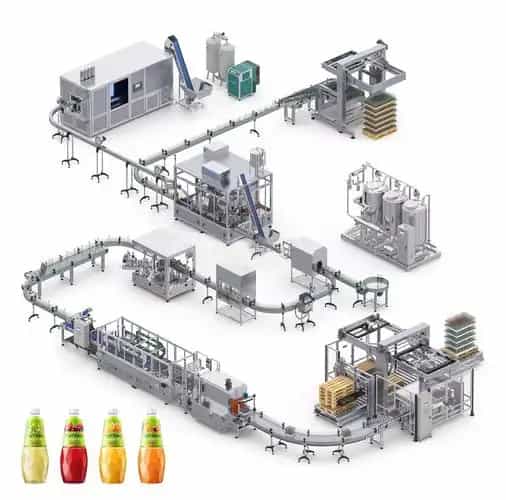

Automatic Banana Powder Production Line Youtube Video
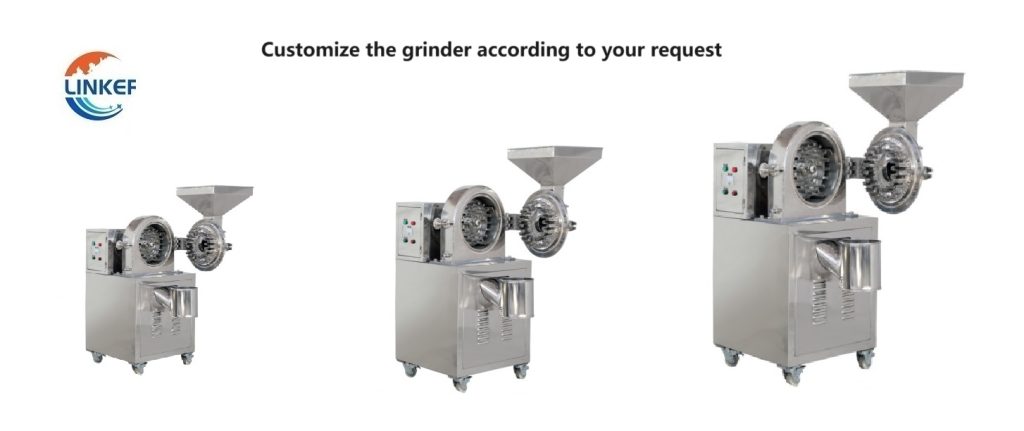
Customization Seeds Grinder According to your Capacity:
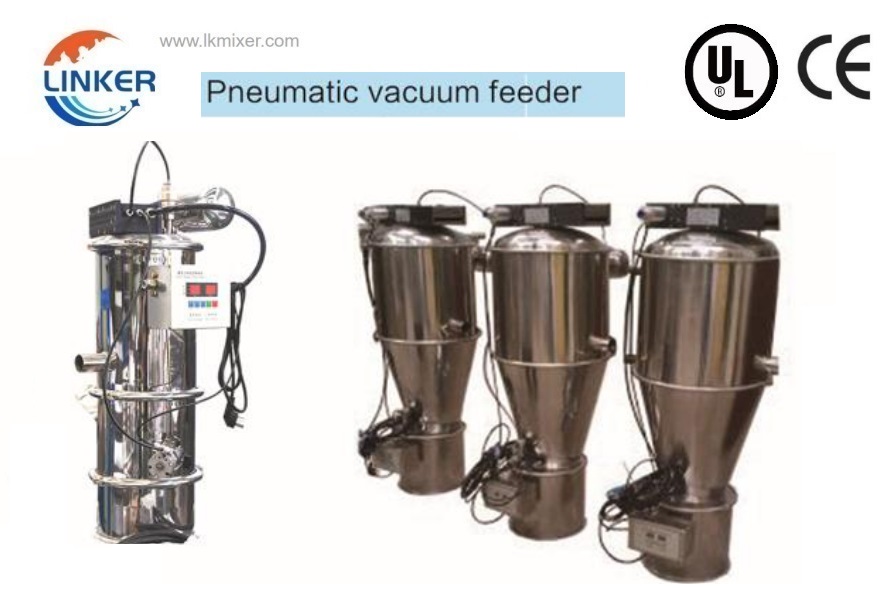
We can customize the capacity according to your special requirement, we can also customize the vacuum feeder connect with your production line (the dimension and width of grinder), for detail contact with our sales for proposal and price.
Videos of Seeds Grinder Machine:
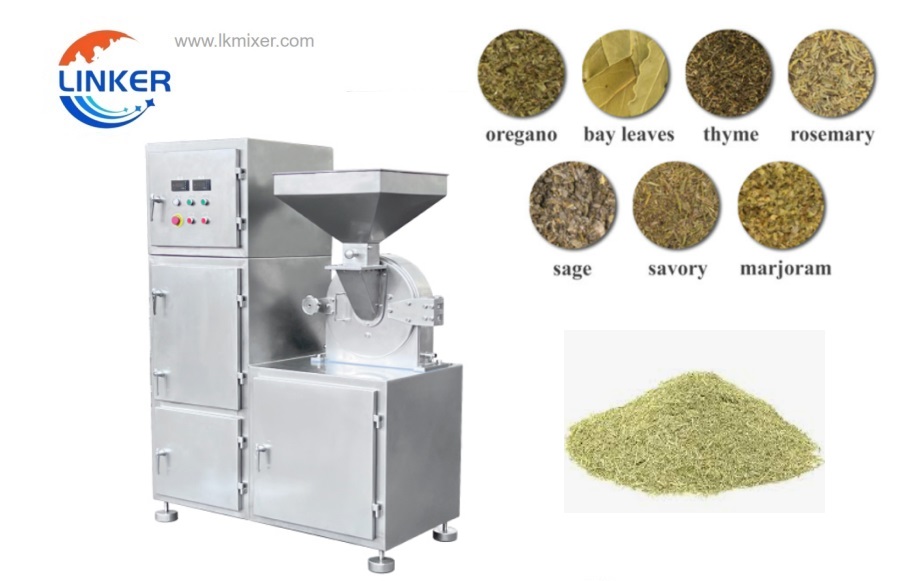
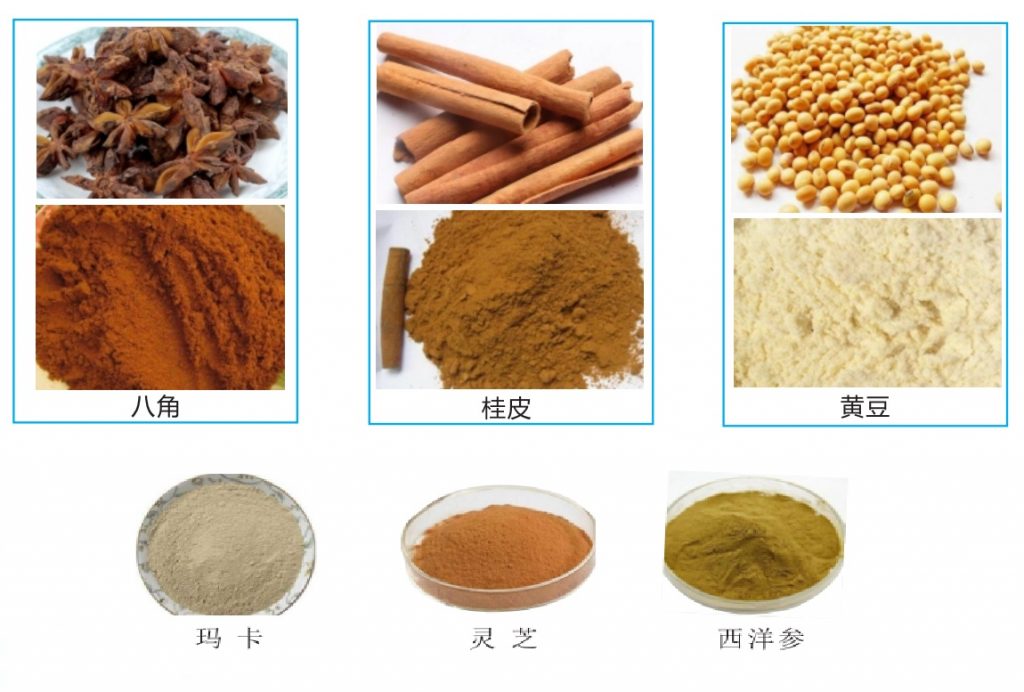
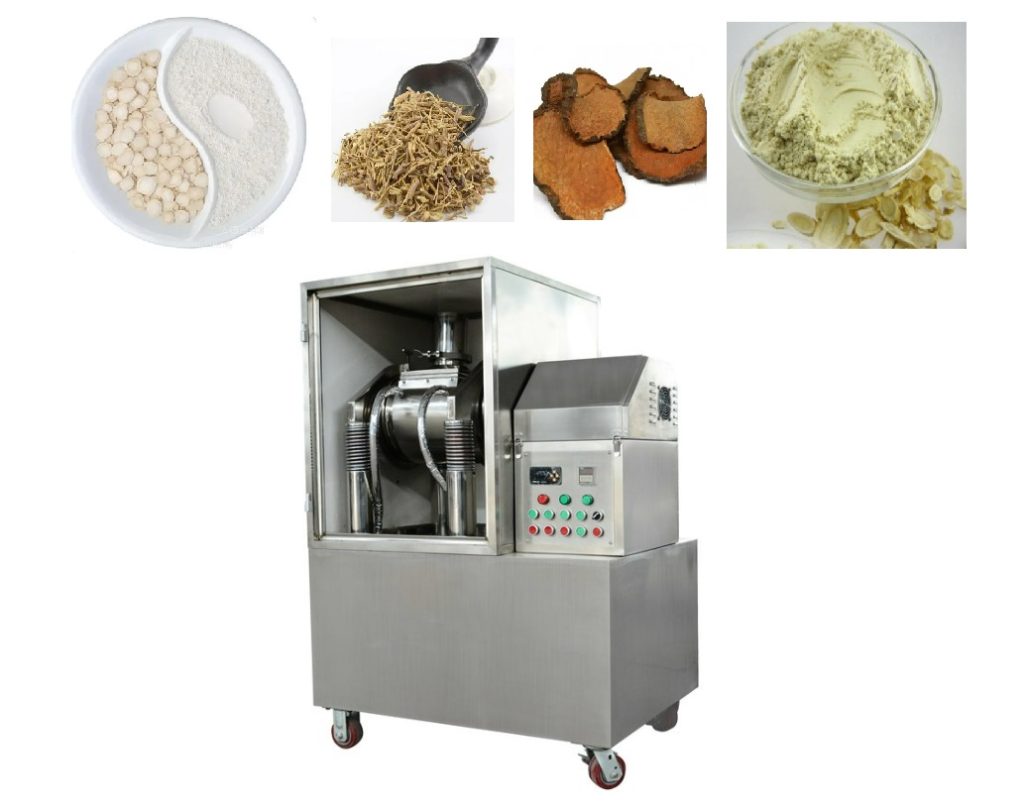
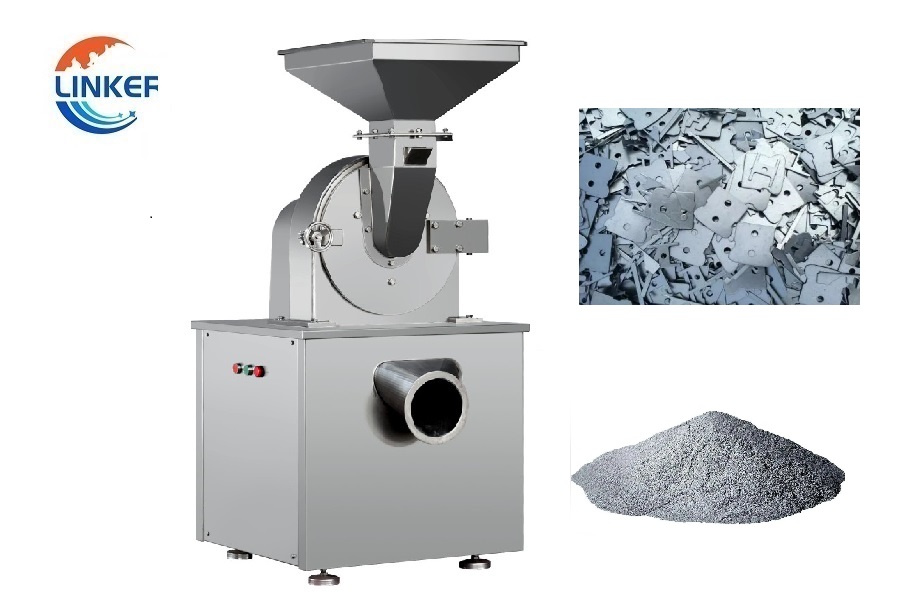
Many model of Seeds Grinder, the universal grinder is suitable to cut the seeds into 12-120mesh, the high efficient grinder is useful, but cost a little bit higher than universal. The super fine grinder can grind into 100mesh to 320mesh. Customer can choose according to your own requirement. here show some example:
About LKMixer
LKMixer is a professional manufacturer for fertilizer production line, grinder, mixer and granulator, shredder. These machines are widely used in food, pharmaceutical, cosmetic, health care products and chemical industries. The Food materials like Peanut, mushroom, seeds, potato, bean, tobacco, salt, cannabis, tea, Sugar, corn, Coffee, rice, pepper, grain as so on. Grinders have many types such as Pulse Dust Grinder which suitable for zero pollution environment, Turbine Mill which is suitable for coffee bean, 12-120mesh all can meet, Ultrafine Grinding Mill covers 80-200mesh, and also Winnowing Dust Grinder or other grinding machines like SF Hammer. Welcome to contact us for details. Contact us for more information. Proposal, catalog, quotation. Mobile/WhatsApp: +86 18019763531 Tel: +86 21 66037855 Email: sales@lkmixer.com
Contact Us
FAQ(Click and See More)
Read More about Herb Grinder:
Why are herb grinders so expensive?
Are electric herb grinders good?
What is the best way to grind up herbs?
Can you chop herbs in a coffee grinder?
How to grind dried herbs into powder?
Click and read more about mushroom grinder:
Click and Read More about Pulverizer:
Click to more questions about Seeds grinder:
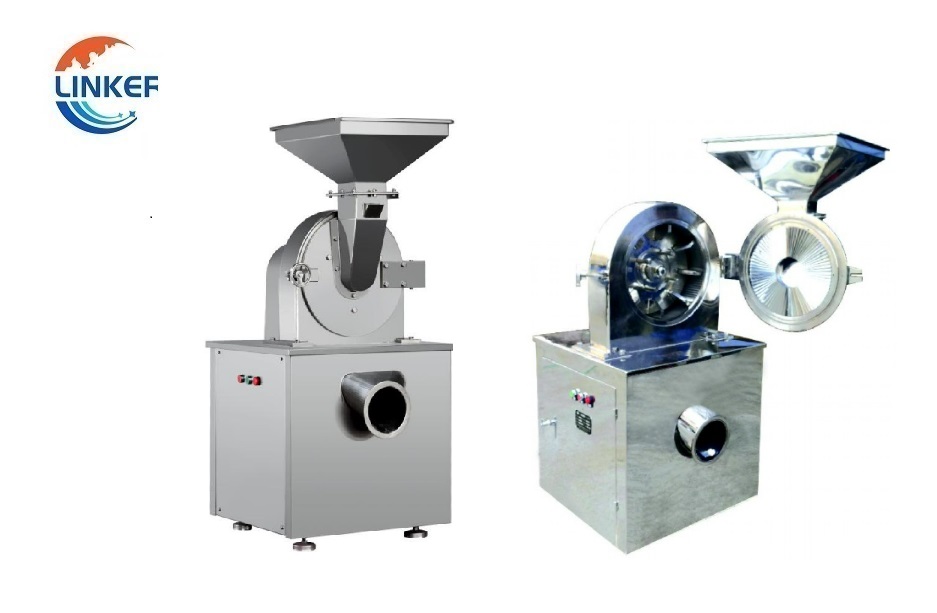
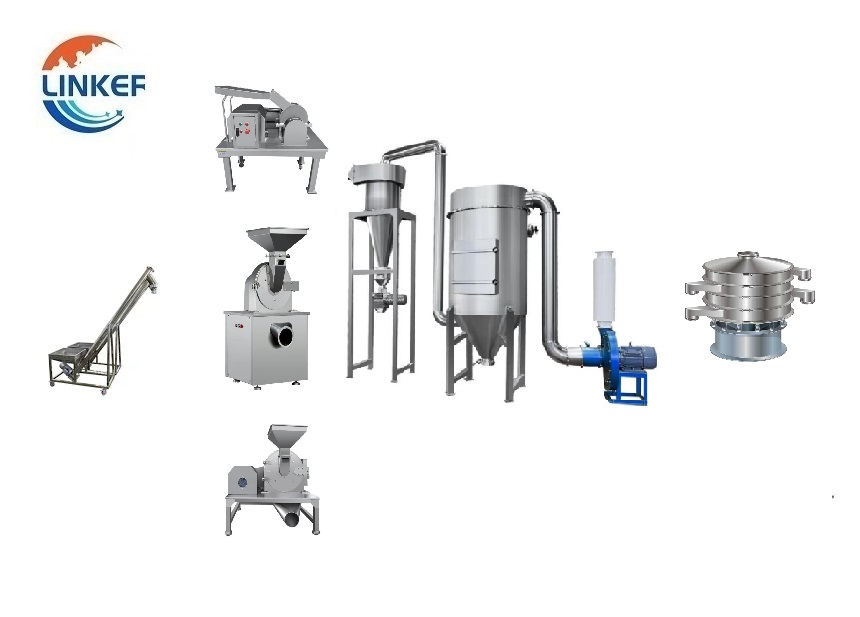
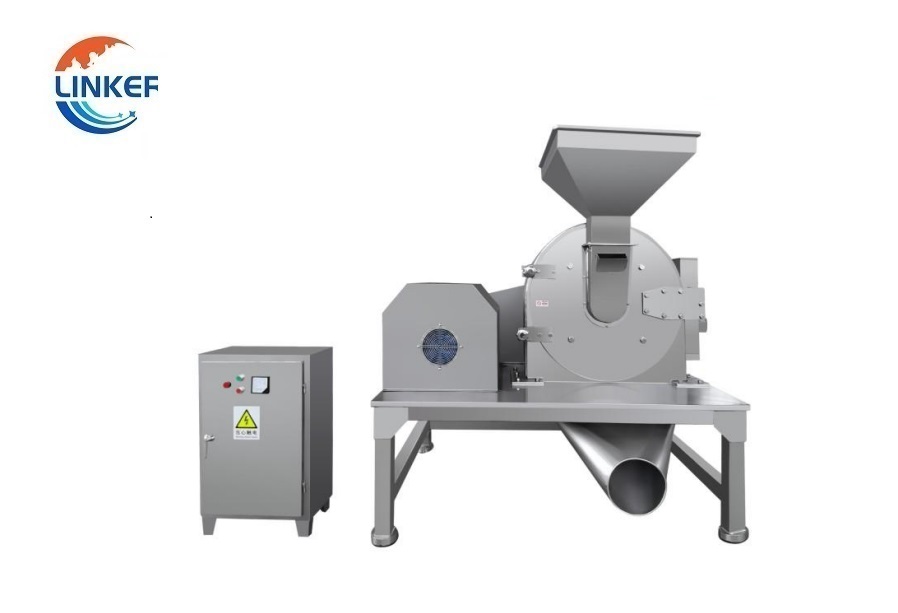
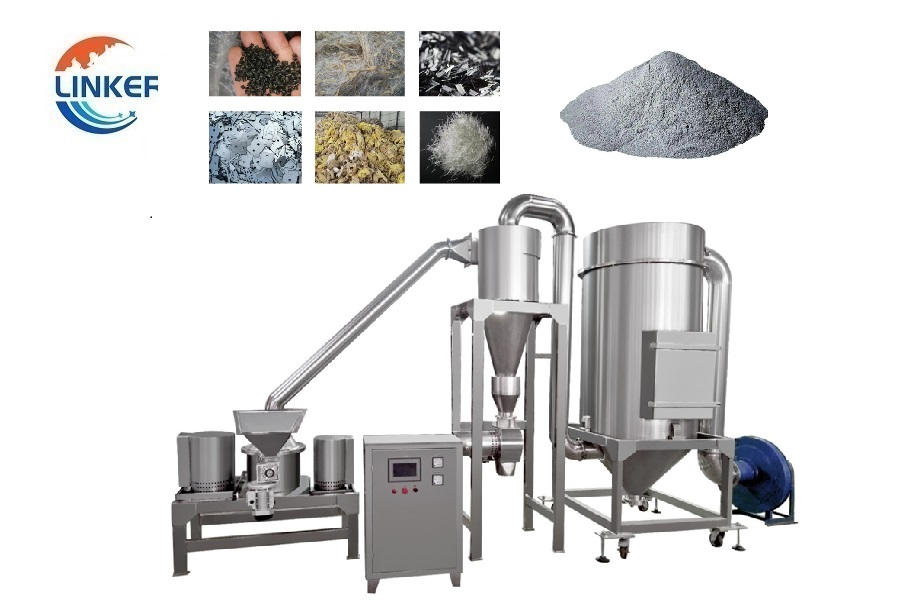
Grinding Machine for Sale:
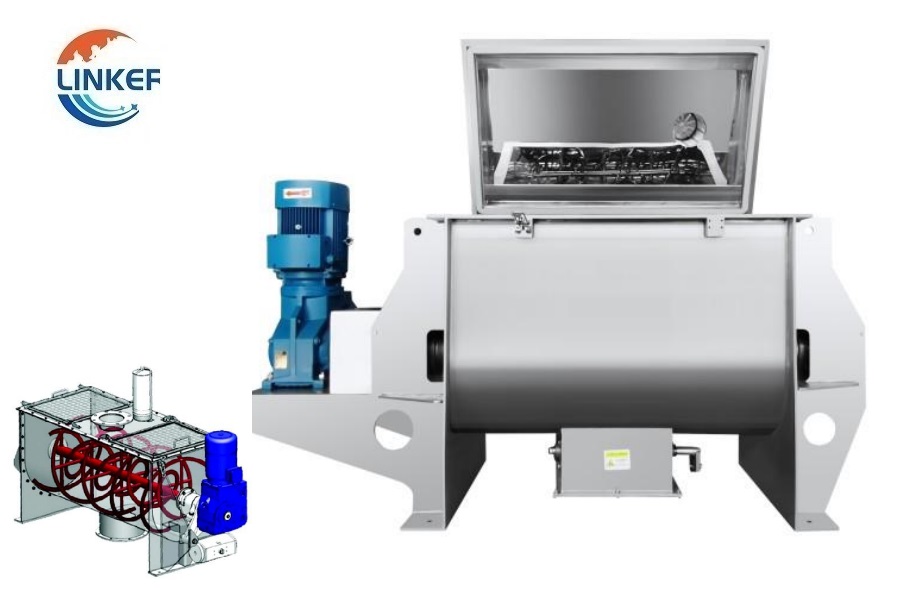
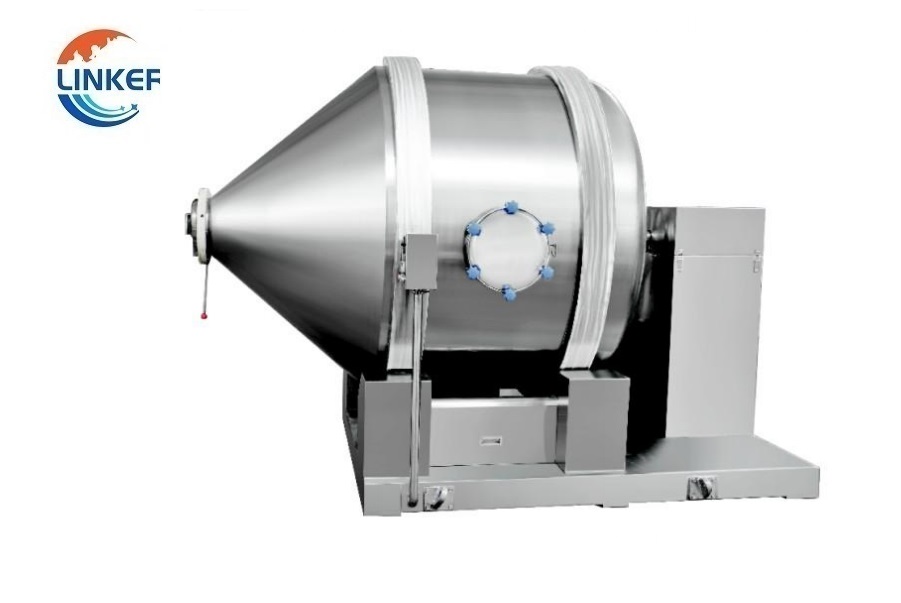
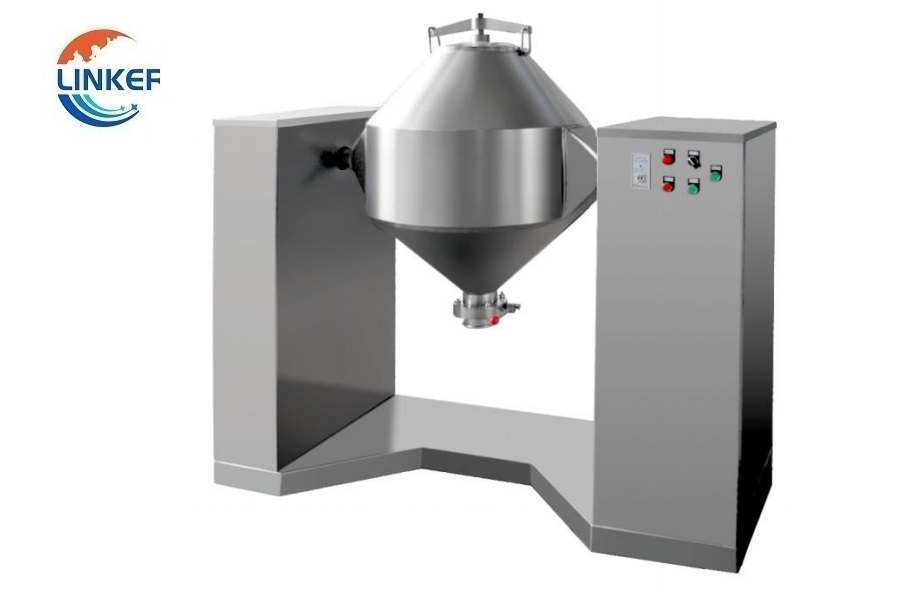
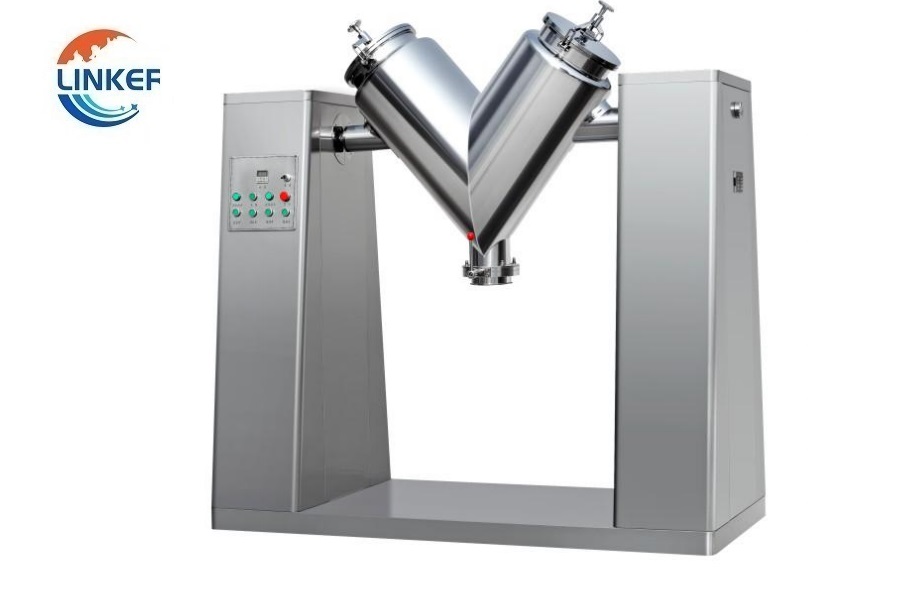
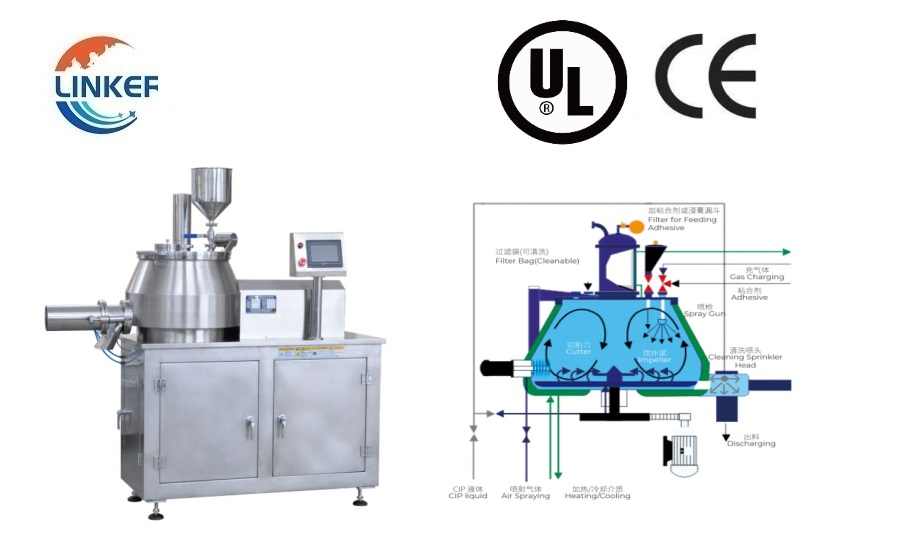
Blending and Mixing Machine for Sale
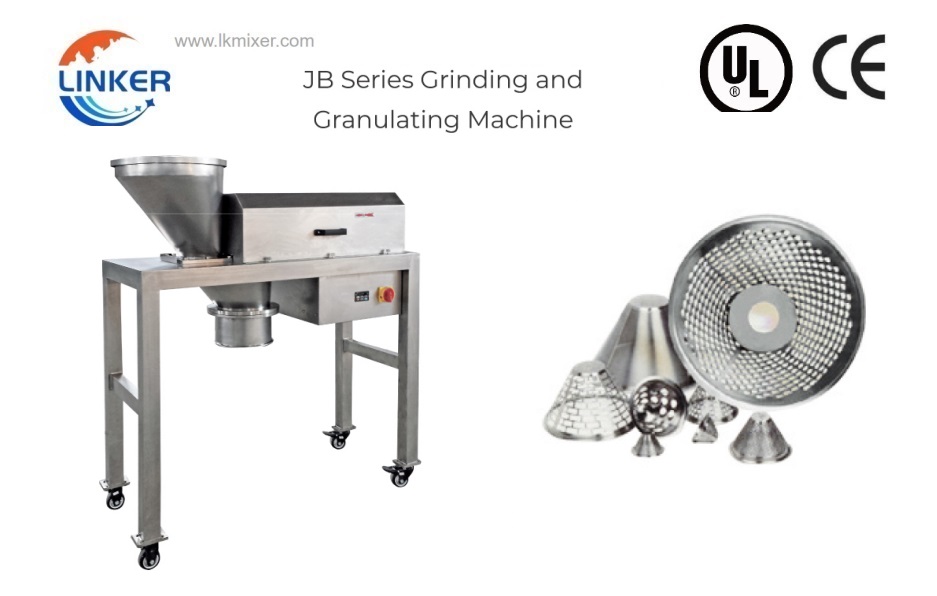
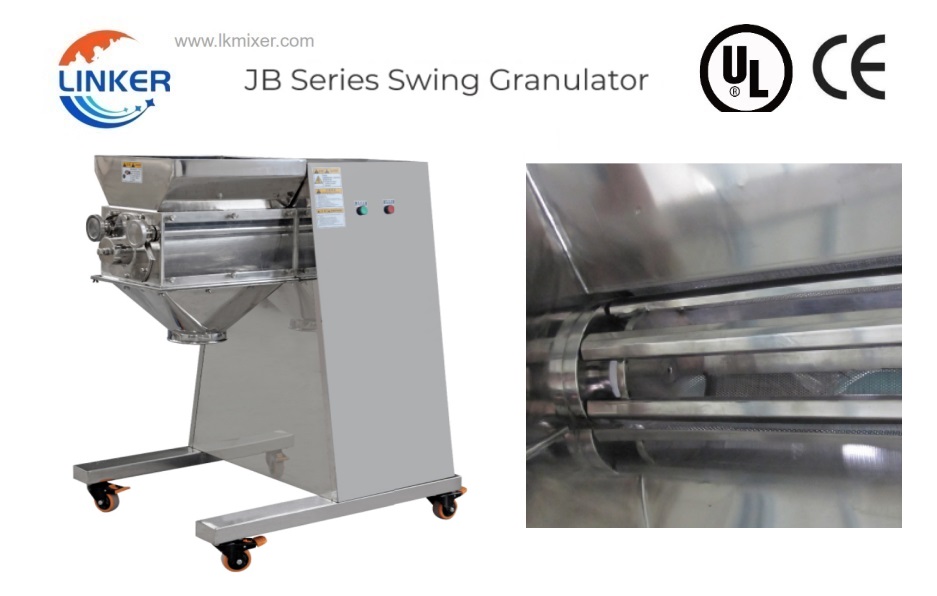
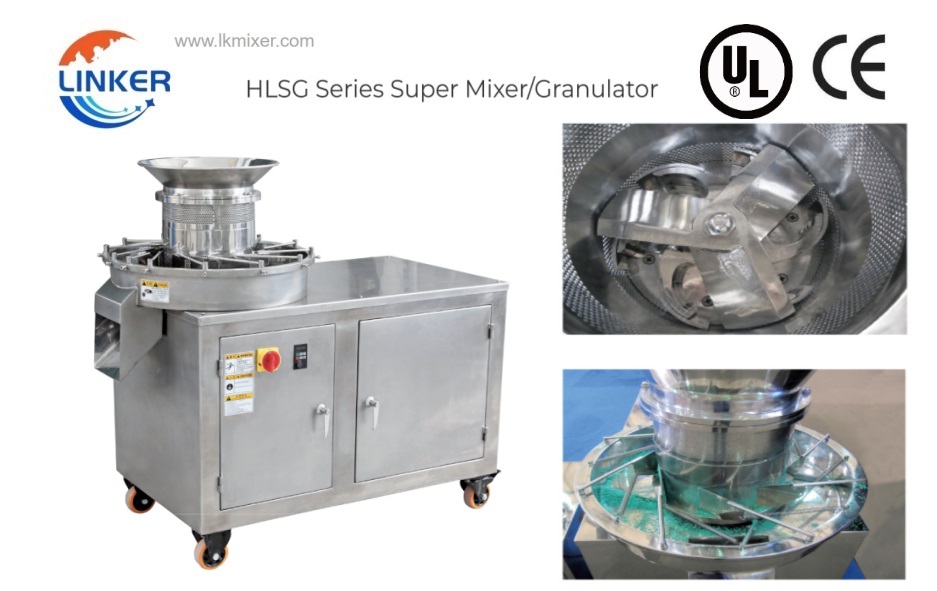
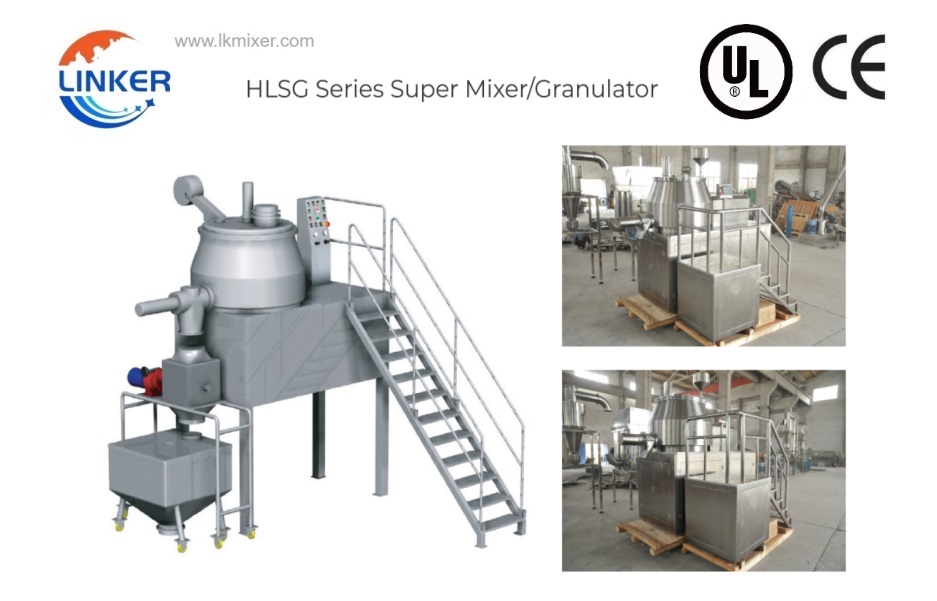
Granulating Machine for Sale:
Auxiliary Machine for Sale:



Recommend Reading


Industrial Dry Granulating Machine for Sale:
Industrial Grinder for Sale:
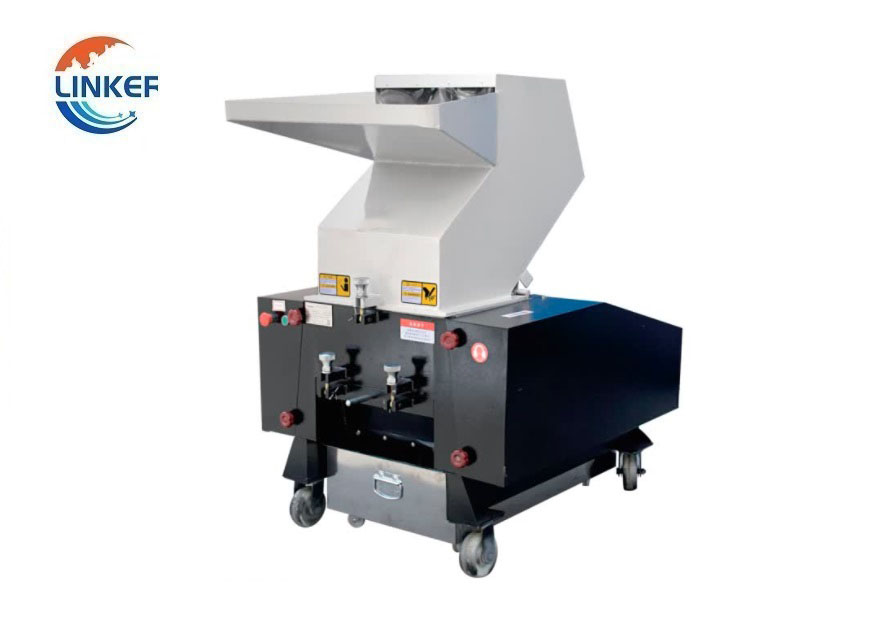
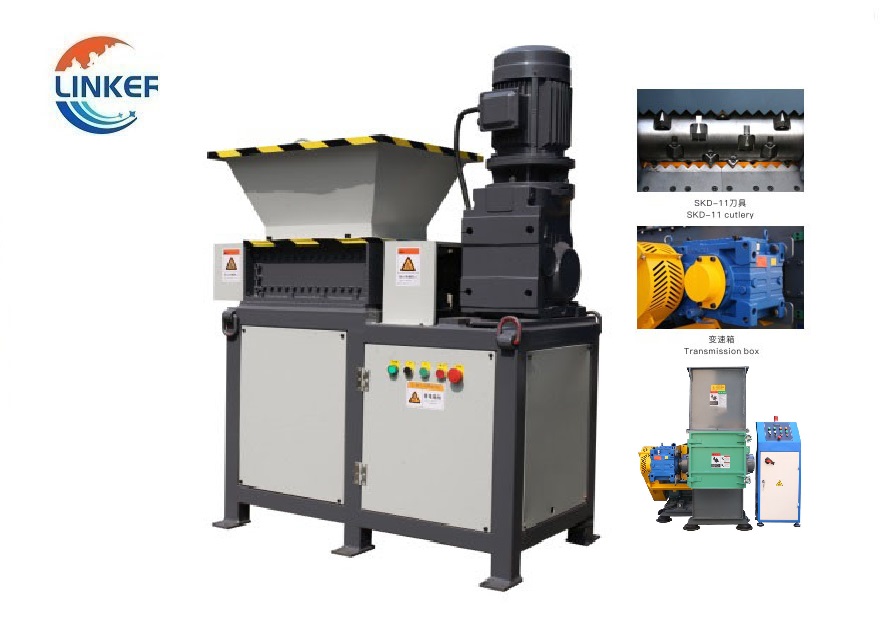
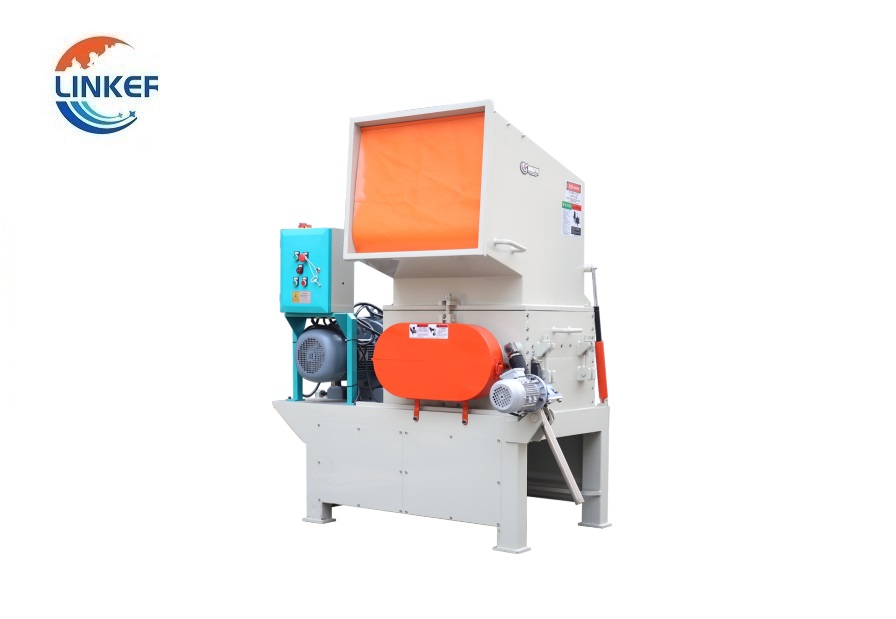
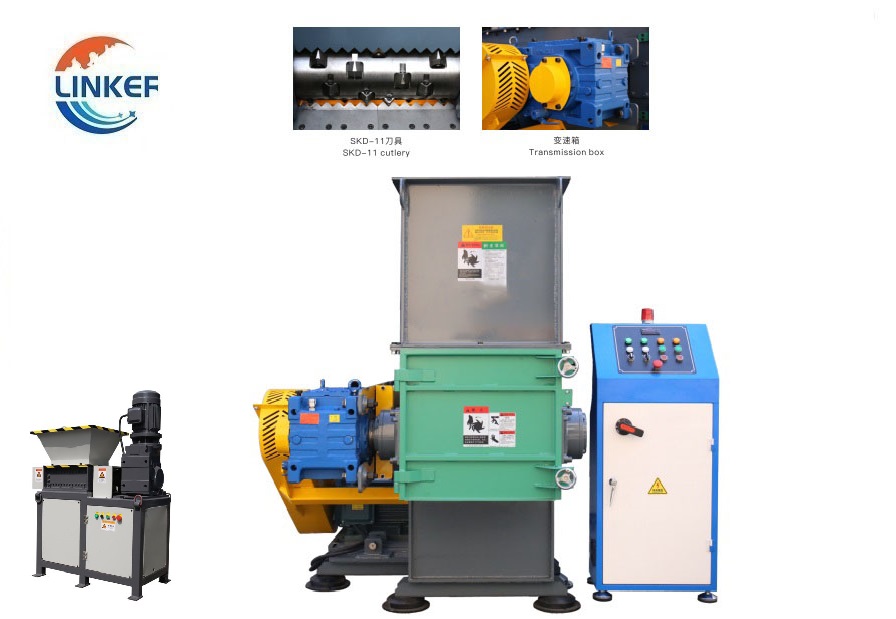
Industrial Vibrating Screen for Sale:
Industrial Vacuum Feeder for Sale:
Potato Flakes Process Flow
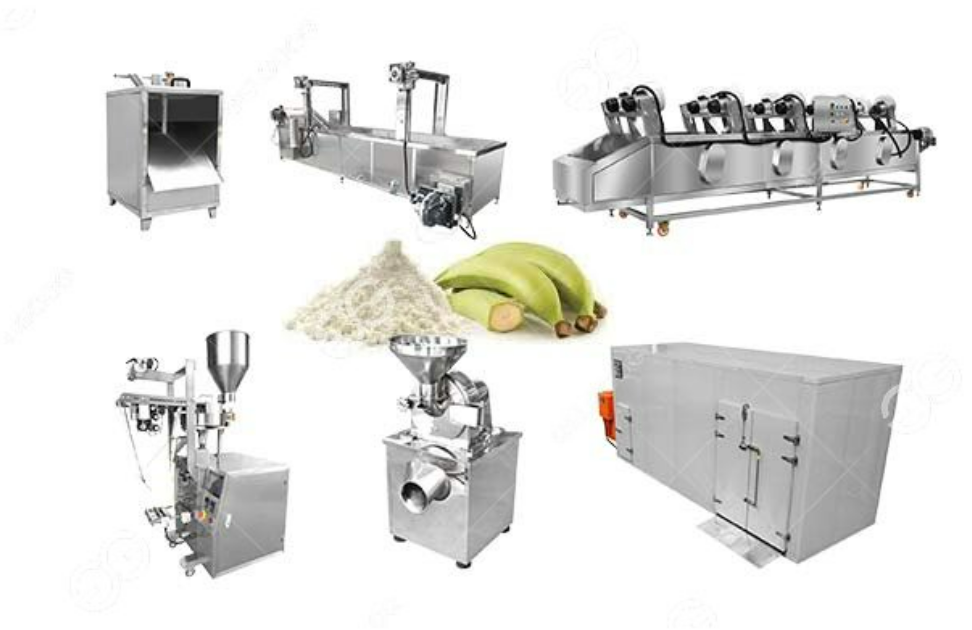
- Banana Washing Machine
- Banana Pealing and Cutting Machine
- Banana Drying Machine
- Banana Grinding Machine
- Banana Powder Mixing Machine
- Banana Powder Filling Machine
- Banana Powder Packing Machine
Potato Flakes Automatic Productino Line Design:x`
Automated Production Line for Potato Flakes
An Automatic Potato Flakes Production Line is a highly integrated, continuous food processing system that uses a fully automated process of washing, peeling, slicing, blanching, frying, de-oiling, seasoning, and packaging to turn raw potatoes into finished, packaged potato chips (crisps). Its main goal is to accomplish large-scale, efficient, standardized manufacturing that will greatly increase output capacity and guarantee consistent, high-quality output.
A Comprehensive Explanation of the Core Process Flow
Raw potatoes are automatically ingested to start the process. The potatoes are raised into the processing stream by an elevator or charger device. The initial crucial phase entails meticulous cleaning and peeling. An ᵸ泡 and brush-washing peeling machine efficiently eliminates dirt, debris, and skins from potatoes, leaving a clean surface for slicing. The cleaned potatoes are then transported to the slicing station. Here, straight edges and regular slice thickness are ensured by high-precision cutting slicers, which frequently have interchangeable blades. This is essential for reliable frying. This slicer is designed to meet the precise texture and size criteria of potato flakes, but it operates with the accuracy of a specialized industrial weed grinder or herb grinder.
The potato chunks are sliced and then blanched. In addition to removing extra surface starch for a cleaner fry and inactivating enzymes to prevent discolouration, this hot water or steam treatment also slightly pre-cooks the product. The slices are dewatered using vibrating screens or centrifugal force after blanching. Here, efficient dehydration is essential because it lowers the initial moisture content, which results in less oil absorption during frying and a crispier finished texture. After that, the dewatered slices go into the continuous frying system, which is the center of the line. They pass through a heated oil bath at a steady, perfectly regulated temperature. Unlike batch frying, this continual frying ensures consistent color and crispness.The chips go through a de-oiling system as soon as they are fried; this is usually a basket similar to a centrifugal dry grinder, although it is made to remove oil gently rather than reduce particle size. By spinning off extra surface oil, the chips become less oily and more appetizing.
After being heated and de-oiled, the chips proceed to the seasoning area. Chips are evenly coated with powdered seasonings such as cheese, salt, or barbecue flavors using a revolving drum or powder-dusting equipment, which is similar to a universal grinder or spice blender in terms of mixing function. This apparatus guarantees a uniform taste application for each chip. Lastly, automated packing equipment receive the seasoned chips. Here, they are weighed, put into bags, and sealed. To increase shelf life, these bags are frequently filled with inert gas, such as nitrogen (modified atmosphere packaging). From the first charger to the last bag, every step of the process is smooth and coordinated, needing little personal intervention.
Important Characteristics and Benefits of the Production Line
The distinguishing feature is high automation and continuous operation. Conveyors and control systems connect every step of the line, from the first elevator to the last packaging machine. By doing this, labor costs are reduced, throughput is increased, and the irregularities that come with manual handling are eliminated. The production process is as continuous as material processing in a large industrial stainless steel mill or a high-output 500KG grinder.
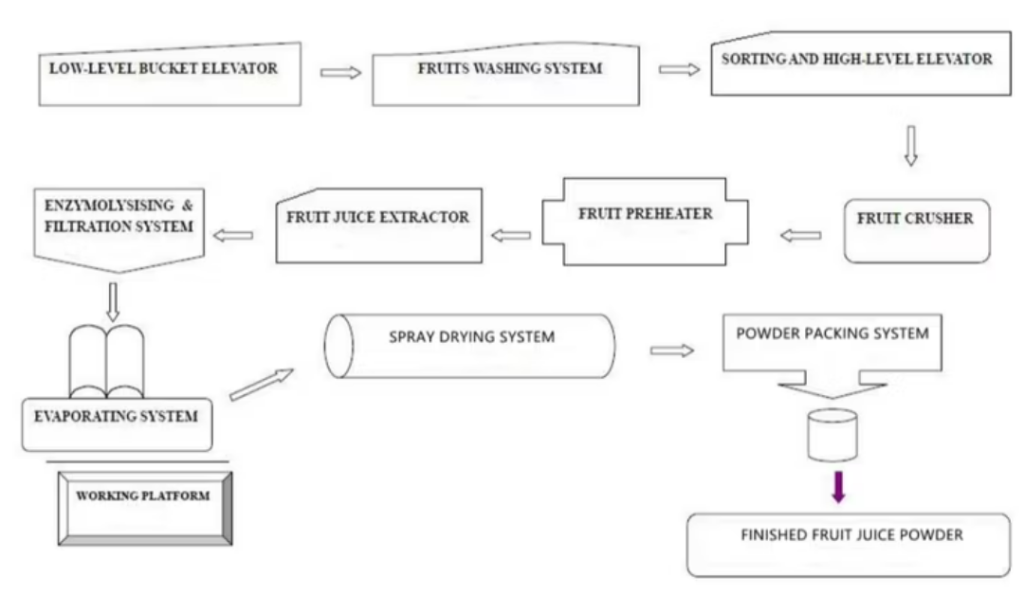
Automatic Banana Powder Production Line
Raw material treatment, color preservation, pulping, homogenization, heating, spray drying, and packing are the main operations of a fully automated banana powder production line. Each phase is highly automated to ensure production efficiency and reliable product quality.
Overview of the Automatic Production Line for Banana Powder
Through a continuous, automated series of processes, an automatic banana powder production line is made to turn fresh bananas into a fine, shelf-stable powder. From raw material intake to final packing, this system incorporates cutting-edge technology to maximize productivity, maintain consistent quality, and retain nutrients and flavor.
Raw Material Washing and Sorting
Fresh bananas are carried by a belt into the washing section, where a high-pressure spray system eliminates surface dirt and impurities. Fruits that are immature, damaged, or of poor quality are then automatically identified and eliminated by optical sorting equipment. Similar to the sorting procedures used for other food products like coffee beans, seeds, or corn, this first step is essential for guaranteeing consistent raw material quality. The automated procedure guarantees only the best fruits progress, setting the foundation for a high-quality end powder.
Slicing and Peeling
The cleaned bananas pass into an automatic peeling machine, which efficiently removes the peel by mechanical pressure or steam-assisted methods. After peeling, the bananas are chopped into uniformly thin slices using an automatic cutter. This homogeneity is crucial for consistent future processing, similar to the preparatory slicing employed in operations for mushroom or dry ginger powder manufacture. The slices give the subsequent processes the best possible surface area.
Color Preservation Treatment
The banana slices instantly enter the color preservation stage to prevent enzymatic browning. This is typically done by immersing them in a 0.2%-0.5% sodium bisulfite solution or through sulfur fumigation in a sealed tank. The procedure includes circulation recovery, timed control, and automated solution dosing. This step is vital for maintaining the appealing color and natural flavor of the banana powder, akin to treatments used in preserving the color of certain spice or tea extracts during processing.
Removal of Impurities and Pulping
The treated slices are fed into a stainless steel pulping machine, which breaks them down into a paste. Black seeds and coarse fibers are next removed from this paste by passing it through a sieve with an opening of roughly 0.5 mm. The end product is a smooth slurry with a solid content that is ideally between 13% and 15%. For beans, nuts like peanuts, or cassava, this pulping process is comparable to the first size reduction carried out by a coarse crusher prior to finer grinding.
Uniformity
The slurry undergoes a two-stage refining process. First, it runs through a colloid mill, and then through a high-pressure homogenizer. This decreases particle size to below 0.05mm, optimizing the homogeneity for spray drying and improving the solubility of the finished powder. The notion of particle size reduction is important to many grinding applications, from the ultrafine grinder used for medicine or chemicals to the hammer mill used for food materials like wheat or rice.
Heating
The homogenized slurry is moved to an insulated tank that has been heated to between 45 and 50 degrees Celsius. In order to facilitate atomization during spray drying, this step reduces the viscosity. Equipped with an agitator to prevent localized overheating, the temperature and time are accurately controlled by the PLC system. In other powder production lines, such those for dry fruit powder or the processing of heat-sensitive materials in a cryogenic grinding machine, precise thermal control is also essential.
Spray Drying
A high-pressure pump transports the heated slurry into a co-current pressure spray drying tower. When the slurry comes into contact with heated air inside the tower, it is quickly atomized and dehydrated into powder. To guarantee that the moisture level of the banana powder stays below 4.16% and maintains optimum flowability, the tower has an automated powder discharge and cooling system. Drying technique is a cornerstone of powder production, distinguishing from methods used for bone meal or tobacco, which could employ a dry grinder or vacuum mill after initial drying.
Sieving and Cooling
A fluidized bed cooler is used to cool the powder that leaves the drying tower to below 50°C. It next goes through a vibrating sieve for particle size classification, ensuring the final product is loose and free of lumps. Sieving or sifting is a frequent final step in powder processing, whether for banana powder, flour, sugar, salt, or specific powders produced by an airflow pulverizer or vibrating pulverizer.
Automatic Packaging
An automated packing machine receives the cooled and sieved banana powder. Weighing, vacuum sealing, and inert gas flushing (such as nitrogen) are all done by this equipment. To stop moisture absorption and increase shelf life, the powder is usually wrapped in aluminum foil or composite film bags. Automated packaging is standard in the food and chemical industries, ensuring hygiene and efficiency for products ranging from spice blends to tea granules.A central control system (PLC + HMI) manages the entire production line. Belt conveyors or elevators connect the equipment, allowing for completely automated operation from the feeding of raw materials to the packing of the final product. This configuration is suited for large-scale industrial production. Although this line is focused on bananas, it’s crucial to remember that many sectors share the fundamental ideas of automation, size reduction (using tools like a universal grinder, turbo grinder, or high speed grinder), drying, and packaging. For instance, a huge stainless steel dry fruit powder grinder machine shares design principles with components here, and a dust collector grinder is important in any process, like licorice grinding or black pepper grinder operation, to keep a clean environment.Additionally, whether it’s a small grinder machine for boutique spice shops or a 500KG grinder for bulk food processing, equipment bearing the CE Certificate grinder logo guarantees conformity with international safety requirements. Though they are adapted to particular materials like metal (for machining), meat (for rendering), or delicate herbs, the basic objectives of effective, controlled size reduction and product handling remain the same whether using an electric grinder in a kitchen, an industrial cannabis grinder, or specialized cannabis processing equipment.
Parameters:
Model Name | SG-600 | |
| Crushing Capacity(kg/h) | 1000~2000 | |
| Power(kw) | 11 | |
| Feeding Size(mm) | <5mm | |
| Fineness(mesh) | 20~40mesh |
Model Name | SG-800 | |
| Crushing Capacity(kg/h) | 2000~4000 | |
| Power(kw) | 15 | |
| Feeding Size(mm) | <5mm | |
| Fineness(mesh) | 20~40mesh |
Trade Capacity
| International Commercial Terms(Incoterms): | FOB, CIF, CFR | Terms of Payment: | LC, T/T, PayPal, Western Union |
| Average Lead Time | 60 working days | Main Markets | North America, South America, Europe, Southeast Asia/ Mideast, East Asia(Japan/ South Korea), Australia, Domestic |
| Nearest Port: | Ningbo Port; Shanghai Port | Factory Address: | JiangSu, China |
Ampere of Motors Customization for Seeds Grinder:
| KW | HP | Ampere |
| 75kw | 100HP | 135A |
| 55kw | 75HP | 99A |
| 30kw | 40HP | 54A |
| 22kw | 30HP | 39A |
| 2.2kw | 3HP | 3.9A |
| 1.5kw | 2HP | 2.7A |
Test Report for Flax Seed Grinder:
A flax seed grinder is a type of seed nut grinder specifically designed for grinding flax seeds. Flax seeds are small, hard seeds that are packed with nutrition and are commonly used in baking and cooking. Grinding flax seeds helps to unlock their nutrients and make them easier to digest.
Flax seed grinders typically feature sharp blades or burrs that rotate to crush the flax seeds into a fine powder. This powder can then be used in a variety of recipes, such as smoothies, baked goods, and yogurt toppings. Some flax seed grinders are manual and require hand-cranking, while others are electric and feature powerful motors for faster grinding.
When choosing a flax seed grinder, it’s important to look for one with durable blades or burrs that can withstand the hard texture of flax seeds.
There are 3 ways of cooling down the grinder: water cooling system; air cooling system and liquid nitrogen freezing system. You can choose the right one if the grinder gets too hot. When machines goes too hot, the metal can expand, causing the grinding wheel to get stuck.
| Business Type: | Manufacturer/Factory | Main Products: | Mill, grinder, granulator, mixer, Crushing Equipment |
| Number of Employees: | 100 | Year of Establishment: | 2014.05 |
| Production Capacity | 5000Set/Year | After-sales Service: | Technical Support; on-line teach lessons |
| R&D Capacity: | ODM, OEM | Annual Output Value: | US$5 Million – US$10 Million |
| No. of R&D Staff: | 5 | No. of Production Lines: | 6 |
LK Mixer is a professional manufacturer for grinder, mixer and pulverizer. These machines are widely used in pharmaceutical, cosmetic, health care products and chemical industries. Our main product including granulating machine, grinder, mixer, dryer, etc. All mechanical products in accordance with the China GMP design requirements. And also we have other certifications such as CE, UL for motors.
Business Philosophy
“Quality is the main policy of sales” and “integrity is the principle of success” are the business philosophy of our people. We carry out one-year warranty, lifelong maintenance service, with technical consultation, with material test machine and other services, and long-term supply of equipment. Welcome new and old customers to negotiate cooperation!
Certifications:
Customer Side Machine Groups Showcase Videos:
Dust Collector Shipment
Shipment – Packing Method
Two Large Industrial Grinder Ready to Ship
Domestic Shipment Show Case:
Operation Instruction
General Provisions
The operation instructions for a commercial grinder may vary depending on the specific model and manufacturer. However, here are some general guidelines that may apply to many high speed grinders:
- Safety precautions: Before operating the high speed grinder, it is important to review all safety precautions and warnings provided in the user manual. Safety precautions may include wearing appropriate personal protective equipment, such as eye protection and hearing protection, and avoiding loose clothing or jewelry that could become caught in the grinder.
- Preparation: The high speed grinder should be placed on a stable and level surface, and all necessary components should be assembled according to the manufacturer’s instructions. The grinder should also be connected to a power source that is appropriate for its voltage and wattage.
- Loading the grinder: The material to be ground should be loaded into the grinder according to the manufacturer’s instructions. Overloading the grinder may cause damage to the machine and result in poor grinding performance.
- Starting the grinder: The grinder should be started according to the manufacturer’s instructions. This may involve pressing a button, turning a dial, or flipping a switch. The user should ensure that their hands are clear of the grinder and that the material to be ground is positioned properly.
- Adjusting the speed and settings: The speed and other settings of the high speed grinder may be adjusted according to the material being ground and the desired outcome. The user should follow the manufacturer’s instructions for making adjustments to the grinder.
- Monitoring the grinding process: The user should monitor the grinding process to ensure that it is progressing smoothly and that the material is being ground to the desired size and consistency. Any issues or abnormalities should be addressed promptly to prevent damage to the machine.
- Shutting down the grinder: When the grinding process is complete, the grinder should be shut down according to the manufacturer’s instructions. The user should ensure that the machine is completely stopped and that all moving parts have come to a complete stop before attempting to clean or service the grinder.
Overall, the operation instructions for a commercial grinder may involve a number of steps and safety precautions. It is important to carefully review the manufacturer’s instructions and follow proper operating procedures to ensure safe and effective use of the machine.
Preparation Work
Before running a commercial grinder, there are several important preparation steps that should be taken to ensure safe and effective operation of the machine. Here are some general guidelines for preparing to run a high speed grinder:
- Read the user manual: The first step in preparing to run a high speed grinder is to carefully read the user manual provided by the manufacturer. The user manual will provide important information about the specific model of grinder being used, including its features, specifications, and safety precautions.
- Select the appropriate grinding wheel: The grinding wheel used in a high speed grinder should be selected based on the material being ground and the desired outcome. It is important to use the correct type of grinding wheel to prevent damage to the machine and ensure optimal grinding performance.
- Inspect the grinder: Before running the grinder, it is important to inspect it for any signs of damage or wear. The user should check for loose or missing components, cracks or other signs of damage to the machine’s housing or other parts, and any other issues that could affect the grinder’s operation.
- Install the grinding wheel: The grinding wheel should be installed according to the manufacturer’s instructions, making sure that it is securely fastened and aligned properly. The user should also check the wheel for any cracks or other signs of damage before installation.
- Secure the workpiece: The workpiece to be ground should be securely clamped or held in place before starting the grinder. This will help to ensure safe and effective operation and prevent the workpiece from becoming dislodged or damaged during grinding.
- Connect the power source: The high speed grinder should be connected to a power source that is appropriate for its voltage and wattage. It is important to use a properly grounded power source to ensure safe and reliable operation of the machine.
- Test run: Before beginning actual grinding operations, it may be useful to perform a test run to ensure that the grinder is functioning properly and that the grinding wheel is aligned and balanced properly. The user should follow the manufacturer’s instructions for performing a test run.
By following these preparation steps, users can ensure safe and effective operation of a high speed grinder and achieve optimal grinding results.
Treatment of inspection
Inspection of a commercial grinder is an important maintenance procedure that helps ensure safe and effective operation of the machine. Here are some general guidelines for inspecting a high speed grinder:
- Disconnect power source: Before performing any inspection or maintenance on a high speed grinder, the power source should be disconnected to prevent accidental startup.
- Check for wear and damage: The user should inspect the grinder for any signs of wear or damage, such as cracks in the housing, worn or damaged grinding wheels, or loose or missing parts. Any issues should be addressed promptly to prevent further damage to the machine.
- Check alignment and balance of grinding wheel: The grinding wheel should be inspected for proper alignment and balance, as these factors can affect the quality of the grinding operation. If the grinding wheel is not properly aligned or balanced, it should be adjusted or replaced as necessary.
- Check for proper lubrication: The high speed grinder should be inspected for proper lubrication, as inadequate lubrication can cause excessive wear and damage to the machine’s moving parts. The user should follow the manufacturer’s instructions for lubrication, and add lubricant as necessary.
- Inspect electrical components: The electrical components of the high speed grinder, including the wiring, switches, and control panel, should be inspected for any signs of wear, damage, or loose connections. Any issues should be addressed promptly to prevent electrical problems.
- Test run: After completing the inspection, it may be useful to perform a test run of the high speed grinder to ensure that it is functioning properly and that any issues have been addressed.
By following these inspection guidelines, users can help ensure safe and effective operation of a high speed grinder and minimize the risk of damage or injury during grinding operations.
Operation Attention
Running a commercial grinder can be a dangerous operation if proper precautions are not taken. Here are some general guidelines for safe operation of a high speed grinder:
- Personal protective equipment: The user should wear appropriate personal protective equipment, such as safety glasses, hearing protection, and gloves, to prevent injury from flying debris, noise, and contact with the grinding wheel.
- Secure workpiece: The workpiece being ground should be securely clamped or held in place to prevent it from becoming dislodged during grinding.
- Use proper grinding wheel: The user should select the appropriate grinding wheel for the material being ground and ensure that it is installed correctly and securely. The grinding wheel should be inspected for cracks or other damage before use.
- Adjust grinding wheel speed: The speed of the grinding wheel should be adjusted according to the manufacturer’s instructions to ensure optimal grinding performance and prevent damage to the machine or workpiece.
- Avoid excessive pressure: The user should avoid applying excessive pressure to the grinding wheel, as this can cause the wheel to overheat and wear out more quickly.
- Avoid overheating: The high speed grinder should not be operated continuously for extended periods of time, as this can cause overheating and damage to the machine.
- Monitor grinding operation: The user should closely monitor the grinding operation to ensure that the workpiece is being ground properly and that the grinding wheel is functioning correctly.
- Disconnect power source: After completing grinding operations, the power source should be disconnected to prevent accidental startup.
By following these guidelines, users can operate a high speed grinder safely and effectively, and achieve optimal grinding results. It is important to follow the manufacturer’s instructions and all applicable safety regulations when operating any type of machinery.
Applications of Industrial Seed Grinder
Industrial seed grinders are used in a variety of applications across many industries. Here are some of the most common applications of industrial seed grinders:
- Food industry: Industrial seed grinders are used extensively in the food industry to grind seeds, nuts, and spices into fine powders or pastes. These powders and pastes are then used in a variety of products such as sauces, seasonings, and spreads.
- Pharmaceutical industry: In the pharmaceutical industry, industrial seed grinders are used to grind plant material into a fine powder, which is then used to make medicines and supplements.
- Cosmetics industry: Industrial seed grinders are also used in the cosmetics industry to grind plant material into a fine powder or paste, which is then used in products such as face masks, scrubs, and exfoliants.
- Agricultural industry: Industrial seed grinders are used in the agricultural industry to process seeds, such as soybeans, into animal feed.
- Chemical industry: In the chemical industry, industrial seed grinders are used to grind materials such as resins, pigments, and dyes into a fine powder.
- Renewable energy industry: Industrial seed grinders are also used in the renewable energy industry to process biomass into a fine powder, which is then burned to generate electricity.
Overall, industrial seed grinders are versatile machines that are used in many different industries for a variety of applications. They are essential for processing plant material into fine powders and pastes that can be used in many different products.
Food Producing Process Flow:
Ultrafine grinding is one of the very key procedure in whole production line. It depends how many mesh that customer need to produce. That’s to say this machine can decide what kind of material will get finally before mxing.
Coarse Crusher Machine —>Grinding Machine —> Vibrating Table Sifter Machine—>Mixing Machine—>Packing Machine —> (Printed Packaging Film Roll or bags ) —> Filling, sealing machine, capping and Labeling Machine —>Pack into Box.
Contact us for detail proposal and cost:
Automatic Banana Powder Production Line Youtube Video
Customization Seeds Grinder According to your Capacity:
We can customize the capacity according to your special requirement, we can also customize the vacuum feeder connect with your production line (the dimension and width of grinder), for detail contact with our sales for proposal and price.
Videos of Seeds Grinder Machine:
Many model of Seeds Grinder, the universal grinder is suitable to cut the seeds into 12-120mesh, the high efficient grinder is useful, but cost a little bit higher than universal. The super fine grinder can grind into 100mesh to 320mesh. Customer can choose according to your own requirement. here show some example:
About LKMixer
LKMixer is a professional manufacturer for fertilizer production line, grinder, mixer and granulator, shredder. These machines are widely used in food, pharmaceutical, cosmetic, health care products and chemical industries. The Food materials like Peanut, mushroom, seeds, potato, bean, tobacco, salt, cannabis, tea, Sugar, corn, Coffee, rice, pepper, grain as so on. Grinders have many types such as Pulse Dust Grinder which suitable for zero pollution environment, Turbine Mill which is suitable for coffee bean, 12-120mesh all can meet, Ultrafine Grinding Mill covers 80-200mesh, and also Winnowing Dust Grinder or other grinding machines like SF Hammer. Welcome to contact us for details. Contact us for more information. Proposal, catalog, quotation. Mobile/WhatsApp: +86 18019763531 Tel: +86 21 66037855 Email: sales@lkmixer.com
Contact Us
FAQ(Click and See More)
Read More about Herb Grinder:
Why are herb grinders so expensive?
Are electric herb grinders good?
What is the best way to grind up herbs?
Can you chop herbs in a coffee grinder?
How to grind dried herbs into powder?